Tenants' Association: Every Third Tenant Household in Germany Overburdened by Housing Costs
Berlin, June 03, 2026
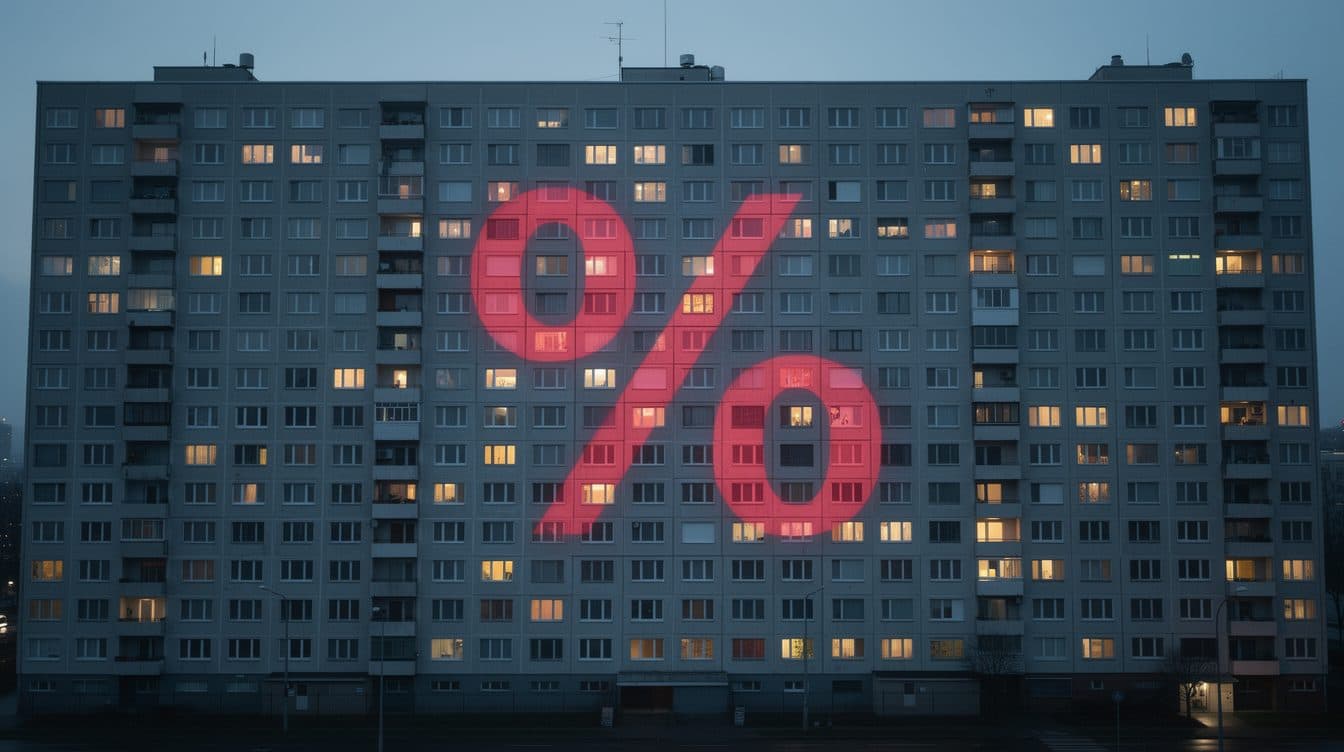
AI-generated image (flux-2/pro-text-to-image via Kie.ai)
Summary
Around 3.2 million tenant households in Germany spend more than 40 percent of their net income on housing. The German Tenants' Association is calling for a stricter rent brake, higher fines for rent gouging, and significantly more social housing.
Berlin, June 03, 2026
Every third tenant household in Germany is overburdened by housing costs, according to a study by the Institute for Housing and Environment (IWU) commissioned by the German Tenants' Association. The president of the Tenants' Association is calling for swift countermeasures from the federal government.
Around 3.2 million tenant households in Germany spend more than 40 percent of their net income on housing. Another 3.4 million households spend 30 to 40 percent of their net income on basic rent and heating costs. From the perspective of IWU and the Tenants' Association, this means a total of every third tenant household – approximately 6.6 million – is overburdened. This group is at its "financial limit" with their housing costs.
The study is based on data from the 2022 microcensus on income and rents and was updated to the latest available figures for 2024 using data from the Federal Statistical Office. According to the information, the lowest 10 percent of the income distribution are particularly affected, with an average housing cost burden of 60 percent.
Low-income earners particularly affected
The proportion of low-income earners among tenants is large. According to the data, 42 percent, or 8.3 million of the almost 20 million tenant households, belong to the lower third of income earners and have an average net household income of 1,417 euros per month. According to IWU data, 16 percent of tenant households in this group would be overburdened.
The statisticians at the Federal Statistical Office set a stricter threshold, only classifying households as overburdened if they spend more than 40 percent of their income on housing. In 2025, 11.2 percent of people in Germany, or about one in nine, were affected by this. Germany was thus above the EU average of 7.7 percent. Only Denmark (23.4 percent) and Greece (26.4 percent) had a higher prevalence of overburdening due to housing costs.
Major cities and new rental agreements drive up the burden
A significant driver of the burden is newer rental agreements: rents in contracts signed from 2020 onwards are, on average, a good fifth higher than in older contracts. The housing cost burden for these households is 33 percent, significantly more than for households that moved in before 2020. Major cities are particularly affected: in Berlin, rents for households that moved in after 2020 are, on average, 29 percent higher than the average for all rental agreements, in Munich 26 percent, and in Frankfurt 25 percent. The housing cost burden in metropolitan areas is over 30 percent overall, and even over 35 percent for new rental agreements.
Situation in Northern Germany and Hamburg
The situation is also tense in Northern Germany. According to data from the 2022 microcensus, Schleswig-Holstein leads the country with a housing cost ratio of almost 30 percent. "As a rural state, we are in first place," said Ann Sophie Mainitz, managing director of the Tenants' Association Schleswig-Holstein. "However, the situation has actually worsened in recent years." In Kiel, many apartments in the high-price segment remain vacant because no one can afford them. In Mecklenburg-Vorpommern, the managing director there, Kai-Uwe Glause, cited "special problems" in coastal towns; in Rostock and Schwerin, the housing cost ratio is around 40 percent, in Güstrow about 30 percent, whereas in rural depopulation regions it is significantly lower.
In Hamburg, according to the study, housing costs amount to 34 percent of household income. Rolf Bosse from the Hamburg Tenants' Association reported from his advisory practice that the ratio for low-income earners ranges between 35 and 50 percent. "Hamburg urgently needs to counteract, otherwise workers will either not come here at all or will leave because they cannot afford to live here," warned Bosse. In Hamburg, the average gross basic rent for rental agreements concluded before 2020 was 10.90 euros per square meter, while Munich, at 19.40 euros per square meter, is the most expensive of the top 7 cities.
Demands of the Tenants' Association to the Federal Government
The president of the German Tenants' Association, Melanie Weber-Moritz, spoke of "alarming figures" and called for swift action: "The spiral of ever-increasing rents must be stopped. The federal government must now protect tenants from further burdens." Specifically, the Tenants' Association demands that the planned stricter penalties for rent gouging be implemented, the rent brake be tightened, and violations be punished with substantial fines. "So that tenants are finally protected from illegal rent increases," said Weber-Moritz.
Furthermore, the rent brake, which applies in strained housing markets and until 2029, should be made permanent and apply nationwide. In Schleswig-Holstein, the Tenants' Association wishes for a rent brake in the first place. In addition, the association calls for the stock of social housing to be increased from the current 1.1 million to at least two million units by 2030. There must be more public housing to "establish a permanently price-controlled and affordable segment" in the rental housing market.
The extent of the pressure to act in Berlin is evident from a look at rent price checks: "Even in Berlin, only in five percent of cases examined by the rent price office were the rents 'legally permissible according to rent price law'," the Senate Department for Urban Development, Building and Housing recently announced. In Hamburg, particularly low-income districts in the south and east, as well as some neighborhoods in the west, are primarily affected by overburdening.
Questions & Answers
According to the study, how many tenant households in Germany are overburdened?
According to an IWU study commissioned by the German Tenants' Association, around 6.6 million tenant households – about one in three – are overburdened, with 3.2 million of them spending more than 40 percent of their net income on housing.
What does the German Tenants' Association demand from the federal government?
President Melanie Weber-Moritz demands a stricter, permanent, and nationwide rent brake, substantial fines for rent gouging, and an increase in the stock of social housing from 1.1 million to at least two million units by 2030.
Where is the housing cost burden highest in Germany?
Major cities are particularly affected: in Berlin, Munich, and Frankfurt, rents for new contracts from 2020 onwards are significantly above average; in metropolitan areas, the housing cost ratio is over 30 percent overall; among the rural states, Schleswig-Holstein leads with almost 30 percent.
Rent Costs: Tenants' Association Warns of Overburdening for | allfacts360