Poverty Report: 16.1 Percent of the Population in Germany Affected by Poverty – Highest Level in Five Years
Berlin, June 02, 2026
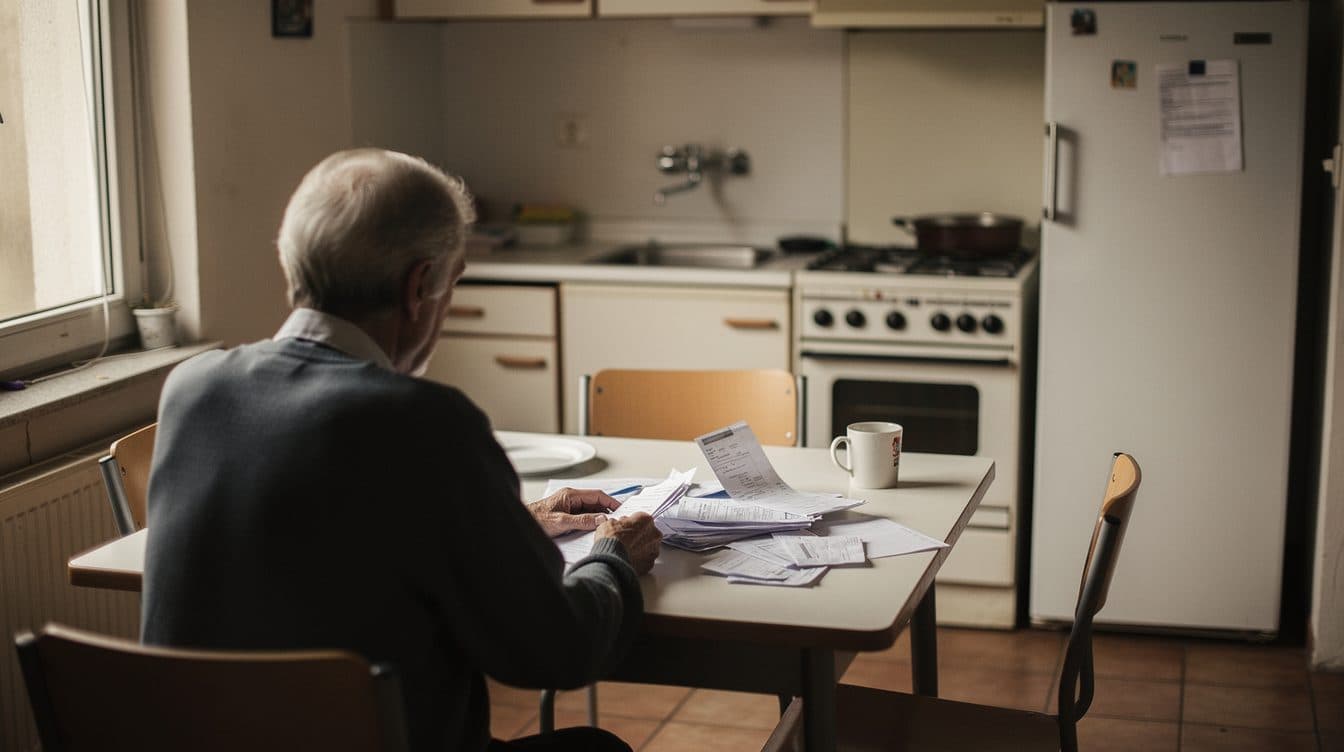
AI-generated image (flux-2/pro-text-to-image via Kie.ai)
Summary
The Paritätischer Wohlfahrtsverband reports an increase in poverty in Germany to 16.1 percent of the population in 2025. A total of 13.3 million people are therefore living in relative income poverty, with single individuals, single parents, and the elderly being particularly affected.
Berlin, June 02, 2026
In its current poverty report, the Paritätischer Wohlfahrtsverband has identified an increase in the poverty rate in Germany to 16.1 percent of the population – the highest value in five years.
Record High and Increase
In 2025, 16.1 percent of people in Germany are affected by relative income poverty. This represents an increase of 0.6 percentage points compared to the previous year. In its report presented on Tuesday, the Paritätischer Wohlfahrtsverband speaks of an increase that clearly reverses the previous trend of recent years. For the Federal Republic, this means the highest value in the past five years.
A total of 13.3 million people in this country live in poverty – considering only relative income poverty. The association emphasizes that there has been "a sad record." Never before in recent years has such a large number of people in Germany been classified as poor or at risk of poverty.
Definition and Income Threshold
According to the statisticians' definition, people with less than 60 percent of the median income are considered poor or at risk of poverty. The welfare association deliberately uses the term "poor" in its report. The threshold was most recently a net income of 1,446 euros per month for a single person. For a household with two adults and two children under 14 years of age, the threshold was 3,036 euros per month.
Until 2023, the poverty rate in Germany had previously declined for several years in a row. After declining rates from 2020 to 2023, there has been "a negative trend reversal," the association emphasizes. The numbers have only been rising again since 2024, and significantly for the second year in a row.
Regional Differences
The regional distribution of poverty in Germany remains extremely uneven. Bavaria and Baden-Württemberg continue to have the lowest rates of affected individuals due to their strong economic structures, with 12.6 percent in Bavaria and 13.2 percent in Baden-Württemberg. The rates are significantly higher in several other federal states.
The report records the highest proportions of affected individuals in Bremen with 27.5 percent – meaning more than one in four inhabitants. This is followed by Saxony-Anhalt with 21.3 percent, and the city-states of Hamburg with 18.9 percent and Berlin with 18.7 percent. North Rhine-Westphalia, Thuringia, Lower Saxony, Hesse, Schleswig-Holstein, and Mecklenburg-Western Pomerania are in the broad middle range with similar rates.
Within the western German states, certain regions are disproportionately affected. The Trier region with 21.4 percent, the Weser-Ems region with 20.8 percent, and the Arnsberg administrative district with 19.6 percent are particularly affected. In Cologne, the poverty rate of 17 percent is also above the national average.
Affected Groups in Detail
In eastern Germany, Chemnitz with 18.2 percent and Leipzig with 17.4 percent show above-average rates. The Paritätischer Wohlfahrtsverband concludes from the regional picture that economically strong regions generally have lower poverty risks than structurally weak areas. At the same time, there is a clear disparity between southern Germany and parts of western and eastern Germany.
In addition to regional distribution, the report names particularly affected population groups. Almost one in five people aged 65 and over are affected by poverty or at risk of poverty. Poverty is also disproportionately high in the age groups between 18 and 25 years and from 65 years onwards. The association writes: "The twilight of life threatens to become a poverty trap." The situation of older people is "tense."
A breakdown by household type shows that single individuals have the highest poverty rate at 30.3 percent. Single parents are affected at 28.9 percent. People with low educational attainment have a rate of 29.1 percent. Four out of five people affected by poverty are not employed.
The picture regarding nationality is as follows: 70 percent of those affected have German nationality, 30 percent do not. The authors of the report explain that poverty is increasing particularly where structural disadvantages exist – for example, with low education or limited access to the labor market.
Situation of Those Affected
Another figure from the report shows the concrete financial situation of many people: In the past year, 6.9 percent of the population did not have enough finances to cover current expenses. Many households were therefore unable to pay for rising electricity and heating prices and often could not afford a new refrigerator or stove.
Joachim Rock, CEO of the Paritätischer Wohlfahrtsverband, described the situation as a "crisis situation." He warned in Deutschlandfunk that further austerity measures by the federal government would exacerbate the crisis. The federal government must not cut social benefits while poverty is rising to a new record high.
Demands on Politics
The association accompanies its report with concrete political demands. First and foremost is the introduction of a stable statutory minimum wage of 15 euros per hour – including for full-time employees. The background is that a portion of the working population does not adequately reach the poverty line despite being employed.
Furthermore, the Paritätischer Wohlfahrtsverband calls for an expansion of housing benefits and family policy benefits. The statutory pension insurance must also be made future-proof so that old-age poverty does not continue to increase. These three areas of action – subsistence wages, affordable housing, and reliable pensions – form the core of the catalog of measures.
In a historical comparison, the report highlights the dramatic nature of the development: In 2020, according to the report, around 13.2 million people in Germany were affected by poverty; by 2023, the number had fallen to around 12.1 million. With the current figure of 13.3 million, this decline has not only been stopped but significantly surpassed. However, the association points out that data from before 2020 are only partially comparable due to changes in data collection methods.
The Federal Statistical Office had already communicated the current poverty figures in February of this year. The poverty report of the Paritätischer Wohlfahrtsverband, presented on June 2, 2026, on Deutschlandfunk and WDR 2, among others, now provides a political context for these figures and supplements them with detailed analyses of affected groups and regions. The association explicitly sees its report as a call to action for the federal government.
Questions & Answers
What does the 2025 Poverty Report say about the situation in Germany?
According to the Paritätischer Wohlfahrtsverband, 16.1 percent of the population is affected by relative income poverty – this corresponds to around 13.3 million people and is the highest value in the past five years.
Which regions in Germany are particularly hard hit?
The report records the highest poverty rates in Bremen (27.5 percent), Saxony-Anhalt (21.3 percent), Hamburg (18.9 percent), and Berlin (18.7 percent); the lowest values are in Bavaria (12.6 percent) and Baden-Württemberg (13.2 percent).
What demands does the Paritätischer Wohlfahrtsverband make?
The association calls for a stable minimum wage of 15 euros per hour, also for full-time workers, an expansion of housing benefits and family policy benefits, and a future-proof statutory pension to curb rising old-age poverty.
Poverty Report 2025: 16.1% in Germany – Record High | allfacts360