Trial in Munich: verdict expected for 2025 car-ramming attack
Munich, August 6, 2026
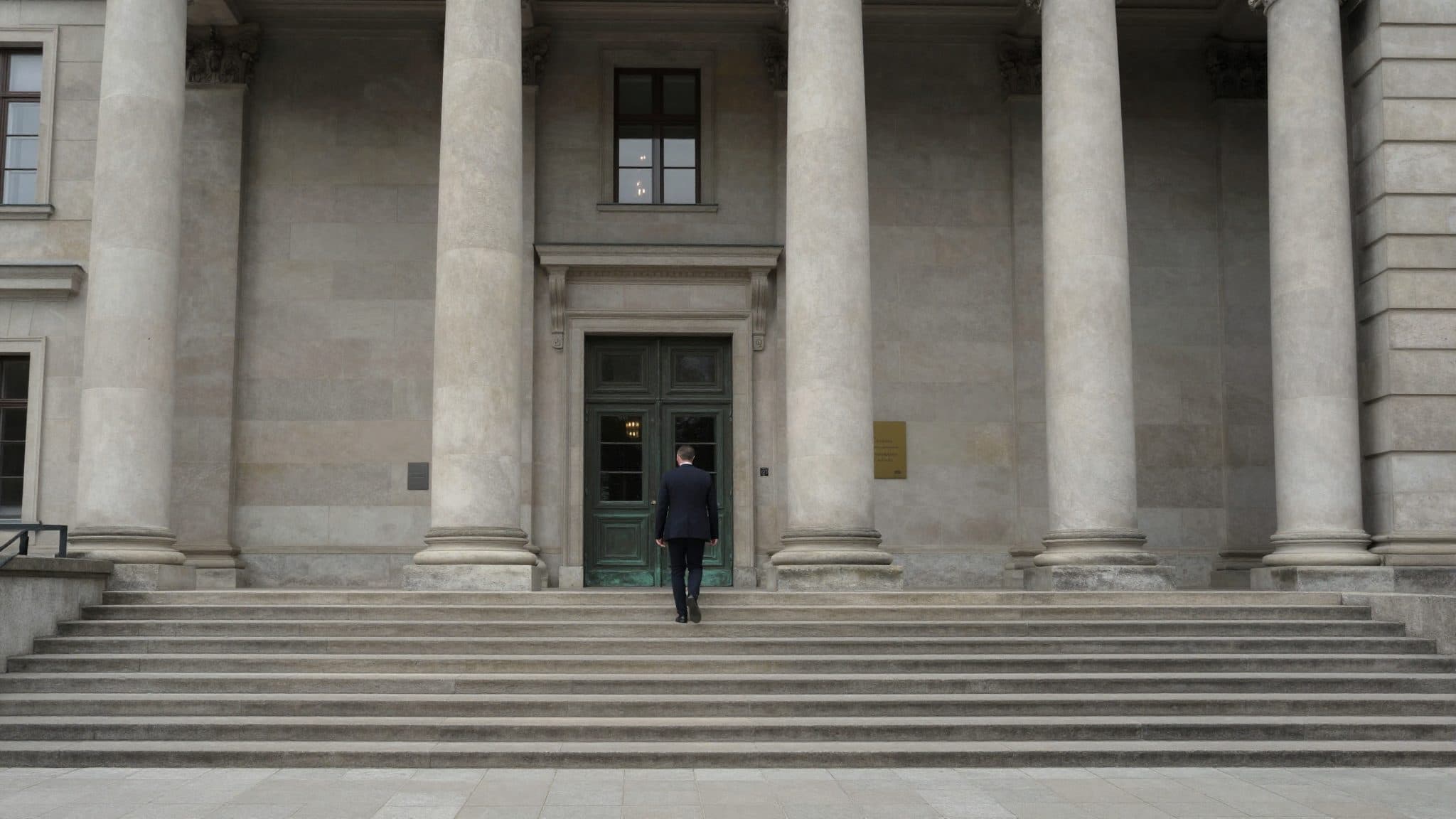
AI-generated image (z-image via Kie.ai)
Summary
The Oberlandesgericht in Munich is preparing to hand down its verdict in the trial over the car-ramming attack that shook the Bavarian capital in 2025. The Federal Prosecutor's Office considers the motive to have been retaliation for the suffering of Muslims in Gaza and Afghanistan.
Munich, August 6, 2026
The Oberlandesgericht in Munich is scheduled to deliver its verdict this Wednesday in the trial for the car-ramming attack carried out in the Bavarian capital, a proceeding in which the Federal Prosecutor's Office argues that the defendant's religious and political motives were decisive.
A trial under heavy scrutiny
The trial, which has captured the attention of the German public in recent weeks, reaches its decisive phase with the ruling scheduled to be read this Wednesday at the Oberlandesgericht in Munich, according to the court's presidency. The proceedings center on the attack carried out in 2025, which shocked the city and reignited the debate over security in Bavaria's public spaces.
In its closing arguments, the Federal Prosecutor's Office stressed that the defendant's religious and political convictions played a determining role in planning and executing the attack. According to the indictment, the attack must be understood as an act of retaliation for the suffering that, in the defendant's view, the West has inflicted on Muslim populations in places such as Gaza and Afghanistan—scenarios to which the public ministry has repeatedly pointed during the trial.
The defendant's final word
During the last day of proceedings, the defendant made limited use of his right to address the court last, according to judicial spokespersons. The man thanked the court and the Federal Prosecutor's Office for the treatment received, expressed respect for prior statements by his defense, and declined to offer a formal apology for the acts being tried. The absence of any public show of remorse was noted by those present in the courtroom.
The attack took place in the vicinity of Munich's Hauptbahnhof, the city's central station, a hub with heavy traffic from travelers and commuters. The choice of location and the use of a vehicle as the instrument of the attack placed the case in the category of vehicle-ramming attacks, a modality that German authorities have examined with particular attention since the latest violent episodes recorded on European soil.
Beyond its criminal dimension, the trial has highlighted the work of the intelligence services and Bavaria's criminal police, who took part in identifying and apprehending the suspect in the hours following the attack. The investigation, coordinated with the Federal Prosecutor's Office—the authority responsible for terrorism and state security matters in Germany—made it possible to reconstruct the defendant's trajectory and to gather the expert evidence now included in the judicial record.
Political reactions and security measures
The defense, for its part, has questioned throughout the trial the Federal Prosecutor's Office's interpretation of the motive and has asked the court to weigh all the evidence before determining criminal liability. The attorneys have emphasized aspects relating to the defendant's capacity for discernment and to the personal context surrounding the events, without at any point contesting the material occurrence of the attack.
The case has also had political repercussions in Bavaria and across the country. Officials from the Landtag and the Bundestag have called, in various statements, for a review of surveillance protocols at stations and major transport hubs, while also urging stronger instruments for the early detection of radikalisierten Personen. Munich authorities have stressed, however, that cooperation among security forces prevented additional fatalities.
The Oberlandesgericht's ruling, expected this Wednesday, will bring the oral phase of the trial to a close and open the period for appeals before higher courts. The verdict will be delivered after the closing arguments and the defendant's final statement, and will determine whether the Federal Prosecutor's Office's theses on the nature of the motive and the degree of the defendant's responsibility are upheld.
An investigation coordinated by the Federal Prosecutor's Office
In parallel with the judicial proceedings, the city of Munich has maintained a reinforced security perimeter downtown and around the courthouse, a measure police sources have described as preventive and which will remain in place until the reading of the sentence is concluded. The public has followed the case closely, although there have been no significant disturbances in the days before the verdict.
The case was investigated by the Federal Prosecutor's Office with assistance from Bavaria's criminal police and German intelligence services, which contributed analyses of the defendant's communications and movements to the case file. The court, composed of three professional judges and two lay judges, has heard testimony from more than thirty witnesses, including police officers, forensic experts, and neighbors who witnessed the events.
At the international level, the attack and the trial have been followed by media outlets from several European countries, which have highlighted the symbolic nature of the chosen location and the speed with which German authorities identified the suspect. Analysts cited by specialist press have stressed that the trial sets a precedent regarding how German courts weigh religious and political motives in attacks of this nature.
Finally, the verdict is expected on a day in which the Oberlandesgericht has restricted access to the courtroom to family members, accredited media, and authorized personnel. The court's presidency has reported that the reading of the sentence may be followed live via the official channels of the Bavarian judiciary, an unusual measure aimed at guaranteeing the transparency of the proceedings and preventing the dissemination of partial or erroneous information.
Questions & Answers
When is the verdict expected in the trial for the Munich car-ramming attack?
The verdict of the Oberlandesgericht in Munich is scheduled for this Wednesday, according to the court's presidency, after the final day of proceedings in which the defendant declined to formally apologize.
What does the Federal Prosecutor's Office argue about the motive for the attack?
The Federal Prosecutor's Office considers the defendant's religious and political convictions to have been decisive and argues that the attack must be understood as retaliation for the suffering inflicted on Muslims in Gaza and Afghanistan.
What did the defendant say in his final statement before the Munich court?
The defendant made limited use of his right to address the court last: he thanked the court and the Federal Prosecutor's Office, expressed respect for prior statements by his defense, and offered no apology for the acts being tried.
Verdict in Munich car-ramming attack: trial at the OLGA | allfacts360