Turkey Ahead of NATO Summit in Ankara: Ankara Insists on Greater Voice in the Alliance
Ankara, July 6, 2026
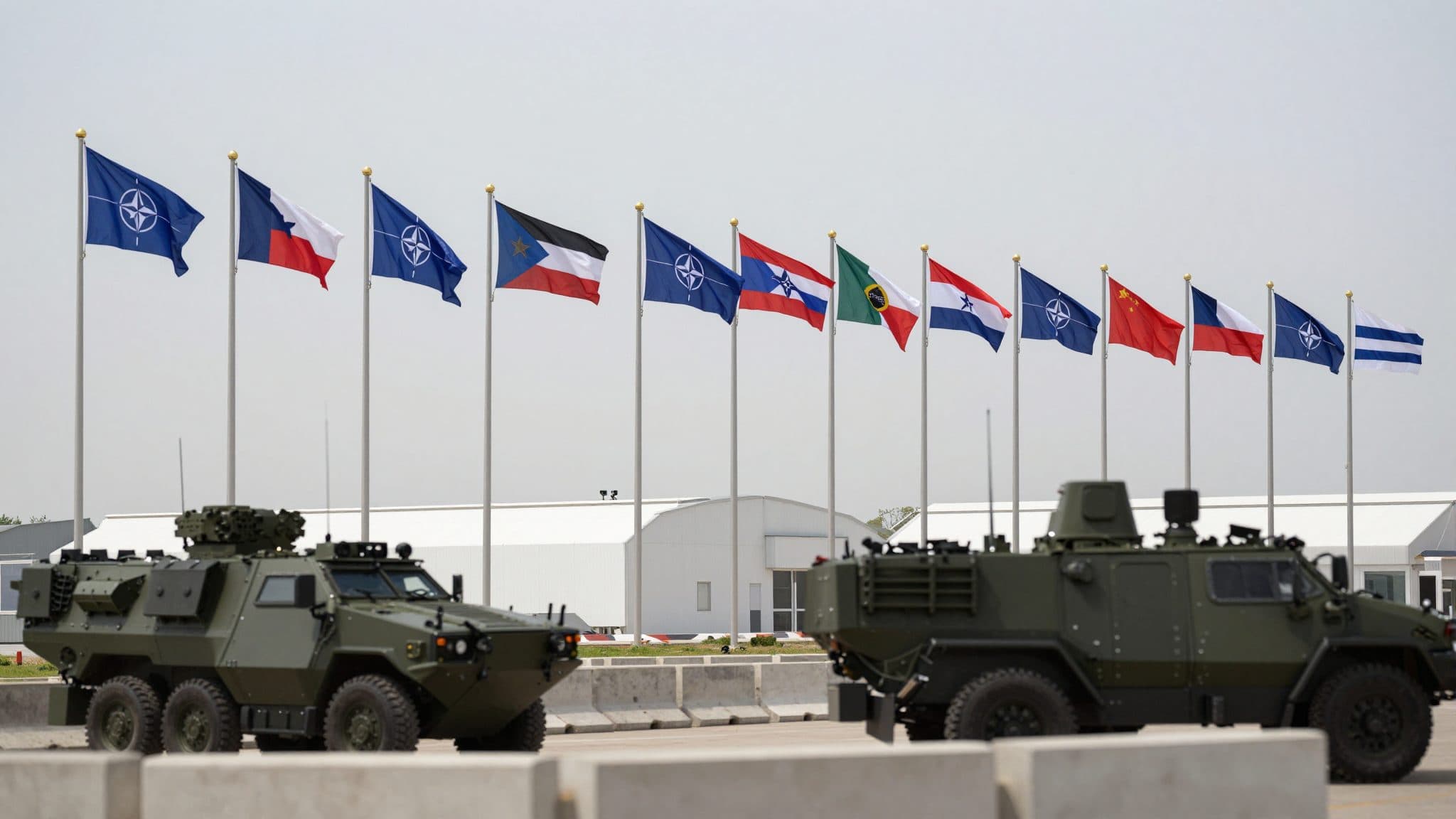
AI-generated image (z-image via Kie.ai)
Summary
Ahead of the NATO summit on July 7 and 8 in Ankara, the Turkish government is lobbying for stronger influence within the alliance. At the same time, arrests, a de facto state of emergency, and heavy security measures in the capital are drawing criticism.
Ankara, July 6, 2026
Ahead of the NATO summit on July 7 and 8 in Ankara, Turkey is positioning itself as a military heavyweight and strategic bridge state, demanding greater consideration of its interests within the alliance.
Military Weight and Rising Spending
Turkey has been a member of NATO since 1952 and, with roughly half a million soldiers, fields the alliance's second-largest army after the United States. According to the Stockholm International Peace Research Institute (SIPRI), Turkish military spending recently rose 7.2 percent year-on-year to more than 30 billion US dollars, placing Turkey 18th worldwide. Ankara aims to raise its defense spending to five percent of gross domestic product by the end of 2030.
It sits at the crossroads between Europe, Asia, and the Middle East and borders several crisis regions. As a riparian state, it controls the straits between the Aegean and the Black Sea under the Montreux Convention, making it a key power for the Black Sea region. The Turkish government is advocating for the challenges in Southern and Eastern Europe, the Black Sea region, and the Middle East to be more strongly incorporated into the alliance's strategic deliberations.
Security Apparatus on High Alert
In the week before the summit, Ankara massively tightened its security precautions. Security measures were raised to the highest level: heavy trucks and construction machinery are banned from driving in Ankara, and demonstrations and rallies are prohibited. Ankara will be placed in a de facto state of emergency until the summit ends. Along the travel routes of international heads of state and government, sight-blocking walls have been erected, stray dogs rounded up, and beggars driven away.
There is bad news for academics, lawyers, politicians, environmental activists, teachers, and retirees arrested on terrorism charges in the run-up to the summit: many of them must remain in custody for the time being. In total, Turkish security forces detained more than 200 people before the summit.
Balancing Act Between Moscow and the Alliance
Ankara is also seeking its own course on security policy toward Moscow. Turkey maintains close ties with the Kremlin and does not participate in the sanctions related to the Ukraine war. Nevertheless, it has signed all NATO statements condemning the various Russian attacks on Ukraine, including the large-scale attack of February 2022, as former NATO Deputy Secretary General Hüseyin Diriöz emphasizes.
Last year, Turkey hosted several direct meetings between Ukraine and Russia in Istanbul, which led to prisoner exchange agreements but produced no major breakthroughs. Beyond that, Ankara sees itself as a mediator in international crises, including the Ukraine war and the sphere of tensions with Iran.
At the same time, Turkey is making demands of the European security architecture. For such a model to be viable, it must also include European allies that are not EU members. This refers in particular to Turkey, the United Kingdom, and Norway. Should Europe develop its own security and defense identity, it must not enter into competition with the alliance; it should complement NATO.
Demands on the European Security Architecture
For NATO, she said, Turkey is therefore of great importance not only militarily but also in terms of energy, the economy, and security policy — and for precisely that reason, its relevance remains undiminished. NATO Secretary General Mark Rutte praised Turkey's strong, well-trained army and its rapidly growing defense industry in an interview with the Turkish state television channel. Turkey is an important country with its roughly 3,000 companies in the defense sector, Rutte said.
The Turkish defense industry is already a global export player: last year, the country exported weapons and equipment worth ten billion US dollars. Against this backdrop, the Defense Industry Forum, previously organized as a side event, will for the first time be an official part of the NATO summit program. The military mega-complex "Ay Yıldız" — the so-called "Pentagon of Turkey" — which has just been completed, has been given its finishing touches.
Defense expert Burak Yildirim of Galatasaray University in Istanbul points to concrete contributions: "Im Baltikum fliegen Jets und Drohnen der türkischen Luftwaffe Patrouille. Bei den Landungsmanövern in Deutschland war die Türkei eine Grundsäule, sie hat bewiesen, dass sie auch 2.000 Kilometer entfernt ihren Beitrag leisten kann. Das ist sehr wertvoll für die NATO."
Points of Friction With Partners
There are, however, also points of friction. Ankara rejected the appointment of Mark Rutte as NATO Secretary General. After the purchase of the Russian S-400 air defense system in 2019, Washington also excluded Turkey from the F-35 fighter jet program. Ankara blocked the NATO accession of Finland and, above all, Sweden for an extended period in order to extract concessions on counterterrorism and the lifting of arms embargoes.
Security expert Yildirim described the arrests and the rejected accreditation applications of a large number of Turkish journalists as completely unacceptable and in contradiction to the universal values of NATO and to Turkey's modernization. Bridging the tensions between the USA and Europe and reaffirming solidarity would be the greatest achievement of this NATO summit, Diriöz said.
Another of Ankara's plans is the revival of the Istanbul Cooperation Initiative (ICI), founded in 2004. The program is intended to strengthen security policy cooperation with states in the Middle East. Members include Qatar, Bahrain, Kuwait, and the United Arab Emirates. Turkey is also expected to receive US support for its first national fighter jet, the KAAN, although the project continues to struggle with engine problems.
Questions & Answers
When and where is the NATO summit taking place?
The NATO summit will take place on July 7 and 8, 2026, in Ankara, as confirmed by the Turkish government and the alliance.
Why is Turkey insisting on more influence in NATO?
Ankara points to its position as the alliance's second-largest army with roughly half a million soldiers, its strategic location at the crossroads of Europe, Asia, and the Middle East, and its role as a mediator in international crises.
What criticism is Turkey facing ahead of the summit?
Security experts and opposition representatives criticize the arrest of more than 200 people, the de facto state of emergency in Ankara, and the rejected accreditations of Turkish journalists as a contradiction of NATO values.
NATO Summit in Ankara: Turkey Demands Greater Influence | allfacts360