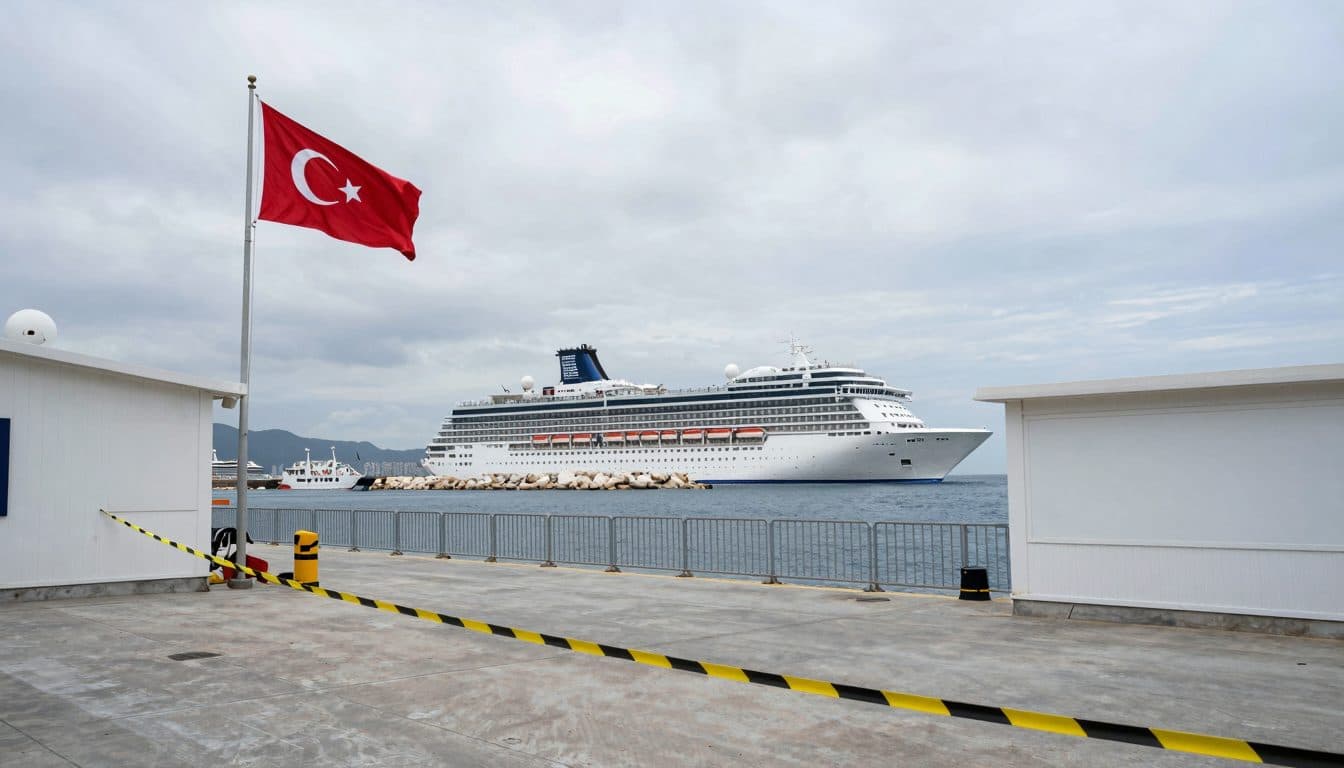
Turkish authorities have denied the "Scarlet Lady," a cruise ship carrying predominantly LGBTQ passengers and chartered by the US travel company Atlantis…
Ankara, July 4, 2026
Turkish authorities have denied the "Scarlet Lady," a cruise ship carrying predominantly LGBTQ passengers and chartered by the US travel company Atlantis Events, permission to dock at the port of Kuşadası as well as in Istanbul, justifying the decision with "moral values."
Justification from the provincial government of Aydın
The Turkish provincial government of Aydın announced on Saturday via the platform X that it was "absolutely out of the question" for the "Scarlet Lady" to dock at the port of Kuşadası. The authority explained that the ship had been chartered by groups "known for behaviors incompatible with the fabric of our society and our moral values." The governor's office also emphasized that the decision concerned solely the planned stop on July 7 and that the remainder of cruise traffic would not be affected.
The US travel company Atlantis Events confirmed to several media outlets that Turkish authorities had refused the ship docking permission and that the itinerary had been altered at short notice as a result. President and CEO Rich Campbell told the broadcaster CNN that this was the first such incident in the company's 36-year history. Atlantis Events also announced on its own website that the ship would now call at the ports of Cairo and the Greek island of Crete instead of Kuşadası.
Atlantis Events confirms docking ban
Campbell told CNN that his company had never before been denied docking permission because of the identity of its passengers. The shipping line expressed regret over the short-notice rerouting and pointed to its long-standing business operating cruises for LGBTQ travelers.
In addition to the port in Kuşadası, authorities also denied the ship docking in Istanbul, according to Atlantis Events. Furthermore, a bar in Istanbul's Beyoğlu district was shut down after being described in pro-government media as the local organizer of the planned event. The Istanbul governor's office stated that the bar in the Beyoğlu district had been closed due to alleged regulatory violations.
Background: Restrictions on the LGBTQ community
Turkey's refusal to allow the ship to dock is part of a series of restrictions on the LGBTQ community in the country. Pride Week events and Pride marches have been banned by authorities or broken up by police in Turkey in nearly every year since 2015. The authorities routinely justify such bans on the grounds of security concerns and public order.
Constitutionally, the secular Turkish constitution does not expressly prohibit LGBTQ identities. At the same time, the government of the Islamist-conservative President Recep Tayyip Erdoğan has recently significantly intensified its anti-LGBTQ rhetoric. Provincial governors in Turkey are appointed directly by the President's office, meaning political directives from Ankara have an immediate impact on regional decisions.
Media incitement against the visit
Even before the planned trip, pro-government Turkish media as well as conservative voices on social networks had mobilized against the visit and called for it to be canceled. After the decision, the pro-government print outlet "Star" and the news portal "A Haber" praised the move in defamatory language.
The Turkish Ministry of Tourism was initially unavailable for comment on Saturday. International reactions to the docking ban also remained absent at first. The operating company Atlantis Events announced that the voyage would proceed as planned despite the rerouting.
The "Scarlet Lady" belongs to the fleet of the US cruise company Virgin Voyages and is regularly chartered for themed trips. The rerouted itinerary now takes the ship to Cairo and the Greek Mediterranean island of Crete, which is considered a comparatively open destination for liberal travel groups.
Reactions and international assessment
Human rights organizations see the decision as another signal of shrinking freedoms for sexual minorities in Turkey. International observers point out that travel restrictions targeting specific groups of people can contravene international standards for protection against discrimination.
Atlantis Events described the incidents as unprecedented in the company's history and announced that it would communicate directly with travelers. Passengers also expressed widespread outrage on social media over the short-notice rerouting and the justification given by Turkish authorities.
Outlook on future Pride events
The Turkish government has cracked down on several Pride events in major cities such as Istanbul and Ankara in recent months. Critics accuse the government of deliberately exerting pressure on the LGBTQ community by invoking "moral values."
The closure of the bar in Beyoğlu marks a new step: for the first time, according to activists, a private organizer was sanctioned with explicit reference to the planned cruise. The bar had previously been considered a scene meeting point for the queer community in Istanbul.
Observers expect the debate over the treatment of LGBTQ travelers in Turkey to gather further momentum in the coming weeks. At the same time, it remains unclear whether the Turkish government will maintain its line or respond to international criticism.
Travel companies worldwide are watching the case with concern. Industry experts note that targeted docking bans for specific passenger groups can sustainably damage a country's image as a tourism destination.
Within Turkey as well, the decision is fueling discussion. While conservative commentators are celebrating the move, liberal voices and opposition politicians are sharply critical of the authorities' justification.
The next major Pride event in Turkey, meanwhile, remains subject to conditions. Activists announced that they would continue to take to the streets in the future for the freedom of assembly and the rights of sexual minorities.
Questions & Answers
Why has Turkey refused the cruise ship "Scarlet Lady" permission to dock?
The governor's office of Aydın province explained that the ship had been chartered by groups "known for behaviors incompatible with the fabric of our society and our moral values." According to the authority, the decision concerned solely the planned stop on July 7.
Who organized the ship's voyage?
The voyage was chartered by the US travel company Atlantis Events. President and CEO Rich Campbell told CNN that this was the first such incident in the company's 36-year history.
Which itinerary will the ship now take instead of Kuşadası?
Atlantis Events announced on its own website that the ship will now call at the ports of Cairo and the Greek island of Crete.