UK plans nighttime social media curfew for 16- and 17-year-olds
London, July 15, 2026
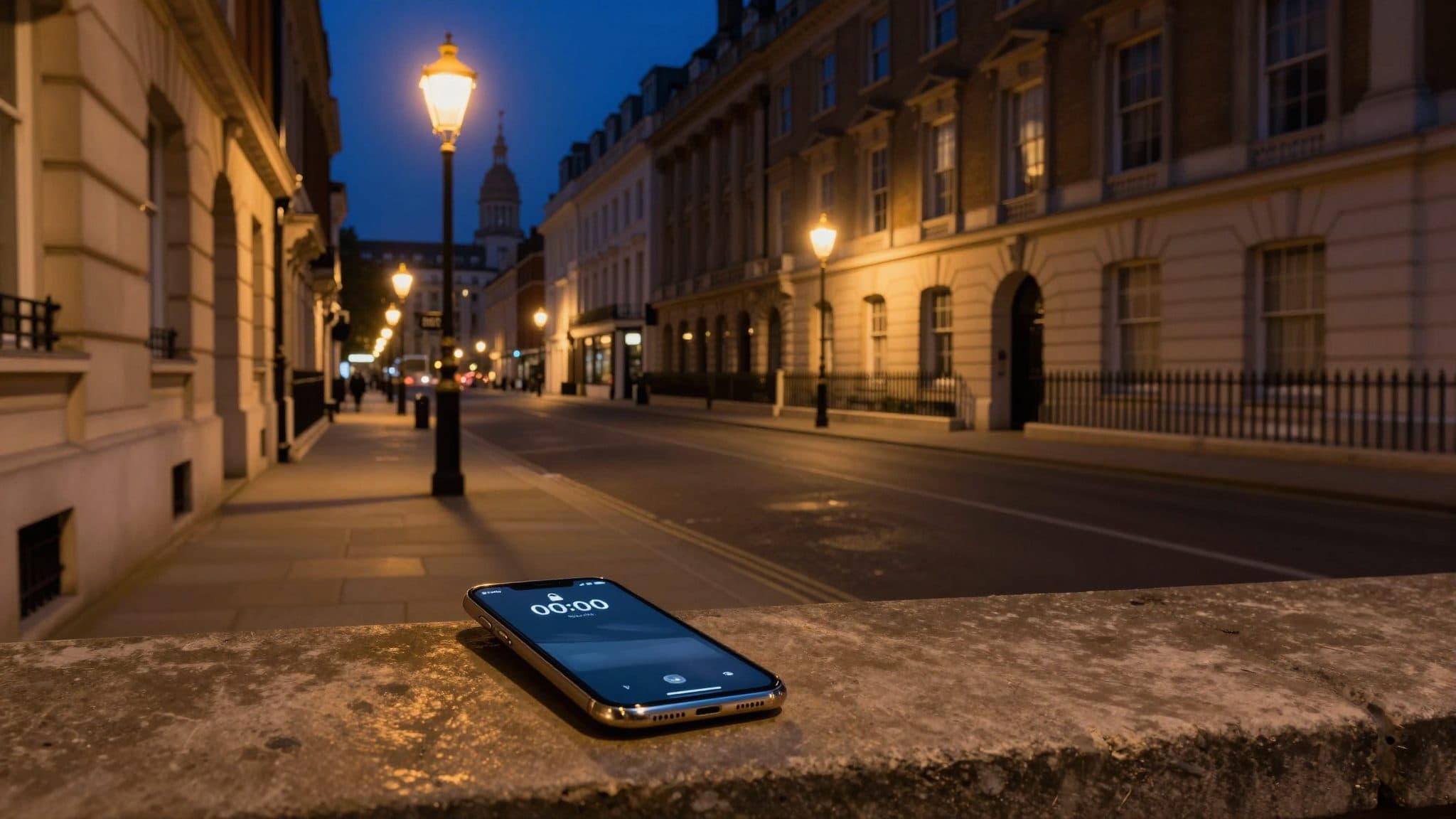
AI-generated image (z-image via Kie.ai)
Summary
The British government has presented plans in London for a nighttime social media curfew for 16- and 17-year-olds. Between midnight and 6:00 a.m., platforms such as Instagram or TikTok should only be usable if young people actively change the default setting.
London, July 15, 2026
The British government presented plans in London on Tuesday according to which 16- and 17-year-olds should no longer have access to social media apps such as Instagram or TikTok between midnight and 6:00 a.m., unless they actively change the default setting.
What the government is planning
As the government announced in London on Tuesday, 16- and 17-year-olds should only be able to use apps such as Instagram or TikTok between midnight and 6:00 a.m. if they actively change the default setting. The measure is part of a comprehensive legislative package to protect children and young people on the internet, which is set to come into force in spring 2027.
Technology Minister Liz Kendall justified the push with adolescents' need for sleep. These measures are crucial to help young people get the sleep they need, focus on school and training, and spend more time with family and friends, she said.
In a further statement, Kendall said parents and young people had sent a clear message: Even as young people become more independent at 16, they must be protected from the internet's most harmful mechanisms in order to get enough sleep, focus on their education, and build a fulfilling life.
Pilot project with 300 families
The British government says it is drawing on a pilot project with over 300 families, in which different rules were tested, including a daily time limit of 15 minutes, a curfew from 9:00 p.m., or a complete removal of the apps. Feedback from the families was unanimously positive and reported better sleep, greater concentration, and a more harmonious family life.
The measure is intended, among other things, to lead to better sleep, according to government circles. The backdrop is the debate that has been going on for months about how minors handle social platforms, which are operated mainly from the USA and China.
The planned changes are part of a major legislative package from the British government. At its core, it already provides for a social media ban for under-16s. In June, the British government had already decided in favor of a social media ban for children and young people under 16.
Addictive features as a starting point
Under the new proposal, 16- and 17-year-olds should have addictive features deactivated in the default settings. These include, among others, videos that play automatically one after another, or feeds that continuously display personalized content. Users should also be able to reverse this deactivation.
As was further stated, features that encourage endless continued use should also be deactivated by default. These include automatically played videos ("Auto-Play") and endless feeds ("Infinite Scroll"). The British government classifies such mechanisms as addictive.
The technology companies are to be legally obligated to implement the curfew. Violations would be met with "very strict regulatory sanctions," as the minister responsible for online safety, Kanishka Narayan, announced.
Timeline: Christmas 2026, spring 2027
The regulations are to be introduced in Parliament by the end of the year. The law is to be passed by Christmas and come into force in spring 2027.
Criticism from opposition and experts
The opposition sharply criticized the plans. The party's education expert, Laura Trott, told the BBC that curfews they can simply switch off will achieve nothing. Parent representatives also criticized the plans as useless — as did the opposition.
Opposition politician Laura Trot also said in a BBC interview that curfew times that can simply be switched off are pointless. They do not solve the actual problem.
Experts also raised concerns. Sonia Livingstone, an expert on digital children's rights at the London School of Economics, said in a BBC interview: "Wenn es eine Sperre ist, die ein Kind, das Unterstützung, Hilfe oder Trost braucht, daran hindert, sich mitten in der Nacht an vertrauenswürdige Ansprechpartner zu wenden, halte ich das für potenziell ziemlich schädlich."
British think-tank activist Andy Burrows, head of the Molly Rose Foundation, which specializes in suicide prevention, accused the government in remarks to the BBC of having no overall concept. Prime Minister Keir Starmer is leaving office after having announced a social media ban without a plan — and his likely successor Andy Burnham would "inherit a series of missed opportunities."
International comparison and German debate
International comparisons also play a role in the debate. In December, Australia became the first country in the world to bring a social media ban for children and young people under 16 into force. France and Italy are also restricting minors' access to social media.
In Austria, the government is planning a social media ban for under-14s. According to information from Der Standard, a draft is currently being worked on that is to be presented in summer in order to come into force at the beginning of 2027. The Austrian federal government does not want to leave age verification to the platforms and is relying on a central application that tells each app whether the respective user is allowed to access it.
In Germany, Family Minister Prien most recently spoke out in favor of a ban for under-13s following recommendations from an expert commission. This signals an approximation to the British line in this country as well, albeit with different age limits.
Prime Minister Keir Starmer had previously outlined the goal of the measure with the words that it should "give children their childhood back." The nighttime curfews for older adolescents now presented are an extension of this plan and, like the more comprehensive ban for under-16s, are to take effect in spring 2027.
The affected corporations such as Meta and TikTok did not initially comment. It therefore remains unclear how the platforms intend to accomplish the technical implementation of a mandatory nighttime curfew and what leeway they will be given with regard to age verification.
This news item was broadcast on 15.07.2026 on the Deutschlandfunk program.
Questions & Answers
What exactly has the British government announced?
The British government presented plans in London on Tuesday according to which 16- and 17-year-olds should have no access to apps such as Instagram or TikTok between midnight and 6:00 a.m., unless they actively change the default setting. The regulations are to be introduced in Parliament by the end of the year and come into force in spring 2027.
Who has criticized the plans and why?
The opposition Conservative Party as well as parent representatives criticized the plans as useless, since the curfew can easily be switched off in the settings. Education expert Laura Trott said that curfews that young people can simply switch off will achieve nothing.
What other restrictions are part of the legislative package?
At its core, the package already provides for a social media ban for under-16s. In addition, addictive features such as automatically played videos and endless personalized feeds are to be deactivated by default for 16- and 17-year-olds, and risky offerings such as livestreams or direct chats with adults are to be drastically restricted for under-16s.
UK nighttime social media curfew for 16- and 17-year-olds | allfacts360