United Kingdom to ban under-16s from social media platforms
London, 15 June 2026
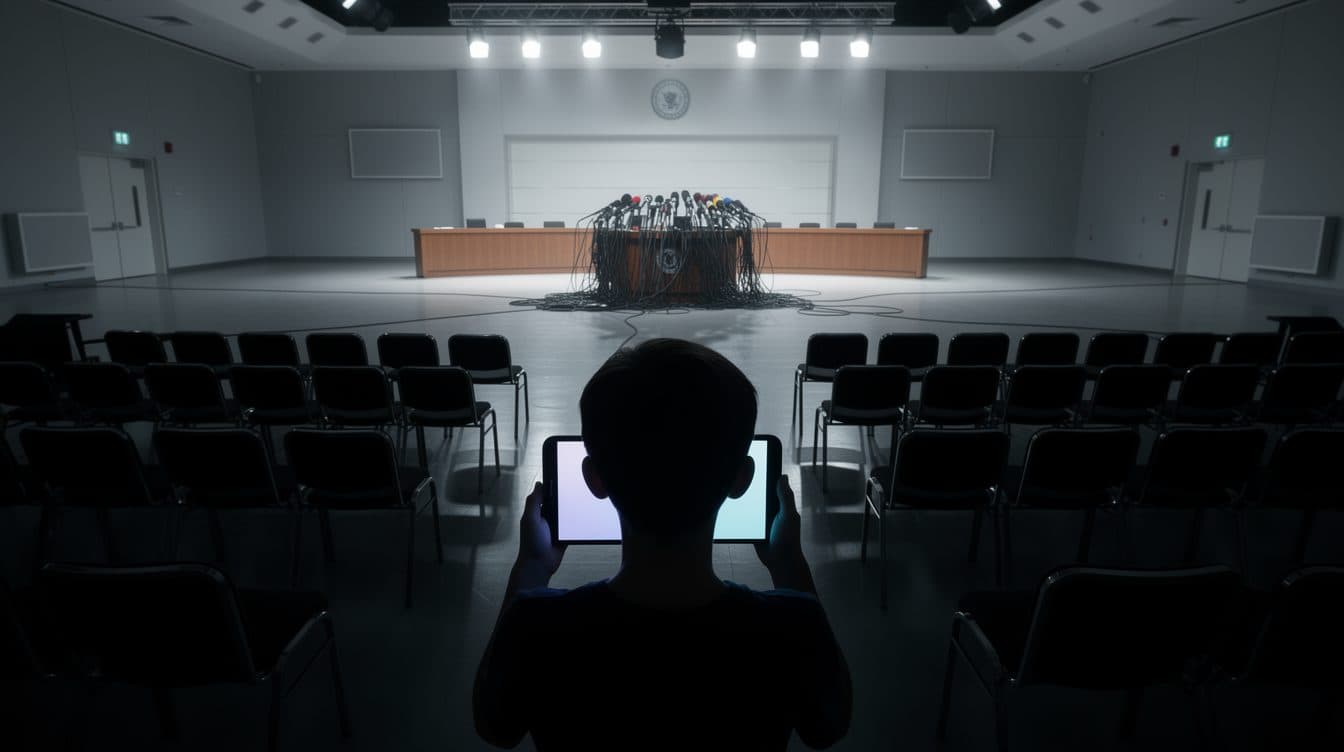
AI-generated image (flux-2/pro-text-to-image via Kie.ai)
Summary
The British government plans to ban numerous social media platforms for children and young people under the age of 16. Prime Minister Keir Starmer also announced restrictions on gaming, livestreaming, and AI chatbot services; the law is to pass through Parliament by Christmas.
London, 15 June 2026
The British government plans to ban children and young people under the age of 16 from using numerous social media apps and intends to bring the corresponding restrictions into force early next year.
Overview of the British government's plans
Prime Minister Keir Starmer presented the plans on Monday in London. He spoke of a "great day" for the country and said a ban could make children "safer and happier, giving them more time, more security, more freedom as they grow up, and more opportunities." The measure is modeled on the Australian approach and, according to the government's wishes, is to go even further; the British government itself speaks of an "Australia-plus" approach.
According to information from the Sunday Times and the government, those affected are to include TikTok, Instagram, Facebook, X, YouTube, Snapchat, Threads, Twitch, Kick, and Reddit. Messaging services such as WhatsApp and Signal, by contrast, are not to be covered. The use of chatbots and certain features of some gaming apps are also to be restricted, as is livestreaming by minors.
Which platforms are to be affected
It is also envisaged that minors will no longer be allowed to chat with unknown adults on gaming and livestreaming platforms. A "sort of curfew" is also planned to prevent young people from endlessly scrolling late at night, as are restrictions on addictive design features such as infinite scrolling and autoplay functions.
For age verification, the government intends to rely on so-called "Highly Effective Age Assurance" (HEAA) systems. Enforcement is to be carried out under the existing Online Safety Act and by the British media regulator Ofcom, which is to order mandatory age verification for the platforms.
Consultation with 116,000 participants
The British government had conducted a public consultation in advance, in which, according to the AP news agency, some 116,000 people took part – including parents, children, and representatives of the technology industry. According to the government, it was the second-largest survey of its kind; the only response that drew more, it said, was a consultation on same-sex marriage in 2012.
According to a statistic from the consultation, 83 percent of parents surveyed consider the risks of social media to outweigh its benefits. 90 percent of participants spoke out in favor of a minimum age of 16 for the use of social media. Culture Minister Lisa Nandy told the BBC that the large majority of participants – including young people themselves – had backed a ban for under-16s.
At the same time, Nandy acknowledged that a social media ban alone was "no silver bullet." She also pointed to Australia's experience, which had "very clearly shown" that such a ban could play a "significant role." According to its own statements, Australia was the first country in the world to introduce a blanket social media ban for under-16s, in December 2025.
Reactions from the US and other countries
In the government's official statement, Starmer said the major platforms had done "too little, too late" when it came to protecting young people. "The tech giants had their chance and they failed; but we are stepping in to protect children, support parents, and set a new standard for future generations." The prime minister said he would not tolerate resistance from technology companies.
The US Embassy in London, meanwhile, warned that any new rules must be "narrowly tailored" and must not infringe on the protection of freedom of speech. Washington also expressed concern that additional regulations could place a heavier burden on American technology companies.
Comparable steps are also being considered or have already been announced in other countries. According to the government, in addition to Australia, countries such as Brazil and Indonesia have already "introduced or announced age-related restrictions or requirements regarding children's access to social media." Canada announced a similar move a few days ago. France, Spain, Denmark, Thailand, and South Korea are also examining or developing their own approaches, it said.
Within the EU, several member states are discussing age limits for the use of social platforms, including France, Spain, Greece, Norway, and Austria. According to the evidence presented at an event the previous week, the OECD found that countries' patience with the major social media platforms was "sorely tried."
Debate in Germany
In Germany, a dedicated commission of experts is currently looking into possible restrictions. The commission "Child and Youth Media Protection in the Digital World," set up by Federal Education Minister Karin Prien (CDU), intends to present its final report on 24 June, as Prien announced. Around 50 recommendations are expected, addressed to schools, parents, daycare centers, and doctors.
The German Ethics Council rejects a statutory minimum age for the use of social media. A blanket ban would "not solve problems in the digital space," according to its statement; the maturity of young people within a single age group varies considerably. The Standing Conference of the Ministers of Education and Cultural Affairs (KMK) also adopted a joint declaration on 12 June on how to handle social media in schools.
Implementation and open questions
KMK President Anna Stolz (Free Voters) spoke out in favor of a "three-pillar approach of awareness-raising, empowerment, and protection" that focuses on digital resilience and media literacy rather than on bans. The digital industry association Bitkom criticized this approach as "too non-binding"; its president, Ralf Wintergerst, called for concrete standards for media education in schools, targeted teacher training, and a roadmap for integrating out-of-school partners.
Experience from Australia, however, shows that bans can be circumvented by technical means. There, young people are widely resorting to VPN services or giving a false age, it is reported. The British government is therefore pinning its hopes on technical age-verification systems, whose effectiveness is to be reviewed by Ofcom. The ban is planned to come into force in spring 2027, and the law is to pass through Parliament by Christmas.
Starmer described the question of how to protect children online as "one of the great debates of our time." He said he was not prepared "to make compromises on the safety and happiness of children." The upcoming parliamentary deliberations will show whether the government can deliver on its announcement in the form outlined – and whether the planned age checks will actually work.
Questions & Answers
What exactly has the British government announced?
The British government plans to ban under-16s from using numerous social media apps and to bring the measure into force early next year. Under the government's plans, the ban is to pass through Parliament by Christmas, with implementation scheduled for spring 2027.
Which platforms are to be covered by the ban?
According to the Sunday Times and the government, those affected are to include TikTok, Instagram, Facebook, X, YouTube, Snapchat, Threads, Twitch, Kick, and Reddit. Messaging services such as WhatsApp and Signal are to be excluded.
What is the situation in Germany?
In Germany, a commission of experts set up by Federal Education Minister Karin Prien is looking into possible restrictions and intends to present its final report on 24 June. The German Ethics Council and the Standing Conference of the Ministers of Education and Cultural Affairs reject a statutory minimum age for the use of social media and instead focus on media literacy.
United Kingdom: Social media ban for under-16s | allfacts360