Witkoff Travels to Switzerland for Iran Nuclear Talks | allfacts360
US Envoy Witkoff Travels to Switzerland for Iran Talks
Bern, 21 June 2026
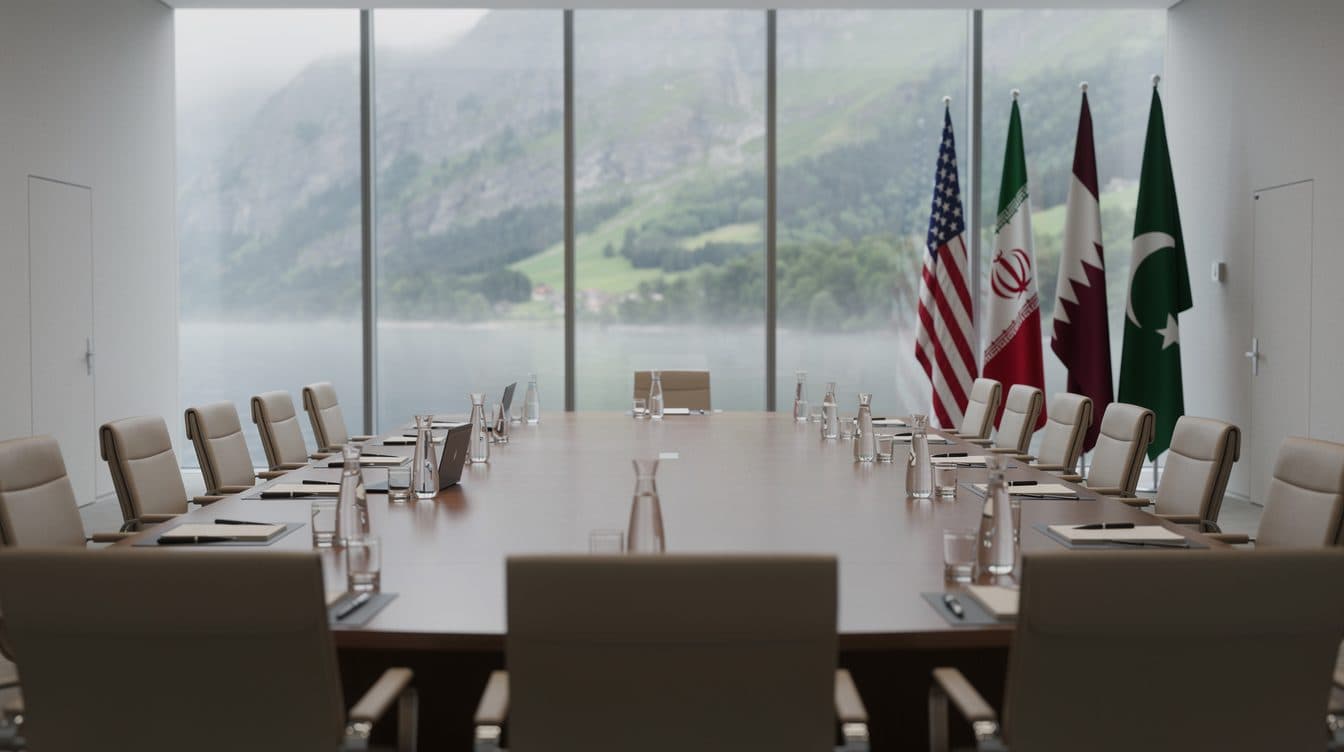
AI-generated image (flux-2/pro-text-to-image via Kie.ai)
Summary
US Special Envoy Steve Witkoff has departed for Switzerland to negotiate a possible nuclear deal with Iran. At the same time, Iranian Foreign Minister Abbas Araghchi is also traveling there, while in Lebanon the ceasefire between Israel and Hezbollah remains fragile.
Bern, 21 June 2026
US Special Envoy Steve Witkoff departed for Switzerland on Sunday to take part in the first round of talks between Washington and Tehran following the signing of the framework agreement, while Iranian Foreign Minister Abbas Araghchi was also expected to arrive on the same day.
Background of the Negotiations
As reported by the US portal Axios and the broadcaster CNN, citing a US official, the US government's special envoy, Steve Witkoff, has traveled to Switzerland. The first round of talks on a possible agreement is to take place there. The talks had originally been planned for Friday but were postponed.
It remains unclear when the first round of talks following the signing of the framework agreement between the US and Iran will actually take place. Axios reports that the Iranians initially wanted to continue waiting to see whether a new ceasefire between Israel and Hezbollah holds. The US news portal Axios cited an informed source saying that Iranian Foreign Minister Abbas Araghchi plans to arrive today.
Earlier, according to Axios, US negotiator Jared Kushner had also arrived in Switzerland. Kushner is the son-in-law of US President Donald Trump. He is one of the central figures in the US negotiations with Tehran and had already been involved in diplomatic talks in the preceding months.
Situation in Lebanon Remains Fragile
The trip comes against the backdrop of renewed mutual attacks between the Israeli army and the pro-Iranian Hezbollah militia in Lebanon. Israeli media reported on Saturday evening, citing the military, that the Israeli army was halting its attacks in Lebanon outside a "security zone" it had unilaterally declared. During the night, there were apparently still Israeli attacks on targets in the neighboring country: five people were killed, according to the state Lebanese news agency NNA.
According to US sources, the ceasefire in Lebanon had been negotiated on Friday. However, Israel and Hezbollah accused each other of breaking the agreement. Lebanese media reported at least 35 dead following Israeli airstrikes. The fragile situation in the border area thus remains a decisive factor for the timetable of the nuclear talks.
Economic Leverage and Maritime Shipping
This delegation was to "monitor and enforce compliance with the other side's obligations under the agreement," said Iranian Foreign Ministry spokesman Bagahei. The framework agreement was signed on Wednesday and provides for a 60-day negotiation phase. The negotiated framework agreement stipulates that Iran may not charge any fees during the 60-day negotiations.
Trump now emphasized that, from the US perspective, Iran would not collect any fees for passage – neither during the 60-day negotiations nor afterward. This position refers to the Strait of Hormuz, one of the most important sea routes for global oil trade. Trump also threatened a US toll in the Strait of Hormuz should no final peace agreement be reached.
The closure of the Strait of Hormuz would be a "first step." Further steps would follow in the event of "a continuation of aggression," in order to "force the enemy to comply with its obligations." These threats underscore the pressure the US government is exerting on Tehran to extract concessions in the negotiations.
US Military Presence in the Region
According to US Central Command (Centcom), the military remains on the ground to ensure that all provisions of the framework agreement are "adhered to, complied with, and fully implemented." Ship traffic increased on Saturday, "while US forces continued to operate in this area to maintain freedom of navigation," it said. The US military presence in the region thus remains an essential component of the agreement.
The US could then have its services as the region's "guardian angel" paid for. This assessment from diplomatic circles illustrates how the US wants to strategically use its role as mediator and guarantor of regional security. In return for securing the shipping routes, the US apparently expects concessions in the nuclear dispute.
Diplomatic Perspectives and Challenges
US Vice President JD Vance also commented on the ongoing developments. "I think we will hopefully make progress on the nuclear issue and also advance the ceasefire in Lebanon," said the deputy to US President Donald Trump. "That is something we must continuously work on to ensure that both Israel and Lebanon are safe," he continued. "These are the two big issues I think we should focus on." In Lebanon, the situation is "improving," according to Vance.
The negotiations in Switzerland thus face a dual challenge: on the one hand, progress must be made on the Iranian nuclear program; on the other hand, the fragile security situation in the Middle East remains a constant source of uncertainty. In recent weeks, Iran has repeatedly stressed that its nuclear program serves exclusively peaceful purposes, while the US and European allies continue to fear that Tehran could pave the way to the atomic bomb.
With the arrival of Witkoff and the planned arrival of Araghchi, the diplomatic initiative is taking concrete shape. The coming days will show whether the first round of negotiations can take place as planned or whether the unstable situation in Lebanon will force further delays. Both sides have an interest in not letting the fragile peace process come to a complete standstill.
The talks are taking place in a geopolitically highly sensitive environment. In addition to the nuclear dispute and the Lebanon crisis, economic sanctions against Iran and relations with regional actors also play a central role. The upcoming negotiations will therefore decide not only the fate of the Iranian nuclear program, but also the future distribution of power in the Middle East.
This news was broadcast on 21.06.2026 on Deutschlandfunk. The reporting illustrates the international attention the negotiations are receiving and underscores the importance of diplomatic efforts to achieve a peaceful resolution of the conflict.
Questions & Answers
Who is Steve Witkoff and what role does he play in the Iran talks?
Steve Witkoff is the special envoy of the US government and departed for Switzerland on Sunday to take part in the first round of talks between the US and Iran following the signing of the framework agreement.
Why have the talks between the US and Iran been postponed?
The talks were originally scheduled for Friday but were postponed. According to Axios, the Iranians initially wanted to wait and see whether the new ceasefire between Israel and Hezbollah holds.
What does the framework agreement between the US and Iran provide for?
The framework agreement, signed on Wednesday, provides for a 60-day negotiation phase during which Iran may not charge any fees for passage through the Strait of Hormuz.