US intensifies pressure on Iran with strike waves and threats against infrastructure
Washington/Tehran, 16 July 2026
AI-generated image (z-image via Kie.ai)
Summary
The US armed forces have flown three strike waves against Iran within 24 hours and simultaneously reimposed a naval blockade on Iranian ports. US President Donald Trump threatened the destruction of power plants and bridges, but also stated that Iran wants a deal.
Washington/Tehran, 16 July 2026
The US armed forces flew multiple strike waves against targets in Iran on Wednesday and overnight into Thursday, while simultaneously reimposing a naval blockade on Iranian ports, as US President Donald Trump threatened the destruction of power plants and bridges.
According to the US military, it was the third strike wave within 24 hours. The first wave had begun the day before, the second launched at 3:00 PM US Eastern Time (9:00 PM CEST), and another followed overnight into Thursday. According to US Central Command (Centcom), the strikes targeted Iranian military capabilities used to threaten ships in the Strait of Hormuz.
Three strike waves within 24 hours
On Thursday morning, the US military declared the overnight strike wave complete. The US military had previously announced it had finished a 90-minute strike wave against Iran. According to Centcom, the strikes targeted Iranian coastal defense installations and missile positions.
The strikes shook parts of the country's north for the first time since the start of the current fighting over control of the Strait of Hormuz. Reports indicated explosions in the port city of Chabahar, in Rask in the far southeast, near Bandar Abbas on the Persian Gulf, in Ahvaz in the southwest, and in the vicinity of the capital Tehran.
The Iranian state news agency Irna reported, citing a local official, that four locations on the outskirts of Ahvaz had been hit. Attacks were also reported in Semnan Province, home to ballistic missile production and the Iranian space program, according to Iranian state media. In Tehran, a propaganda poster showed Donald Trump in a coffin.
Targets in Iran and casualty figures
According to Iranian authorities, more than 35 people have been killed and over 300 others injured in Iran by the latest US strike waves. According to Iranian health authorities, more than 260 people have been injured by US strikes since the latest escalation.
Shortly after the new strike wave began, sirens sounded once again in the US-allied Gulf states of Kuwait and Bahrain, and explosions could be heard. The Kuwaiti military announced on platform X that air defenses had been activated due to drone attacks. Kuwaiti forces said they had intercepted four cruise missiles and 21 drones that had entered the country's airspace on Wednesday.
The Jordanian military said it intercepted eight missiles fired by Iran on Thursday. The military announced this through the state Jordanian news agency Petra. Iran had responded with missile and drone attacks on Bahrain and Kuwait before dawn on Thursday.
Retaliatory strikes in Kuwait and Bahrain
Bahraini authorities called on the population to remain calm and seek shelter. Both Kuwait and Bahrain have been repeatedly targeted by Iranian retaliatory attacks during the course of the war.
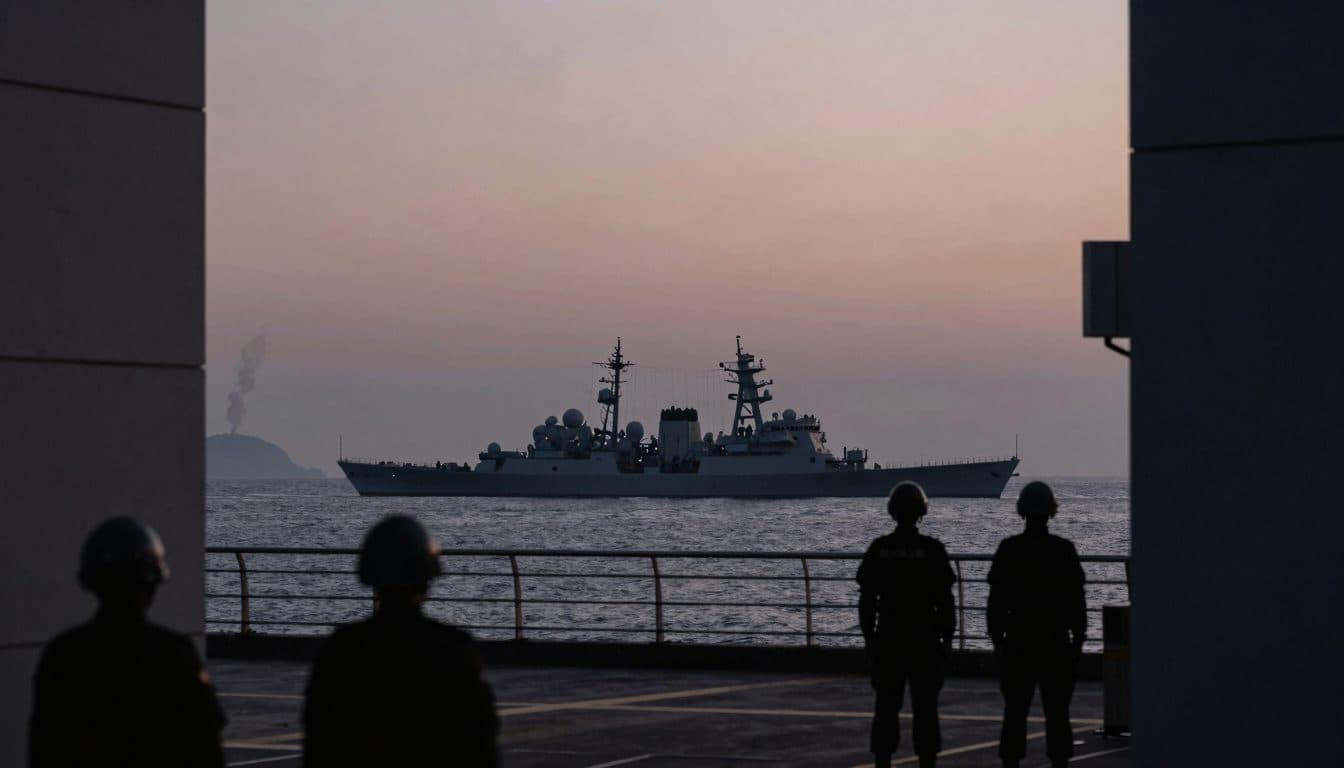
The US military had reimposed a naval blockade on Iranian ports on Tuesday. Within the first 24 hours of the renewed blockade, US forces had redirected two commercial ships that had attempted to break through the blockade, according to US sources. During the earlier blockade, the US military had redirected more than 140 ships and disabled nine ships whose crews had refused to cooperate.
Naval blockade and attack on the oil tanker
On Wednesday, the US military attacked an empty oil tanker that was en route to an Iranian port on the Persian Gulf, according to Centcom. It disabled the Curaçao-flagged oil tanker Belma en route to Charg Island. After the ship ignored multiple warnings, the military fired Hellfire missiles at the tanker's funnel, rendering it inoperable.
Contact was also made with two other commercial ships. They complied with instructions and changed course. On Wednesday – the first day after the renewed US naval blockade against Iran – only seven ships passed through the Strait of Hormuz, down from 13 the day before.
Trump's threats against power plants and bridges
US President Donald Trump threatened attacks on power plants and bridges in Iran in an interview with the US network «Fox News», "unless they (the Iranians) come to the negotiating table and negotiate." At the same time, Trump announced heavy attacks in the coming nights. Trump had also threatened attacks on the complex at Kuh-e Kolang south of the Natanz nuclear facility in central Iran, also known as "Pickaxe Mountain."
On Wednesday, Trump said Iran wants "absolutely" a deal to end the fighting. Trump said: "Ihnen gefällt nicht, was wir tun, und sie wollen eine Einigung erzielen. Wir werden sehen, ob wir uns mit ihnen einigen oder die Sache einfach zu Ende bringen." At a security conference at the Army War College in the state of Pennsylvania, Trump said the US is doing very well in dealing with Iran and added that the Islamic Republic is "derzeit nicht glücklich".
Shortly after the US military's announcement on Wednesday evening, President Donald Trump declared that Iran is ready for a peace agreement. Trump said the fighting would continue "bis ich sage, dass es genug ist." When asked by a reporter whether he is giving Iran an ultimatum before the US military bombs bridges, Trump replied: "Ich mag es nicht, Fristen zu setzen."
The options being considered in Washington include, according to the Wall Street Journal, citing US officials, an expansion of airstrikes, the deployment of ground troops to take Iranian islands near the Strait of Hormuz, and the bombing of the "Pickaxe Mountain" nuclear facility. According to the report, Trump is inclined to expand the military operation but has not yet made a final decision on next steps.
Release of US citizen Dena Karari
In parallel with the military steps, Trump announced on Truth Social the release of a US citizen who had been held in Iran since the end of 2024. Trump wrote: "Die Vereinigten Staaten von Amerika wissen diese Geste des guten Willens seitens des Irans zu schätzen!" Trump provided no further details about the woman, saying only that she is outside the country and is safe.
Human rights attorney Jared Genser identified the released woman as his client Dena Karari. The US-Iranian national heads a nonprofit organization and had been charged with espionage in Iran. Iran did not initially confirm the release. Karari's case had also not previously been publicly known.
Iran's response and the warning of an energy stop
Iranian Parliament Speaker and chief negotiator Mohammed Bagher Ghalibaf said Iran is prepared for a broader military confrontation if the US does not honor the terms of the framework agreement. Tehran does not adhere to a US agreement without its own benefit. The Iranian Revolutionary Guards also threatened to stop all energy exports from the Middle East in response to the naval blockade. The export of oil and gas from the region will either be possible for everyone – or for no one.
A prominent Iranian politician has called on his country to be prepared for a years-long war with the US. Analysts also point out that Iran has signaled it could use its allied Houthi militias in Yemen to block the Bab al-Mandab strait at the entrance to the Red Sea.
UN Secretary-General António Guterres expressed "zutiefst besorgt" about the ongoing military escalation in the region and called on all parties to take immediate de-escalation steps and return to dialogue and diplomacy. Guterres warned of "katastrophale Konsequenzen" if hostilities resume in full, and reiterated the demand that freedom of navigation through the Strait of Hormuz must be ensured.
Questions & Answers
What has the US military done against Iran?
The US military has flown three strike waves against Iranian coastal defense installations and missile positions within 24 hours and reimposed a naval blockade on Iranian ports on Tuesday.
Who is the released US citizen Dena Karari?
According to her attorney Jared Genser, the released woman is the US-Iranian Dena Karari, who heads a nonprofit organization and had been held in Iran on espionage charges since the end of 2024.
How has Iran responded to the US attacks?
Iran responded with missile and drone attacks on Bahrain and Kuwait before dawn on Thursday; at the same time, the Revolutionary Guards threatened to stop all energy exports from the Middle East.
US attacks Iran: blockade, strikes, Trump threats | allfacts360