Trump threatens Iran with attacks on power plants and bridges
Washington/Tehran, July 15, 2026
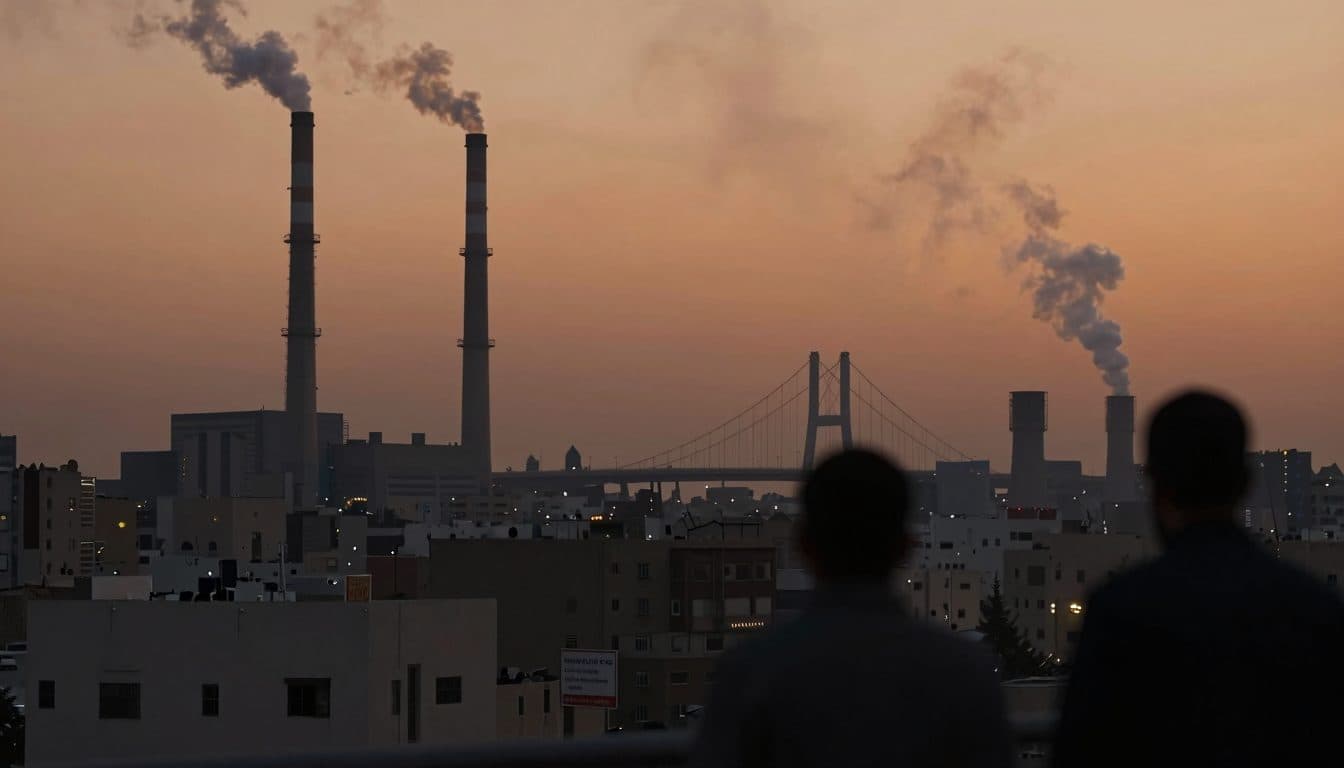
AI-generated image (z-image via Kie.ai)
Summary
US President Donald Trump once again threatened Iran in an interview with Fox News with the destruction of civilian infrastructure. At the same time, the US military flew another 90-minute wave of strikes on Iranian positions, while Iranian Revolutionary Guards fired on targets in Bahrain, Kuwait, and Jordan.
Washington/Tehran, July 15, 2026
US President Donald Trump once again threatened Iran in a television interview with the network Fox News with attacks on power plants and bridges if Tehran does not return to the negotiating table.
"Next week it will be really bad for them, because next week it's the power plants and bridges," Trump said in the interview. He added: "We will shut down all of their power plants. Next week it's the bridges' turn." Asked how long the US airstrikes in Iran would continue, Trump replied: "They will continue until I say it's enough."
According to the German Press Agency's count, the threats mark at least the tenth public threat Trump has made against Iran since the beginning of the year. As early as April, Trump had threatened to destroy all of the country's bridges and power plants within a matter of hours. A dpa review of its own archive turned up at least nine further statements since January 2026 in which the US president threatened the destruction of Iranian infrastructure or of the country as a whole.
Trump's Threat Posture: Attacks on Civilian Infrastructure
A few hours before the interview, US Central Command (Centcom) had completed a new 90-minute wave of strikes on Iran. According to Centcom, the strikes were intended to "further weaken Iranian military capabilities being used to attack commercial ships in the Strait of Hormuz." The "American armed forces are vigilant, powerful, and ready to act," the regional command stated on the online service X.
From Tehran, it was reported that more than 260 people were injured in the shelling overnight. According to government figures, at least 30 people were killed in the south of the country in recent days. According to the US military, the operation began at 4:00 p.m. US Eastern Time (10:00 p.m. CEST). Currently, "more than 20 US Navy warships and hundreds of military aircraft are deployed throughout the Middle East," Centcom added.
Military Escalation: US Wave of Strikes and Iranian Retaliation
The US and Israel had begun the war against Iran on June 28. In mid-June, the US and Iran had signed a framework agreement under Pakistani mediation that was to lead to a final peace agreement within 60 days. Following the resumption of US strikes on Monday, Iranian Deputy Foreign Minister Kazem Gharibabadi accused the US of having "dismantled" the framework agreement negotiated between the two countries with the new naval blockade and the resumption of military measures.
"With the resumption of military and aggressive measures against the Islamic Republic of Iran, the US has violated the declaration of intent in a fundamental way," Gharibabadi said in an interview with the Iranian online platform "YJC." The United States is "the aggressor, not the victim," he said, according to state-run Iranian radio.
In response to the US attacks, the Iranian Revolutionary Guards fired missiles and kamikaze drones at targets in Bahrain and Kuwait, as well as in Jordan, more than 1,000 kilometers away. According to news agencies, Jordan declared that it had shot down three Iranian missiles. The Revolutionary Guards at the same time affirmed that the Strait of Hormuz would remain closed "until the United States ends its aggressions."
Strait of Hormuz: Blockade and Energy Threats
The Iranian elite unit of the Revolutionary Guards declared through the official news agency Irna that regional energy exports would "either be shared by all or denied to all." Energy exports are "either for everyone or for no one," a statement said overnight. With this, Tehran expanded its threats against neighboring states on the Persian Gulf.
The US had imposed a naval blockade against Iranian ports on Monday, involving 20 US Navy warships. On Tuesday, however, Trump surprisingly distanced himself from a previously announced plan to levy a toll of 20 percent of cargo value for passage through the Strait of Hormuz. The US had originally intended to introduce a 20 percent fee on ship cargo through the strait, it was said.
Diplomatic Crisis: Framework Agreement Under Pressure
Iranian Deputy Foreign Minister Gharibabadi accused the US on Tuesday of having "dismantled" the framework agreement negotiated between the two countries with the new naval blockade. US Treasury Secretary Scott Bessent announced on the online service X that his department had frozen assets worth $130 million (approximately 114 million euros) that were "held in several digital wallets linked to the Iranian central bank."
Meanwhile, the news portal "Axios" reported that Trump had held a crisis meeting on Tuesday to discuss a massive offensive against Iran. Similar attacks had already taken place on previous nights. In southern Lebanon, the Israeli army blew up further houses according to reports, while four people were reported killed in a new Israeli attack on a clinic in the Gaza Strip.
The US had announced with the resumption on Monday that "fair and open" access to the Strait of Hormuz should be possible for other countries. The background is the conflict that has been simmering for weeks over control of the strategically important strait through which a significant share of global oil transport flows. The Iranian leadership had repeatedly threatened to fully close the strait in the event of a conflict.
Outlook: Further Attacks and Closed Trade Routes
Iranian health authorities said more than 260 people had been injured by US attacks since the latest escalation. The wave of strikes the previous night had lasted 90 minutes, Centcom said. According to the US, the US flew airstrikes in several waves, with the operation directed against military targets being used to attack commercial ships in the strait.
The news was broadcast on July 15, 2026 on the program Deutschlandfunk. According to the German Press Agency, the US government is meanwhile preparing further attacks, with no end to the operation in sight. Trump had already stated the previous day that the attacks would continue "until I say it's enough."
International observers assess the renewed threats as a sign of a further escalation in the conflict between Washington and Tehran. The parallel diplomatic channels, including the Pakistani mediation, are considered by diplomats to be under heavy strain. A return to the negotiating table appears unlikely from today's perspective as long as the fighting continues.
Questions & Answers
What specifically has Donald Trump threatened Iran with?
In an interview with Fox News, Trump announced that the US would destroy all power plants and bridges in Iran in the coming week if Tehran does not return to the negotiating table.
What is the current situation in the Strait of Hormuz?
The US Navy has established a blockade of Iranian ports with 20 warships, while the Iranian Revolutionary Guards have announced the closure of the strait until the US ends its attacks.
Are there still diplomatic efforts between the US and Iran?
In mid-June, both sides had signed a framework agreement under Pakistani mediation that was to lead to a peace agreement within 60 days; after the resumption of US attacks on Monday, Iran accuses Washington of having broken this agreement.
Trump threatens Iran with attacks on power plants and | allfacts360