U.S. Strikes Iran Targets as Nuclear Talks Stall | allfacts360
U.S. Strikes Iranian Missile Sites and Boats in Strait of Hormuz Despite Ceasefire
Washington, D.C., 26 May 2026
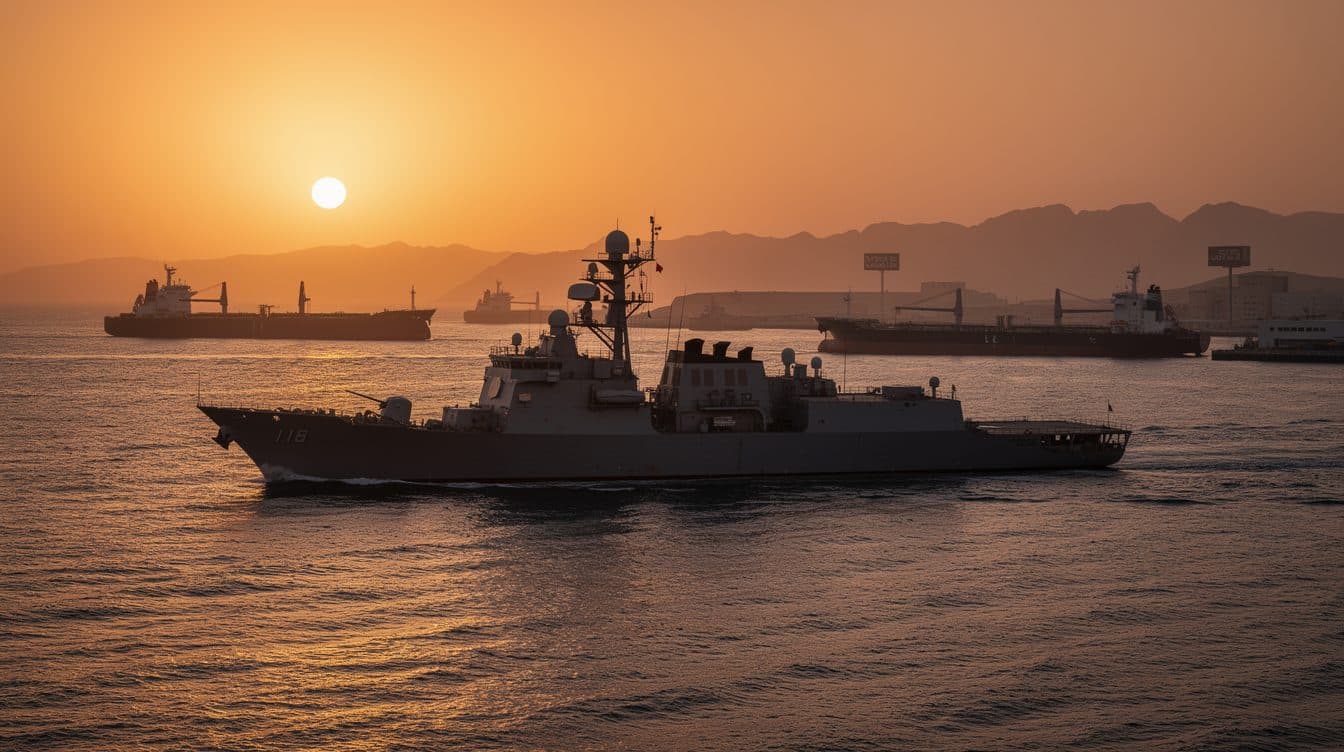
AI-generated image (flux-2/pro-text-to-image via Kie.ai)
Summary
The U.S. military attacked Iranian missile positions and boats laying mines in the Strait of Hormuz overnight Monday, calling the strikes self-defense. The operation comes amid a fragile ceasefire and ongoing negotiations over Iran’s nuclear program.
Washington, D.C., 26 May 2026
U.S. forces conducted airstrikes on Iranian missile installations in southern Iran and targeted boats attempting to mine the Strait of Hormuz late Monday, describing the actions as self-defense measures while a ceasefire and nuclear diplomacy remain underway.
A spokesman for U.S. Central Command (CENTCOM), Tim Hawkins, said the latest “Angriffe zur Selbstverteidigung” served to protect troops from threats posed by the Iranian military. The strikes hit missile positions in southern Iran and several boats in the strategic waterway that the U.S. said were laying mines.
Iranian media reported multiple fatalities following an attack near Larak Island in the Strait of Hormuz, but the U.S. military has not yet provided information on possible casualties and gave no further details on the specific targets. The Pentagon emphasized that its forces were exercising “Zurückhalten” given the ceasefire that has been in place since early April.
Escalation Despite Truce
The overnight operation marks the third round of mutual attacks around the Strait of Hormuz in recent weeks. In early May, Iran struck U.S. military ships with rockets and speedboats, and the U.S. responded by hitting targets on the Iranian mainland.
Despite these exchanges, the ceasefire is largely holding. U.S. President Donald Trump has not commented on the latest strikes, but his shifting statements on nuclear negotiations have injected uncertainty into the diplomatic track.
Over the weekend, Trump had announced that a framework agreement with Iran was “weitgehend” negotiated. Hours later, on his Truth Social platform, he dampened hopes, writing that he had instructed his representatives not to conclude a “übereilte” deal. “Wir werden sehen, ob es dabei Fortschritte gibt,” he added.
Trump’s Mixed Signals on Iran Deal
Trump also set conditions for Iran’s enriched uranium stockpile: it must either be handed over “sofort” to the United States for destruction there, or be destroyed in cooperation with Iran on site or elsewhere. He referenced the “Atomenergie-Kommission” in that context. Central to the talks is the handling of approximately 400 kilograms of highly enriched uranium held by Tehran.
Israeli Prime Minister Benjamin Netanyahu said Sunday that he and Trump agreed in a phone call the previous day “dass jedes endgültige Abkommen mit dem Iran die nukleare Gefahr beseitigen muss.” Israel has long insisted that any deal must eliminate Iran’s nuclear threat entirely.
Secretary of State Marco Rubio weighed in on the military strikes, stressing that the Strait of Hormuz “müsse ‘so oder so’ offen bleiben.” He called Iran’s actions in the critical passage “rechtswidrig und illegal – es ist für die Welt untragbar und nicht akzeptabel.”
The U.S. characterization of the airstrikes as self-defense was deliberate. SRF USA correspondent Barbara Colpi noted that the U.S. wanted to emphasize that it was not fundamentally violating the ceasefire – “mit dieser Wortwahl wollten die USA einerseits betonen, dass sie die Waffenruhe nicht grundlegend verletzten, und somit eine Eskalation verhindern” – while simultaneously increasing pressure on Iran.
Colpi added that such attacks worsen the diplomatic situation in the short term but also raise pressure to force Iran to the negotiating table: “Solche Angriffe würden zwar kurzfristig die diplomatische Lage verschlechtern, jedoch erhöhten sie auch den Druck, um den Iran an den Verhandlungstisch zu zwingen.”
A Self-Defense Narrative
According to Colpi, the U.S. is sending “ein klares Signal” with the operation. However, the American political line remains ambiguous. “Die politische Linie der USA ist nicht immer klar,” she said.
Iran still holds significant leverage through its control over the Strait of Hormuz, a choke point for global oil shipments. Colpi noted: “Das ändere nichts daran, dass der Iran mit der Strasse von Hormus nach wie vor am stärkeren Hebel sei.”
Concurrently, a high-ranking Iranian delegation arrived in Qatar for renewed peace negotiations. The U.S. news website Axios reported that a possible extension of the ceasefire by 60 days is under discussion, building on the current truce that began in April.
The CENTCOM spokesman reiterated that the U.S. military’s posture remains one of restraint. “Bei den Luftangriffen habe es sich um ‘Selbstverteidigungsmaßnahmen’ gehandelt,” Hawkins said, underscoring the defensive framing.
Diplomacy on a Knife Edge
The U.S. military says its forces in the region have been repeatedly threatened by drone and rocket attacks, mostly by Iran-backed militias. “Die Luftschläge seien deshalb eine direkte Reaktion gewesen, um solche Angriffe zu stoppen und weitere zu verhindern,” Colpi explained, citing U.S. officials.
The overnight strikes were not preceded by a public presidential order. Trump’s last direct comment on Iran focused on the nuclear file, leaving the military action without an immediate political narrative from the White House.
Regional analysts view the situation as a tightrope between limited force and all-out confrontation. The U.S. aims to degrade immediate threats without collapsing the diplomatic framework, but each exchange risks miscalculation.
The Strait of Hormuz, through which about one-fifth of global oil passes, has seen a pattern of tit-for-tat since early May. The mining attempt targeted by the U.S. strikes would have further escalated the danger to commercial shipping.
Strait of Hormuz Flashpoint
Iran has not yet officially responded to the latest strikes beyond state media reports of deaths. The coming hours will be critical to gauge whether the ceasefire can absorb this round of violence or if the diplomatic track in Qatar will be derailed.
Questions & Answers
Why did the U.S. attack Iran during a ceasefire?
The U.S. described the strikes as self-defense, saying its forces faced repeated drone and rocket threats from Iran-backed militias and that the action was a direct response to prevent further attacks.
What is the status of the Iran nuclear negotiations?
President Trump said a framework deal was largely negotiated but then warned against a rushed agreement, while Secretary Rubio insisted any final deal must end Iran’s nuclear threat.
What happened near Larak Island in the Strait of Hormuz?
Iranian media reported multiple fatalities after a U.S. attack there, but the U.S. military has not confirmed casualties or provided further details about the specific incident.