
Washington, 21 May 2026

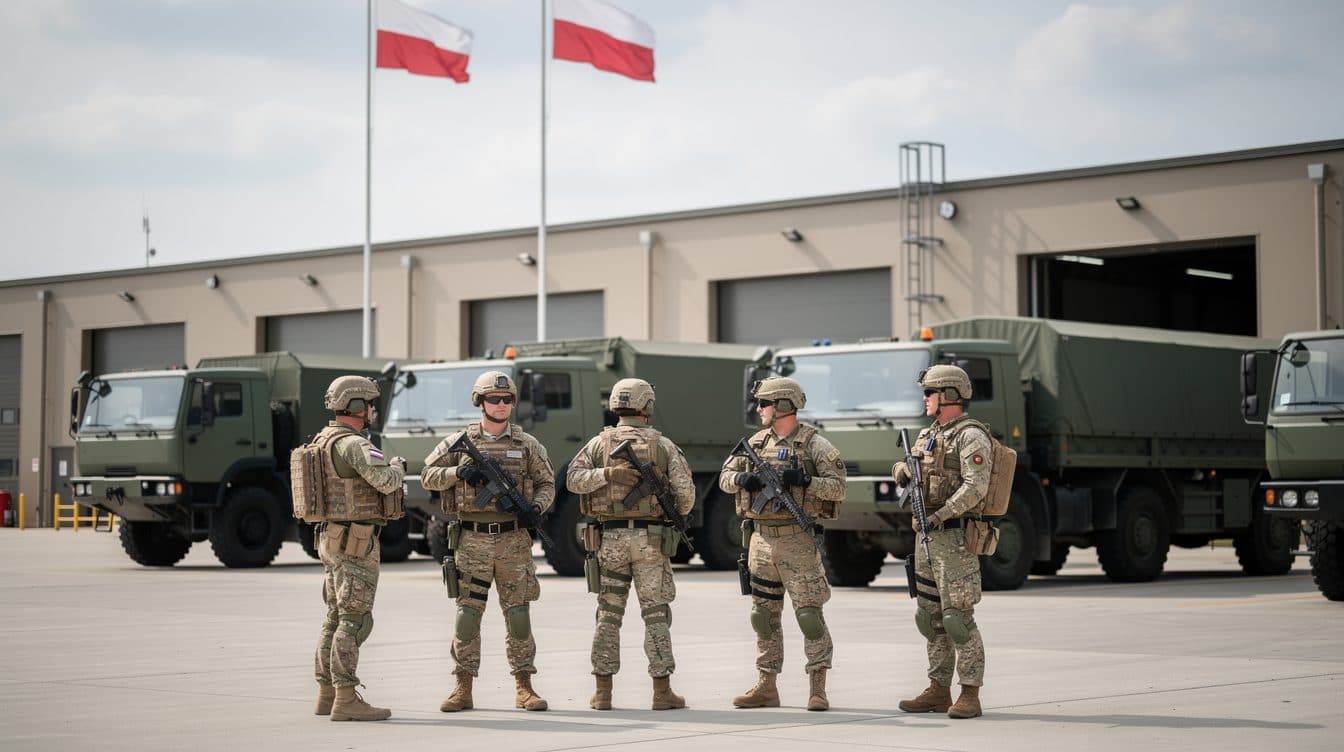
US President Donald Trump announced late Friday night that the United States will send 5,000 additional troops to Poland, marking a reversal of previous plans to reduce American military presence in Europe.

The announcement, made on Trump's Truth Social platform, cited the recent election of Polish President Karol Nawrocki as motivation for the deployment. "Based on the successful Election of the now President of Poland, Karol Nawrocki, who I was proud to Endorse, and our relationship with him, I am pleased to announce that the United States will be sending an additional 5,000 Troops to Poland," Trump wrote.

This decision comes just weeks after the Pentagon canceled the deployment of 4,000 troops to Poland and announced plans to withdraw 5,000 troops from Germany. The German withdrawal was seen as retaliation for Chancellor Friedrich Merz's criticism of Trump's Iran policy.

The latest move creates confusion about US military strategy in Europe, where Congress has mandated maintaining at least 76,000 troops. Currently, there are approximately 80,000 US troops stationed across Europe.

NATO allies expressed surprise at the sudden policy shift. Don Bacon, a Republican congressman from Nebraska, called the earlier cancellation of Polish deployments "reprehensible" and "an embarrassment to our country" during a congressional hearing.

Polish officials offered mixed reactions. Prime Minister Donald Tusk welcomed "Washington's declaration that Poland will be treated as it deserves," while Foreign Minister Radosław Sikorski noted the troop numbers would remain "more or less on the previous level."

The announcement came as Secretary of State Marco Rubio prepared to meet with NATO counterparts in Sweden, where allies have questioned the Trump administration's inconsistent policies on European defense.

Retired diplomat Ian Kelly criticized the decision-making process: "There seems to be no process to deliberating policies like troop withdrawals and deployments at the top. These are impulsive decisions based on Trump's whims or what his advisors think are Trump's whims."

What's new since May 22

What's new since May 22

The overnight announcement marks a complete reversal from previous Pentagon plans to reduce troop levels in Europe. Just last week, Defense Secretary Pete Hegseth canceled the rotation of 4,000 troops to Poland, surprising NATO allies.

Trump's latest decision to send additional troops rather than reduce them appears motivated by personal politics rather than strategic considerations, citing his endorsement of Poland's new president as the primary reason.

The move comes amid growing tensions within NATO over burden-sharing and defense strategy. While European allies have increased defense spending in recent years, the Trump administration continues to push for greater contributions.

NATO's shifting landscape

NATO's shifting landscape

The current US troop presence in Europe stands at about 80,000, down dramatically from the Cold War peak of 475,000. The Pentagon has signaled plans to further reduce automatic commitments to European defense.

NATO's traditional "one for all, all for one" principle under Article 5 appears increasingly strained. The Council on Foreign Relations estimates that replacing US security guarantees could take years and cost billions.

Some experts suggest alternatives like the UK-led Joint Expeditionary Force with Scandinavian and Baltic partners could provide partial solutions. However, these lack the comprehensive capabilities of NATO's current structure.

Political reactions

Political reactions

Democratic and Republican lawmakers alike have criticized the administration's erratic troop movements. Many see the changes as sending mixed signals to both allies and adversaries like Russia during the ongoing Ukraine conflict.

At NATO meetings in Sweden, allies expressed frustration with the unpredictability of US policy. "How every alliance, this one must also benefit all who are in it," Rubio told counterparts, while also expressing disappointment with allies.

Strategic implications

European officials emphasized NATO unity despite the tensions. German Deputy Government Spokesman Steffen Meyer stated: "Our message is clear: Our alliance is rock solid and we stand together."

Strategic implications

The troop movements raise questions about long-term US commitment to European security. While nuclear weapons remain stationed in several NATO countries, the conventional force reductions concern many allies.

Norwegian Foreign Minister Espen Barth Eide suggested the reductions might happen gradually: "I assume that the US reduction will not happen tomorrow, but over time and in line with European rearmament."

The developments come as NATO prepares for a major summit in Ankara in July, where leaders hope to address these challenges and develop what some are calling "NATO 3.0" - a new framework for alliance cooperation.