USA and Iran Agree on Roadmap for Peace Agreement in Switzerland
Lucerne, 22 June 2026
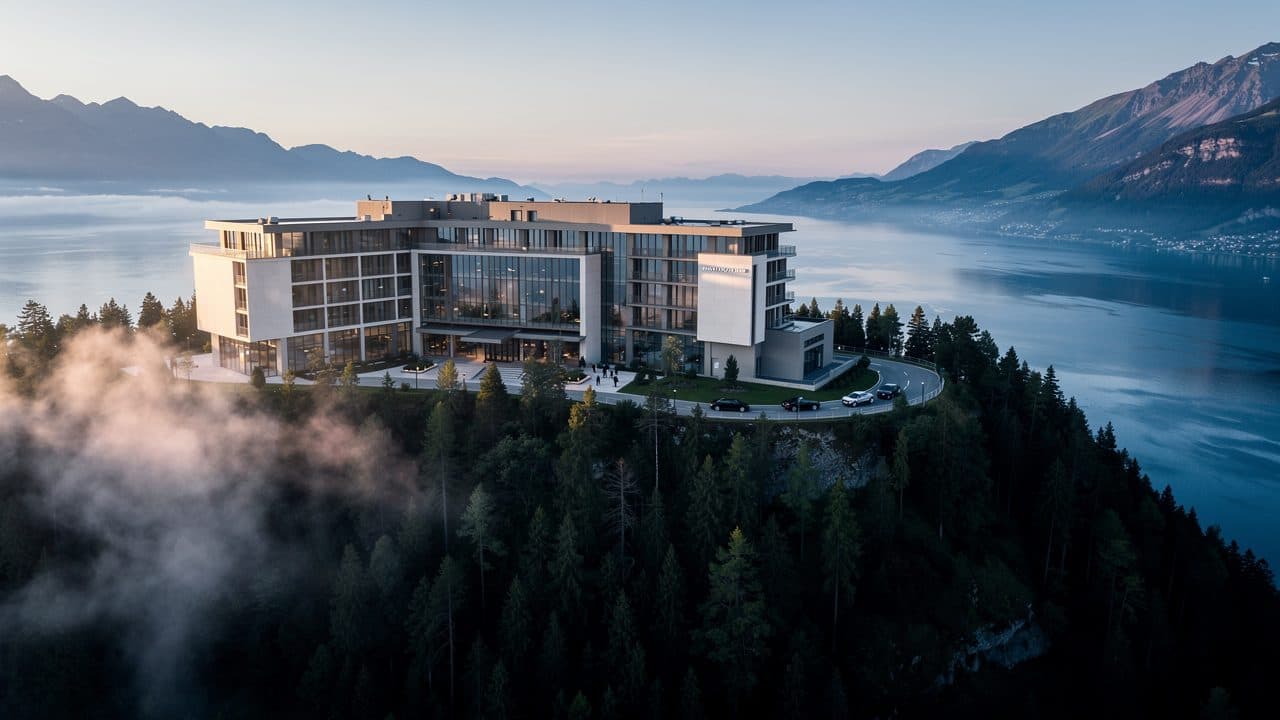
AI-generated image (flux-2/pro-text-to-image via Kie.ai)
Summary
After 18 hours of negotiations in Switzerland, the USA and Iran have agreed on a roadmap for a peace agreement. The goal is a "final agreement" within 60 days; mediators Qatar and Pakistan spoke of encouraging progress.
Lucerne, 22 June 2026
The USA and Iran have agreed, after an initial round of negotiations in Switzerland, on a roadmap for a comprehensive peace agreement that is to lead to a "final agreement" within 60 days.
After 18 hours of talks at the highest level, mediators Qatar and Pakistan announced the conclusion of the first round in the early hours of Monday morning, as the dpa-AFX report from Lucerne records. The delegations of the USA and Iran had begun the negotiations on Sunday at a luxury hotel on the Bürgenstock above Lake Lucerne.
The result is a jointly formulated roadmap: within 60 days, the parties to the conflict are to reach a "final agreement." In addition, immediately following the high-level round, negotiations are to continue at the working level. This wording is taken from the statement disseminated by Qatar on the X platform.
Roadmap with 60-Day Deadline and Working Groups
At the core of the understanding is a newly established channel of communication between the warring parties, which is intended to prevent misunderstandings or incidents in the Strait of Hormuz and ensure the safe passage of ships through the strait. Qatar and Pakistan further declared: "Encouraging progress has been made, including the creation of a mechanism for further talks." The talks had taken place in a positive and constructive atmosphere.
The technical talks on implementing the agreements are accordingly to be continued for the remainder of the week at the Swiss luxury resort Bürgenstock. In parallel, working groups are to be set up, including on Iran's nuclear program and on Western sanctions, according to the statement.
Araghchi's Assessment: Progress on Blockade and Sanctions
Abbas Araghchi declared on X that "substantial progress" had been achieved. He expressly praised Pakistan and Qatar for their mediating role. His Esmail Baghaei confirmed to the state news agency Irna that "good progress" had been made.
According to Araghchi, Tehran has also negotiated concrete concessions: the US naval blockade of Iranian ports has been lifted, initial frozen Iranian assets will be released, and Tehran has agreed on exemption permits for oil and petrochemical exports as well as a reconstruction plan. "A major plan for reconstruction in Iran has also been set in motion," said the foreign minister. These details could not initially be independently verified.
Lebanon as the Second Pillar of the Understanding
A second pillar of the understanding concerns Lebanon: the framework agreement between Iran and the USA provides, among other things, for an end to the fighting in southern Lebanon, where there have repeatedly been mutual attacks by the Israeli army and the pro-Iranian Hezbollah militia. "In addition, a forum has been created to ensure compliance with the ceasefire also in Lebanon," according to the statement.
Araghchi described the joint forum for monitoring the ceasefire in Lebanon as the "first real test" of the agreements. It is also planned to set up a kind of conflict resolution unit together with Lebanon in order to end the fighting in the country.
Israel Rejects Parts of the Framework Agreement
However, there is already resistance: Israel strictly rejects the restrictions envisaged in the framework agreement. As ZDF correspondent Reichart reported, one has the impression "that the Israeli government as a whole rejects this framework agreement." The Israeli army will not withdraw from southern Lebanon.
On the US side, the reaction initially also remained restrained. The US side did not immediately comment on the outcome of the first day of negotiations during the night. Vance had previously stated that President Trump had asked "to turn a new chapter in order to change relations with the Iranian people."
Between Stalling and Trump's Threats
According to the Iranian account, the round of negotiations briefly stalled shortly after its start in Switzerland. The Iranian delegation cited threats by Donald Trump of new attacks on Iran as the reason. According to the statement, the Iranian support for the Hezbollah militia in Lebanon was the occasion for the threats.
In the mediators' statement, the USA and Iran are referred to as "warring parties." Against this backdrop, the agreement on a communication channel in the strait is strategically significant, as the Strait of Hormuz is considered one of the most important shipping routes for global oil transport.
Strait of Hormuz: A Fragile Channel
The report also contains a video segment from 19.06.2026 (1:38 min) on the communication channel for safe shipping in Hormuz, as well as another video segment from 20.06.2026 (1:20 min), in which it is said that Iran accuses the USA of not ending the war and has again blocked the Strait of Hormuz. This later report stands in contrast to the agreement on safe shipping and underscores the fragility of what has been achieved.
The roadmap now achieved is therefore above all a schedule: within 60 days, the disputed issues – the nuclear program, sanctions, reconstruction, frozen funds, security in the strait, and the situation in Lebanon – are to be clarified to the point that a "final agreement" can be signed. Whether this timeframe will be met also depends on whether the upcoming working group meetings at the Bürgenstock yield the necessary progress and whether Washington confirms the Iranian statements on the blockade and frozen assets.
Overall, the joint statement by the mediators paints the picture of a diplomatic breakthrough after difficult hours. The participants – Qatar, Pakistan, Switzerland as host, and the parties to the conflict themselves – have visibly committed to keeping the talks from breaking off despite temporary stagnation. The coming days at the Bürgenstock will show whether the roadmap will turn into a viable peace.
Questions & Answers
Who is mediating between the USA and Iran?
Qatar and Pakistan are acting as joint mediators and released the statement on the first round of negotiations in the night to Monday. They spoke of a positive and constructive atmosphere and praised the mechanism achieved for further talks.
What does the roadmap specifically provide for?
Within 60 days, a "final agreement" is to be reached; in parallel, working groups on Iran's nuclear program and on Western sanctions are to be set up, and talks will be continued at the working level at the Bürgenstock.
What role does Lebanon play in the agreement?
The framework agreement provides, among other things, for an end to the fighting in southern Lebanon and provides for the establishment of a forum to monitor the ceasefire, which the Iranian foreign minister described as the "first real test" of the agreements.
USA-Iran Peace Talks: 60-Day Roadmap and Working Groups | allfacts360