Villacher Kirchtag overhauls safety concept ahead of 81st edition
Villach, 10 July 2026
AI-generated image (z-image via Kie.ai)
Summary
Organizers of the Villacher Kirchtag have overhauled the festival's decade-old safety concept in cooperation with police and emergency services. The plan adds live video surveillance, crowd management, and a strict 4 p.m. vehicle ban across the event zone.
Villach, 10 July 2026
Organizers of the Villacher Kirchtag, one of Austria's largest traditional folk festivals, have overhauled the event's decade-old safety concept ahead of the 81st edition, adding live video surveillance, dedicated crowd management and a strict afternoon vehicle ban in the city center.
The new safety framework replaces a concept dating back to 2015 and was developed over several months in close cooperation with the authorities and emergency services. "Hundertprozentige Sicherheit gibt es nicht, aber wir wollen für die bestmögliche Sicherheit sorgen", so Wagner. The overhaul was prompted by a comprehensive risk analysis and is intended to bring prevention, rapid response capability and clear procedures to the forefront during periods of high attendance.
A decade-old plan replaced
Vice-mayor and Kirchtag chairwoman Gerda Sandriesser (SPÖ) said the city had approved 220,000 euros for the preparation of the safety concept and any measures that might prove necessary. "Wie viel davon benötigt wird, werden wir sehen. Aber mit diesem Geld werden auch Anschaffungen getätigt, die in den kommenden Jahren zum Einsatz kommen." The investment is therefore intended not only for this year's festival but also for future editions.
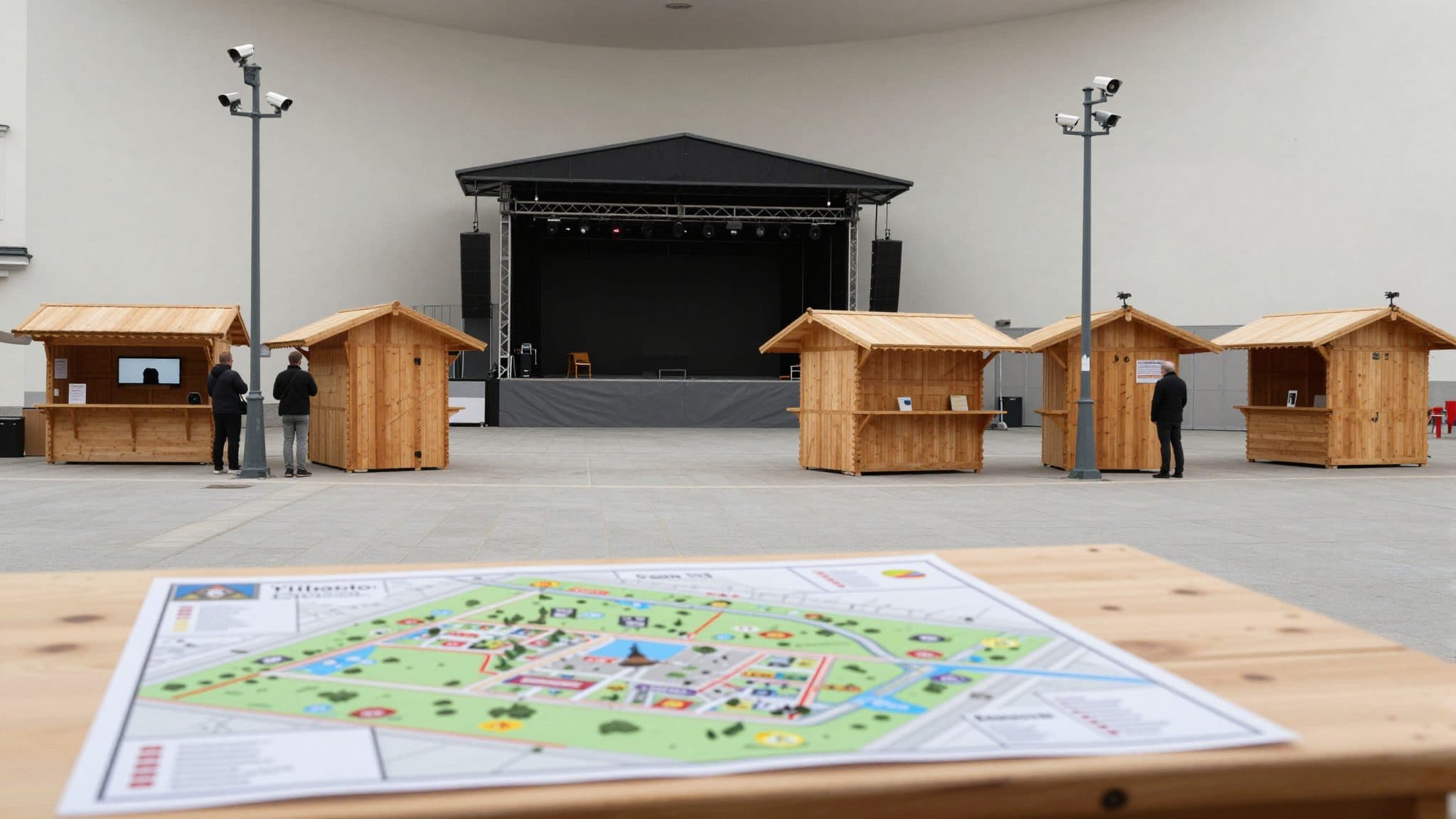
A central element of the new plan is a video surveillance system that allows operators in a central control room to monitor crowd density in real time. "Man sieht von der Zentrale aus Stauungen oder enge Räume und kann dann sofort Sicherheitspersonal hinschicken, um das zu entschärfen", so Wagner. The system is designed to detect bottlenecks and congestion early so that security personnel can be dispatched immediately to defuse potentially dangerous situations.
Live video surveillance from a central hub
Because large numbers of visitors gather in the inner city at peak times, organizers have also introduced a dedicated crowd-management component. Live assessments of pedestrian flows are intended to channel visitors along safe routes and prevent dangerous build-ups. Security expert Herbert Wagner stressed the underlying principle: "Sicherheit bei Großveranstaltungen heißt: Risiken früh erkennen, Besucherströme aktiv managen und im Ereignisfall in Sekunden klar entscheiden."
Police deployment has been scaled up accordingly. On the busiest weekends, up to 100 officers, both in uniform and in plain clothes, will be present on the festival grounds, drawn from across the Carinthian police force. The presence is intended to be visible without being intrusive, allowing officers to respond quickly while preserving the festival's traditional atmosphere.
Police presence scaled up across Carinthia
A strict vehicle ban applies to the event zone from 4 p.m. onwards, mirroring a measure introduced the previous year. The restriction is designed to minimize the risk posed by motor vehicles in areas with very high pedestrian density and to keep escape and access routes clear for emergency services.
Fire safety has also received heightened attention. While no new statutory fire-protection rules have been introduced, Wagner noted that existing regulations are now being applied and checked more rigorously than before. Organizers confirmed that even decorative elements, including the iconic "Kirchtagsherzen" hung throughout the city, have been certified as flame-resistant.
Fire safety in the spotlight
The heightened sensitivity to fire risk comes in the wake of the deadly blaze at a bar in the Swiss resort of Crans-Montana, which killed 41 people. "Wenn etwas passiert, sind wir natürlich hellwach", Wagner said when asked about the impact of that incident on local planning. The Swiss tragedy has sharpened awareness of fire hazards at crowded venues across the Alpine region.
Sandriesser framed the overhaul as a balance between vigilance and atmosphere. "Der Villacher Kirchtag steht für Tradition, Lebensfreude und Begegnung. Sicherheit soll präsent sein, ohne die Stimmung zu beeinträchtigen", she said. "Klare Abläufe, gute Information und ein starkes Team im Hintergrund sind dafür entscheidend." The message from organizers is that visitors should notice the festival's character first and the security apparatus only if it is needed.
Tradition and vigilance in balance
The Kirchtag, held annually in the Carinthian city of Villach, draws hundreds of thousands of visitors over its multi-day run and is widely regarded as one of Austria's largest folk traditions. Its combination of open-air concerts, market stalls and ceremonial processions places unusual demands on urban infrastructure, particularly in the narrow streets of the old town.
Beyond the immediate festival period, the investments are expected to leave a lasting mark on the city's emergency-preparedness infrastructure. The video surveillance network, the crowd-management protocols and the upgraded coordination with police and rescue services are all designed to remain in place and to be activated at future large-scale events in Villach.
A lasting upgrade for the city
Wagner emphasized that the goal is not to eliminate risk, which he said is impossible, but to reduce it to the lowest practicable level and to ensure that any incident can be dealt with within seconds. The combination of prevention, real-time monitoring and clearly defined response chains is intended to give both organizers and visitors a reliable framework for the days ahead.
Officials acknowledged that the new measures will be reviewed after the festival and adjusted for future editions. Sandriesser said the 220,000-euro budget would be assessed against actual expenditure, with any surplus or shortfall informing next year's planning. The process, she added, is intended to be iterative rather than a one-off exercise.
The 81st Villacher Kirchtag is scheduled to open in the coming days, with the busiest weekend expected to draw the largest crowds. Visitors have been advised to follow the directions of stewards and police, to keep emergency exits clear and to report any concerns to the on-site information points distributed throughout the festival grounds.
Questions & Answers
Who is Gerda Sandriesser and what is her role at the Villacher Kirchtag?
Gerda Sandriesser is the vice-mayor of Villach and serves as chairwoman (Kirchtagsobfrau) of the festival. She announced the 220,000-euro budget for the new safety concept and framed the overhaul as a balance between vigilance and atmosphere.
Why was the safety concept for the Villacher Kirchtag overhauled?
The previous concept dated back to 2015 and was revised after a comprehensive risk analysis carried out with authorities and emergency services. Organizers also cited heightened awareness of fire risks following the deadly blaze in Crans-Montana, Switzerland.
What are the main elements of the new safety plan?
The plan introduces live video surveillance monitored from a central hub, dedicated crowd management to steer pedestrian flows, a strict vehicle ban in the event zone from 4 p.m., and a police presence of up to 100 officers on the busiest weekends.
Villacher Kirchtag 2026: new safety plan, video surveillance | allfacts360