War in the Middle East pushes oil price above $91 and blocks the Strait of Hormuz
Amsterdam, 20 July 2026
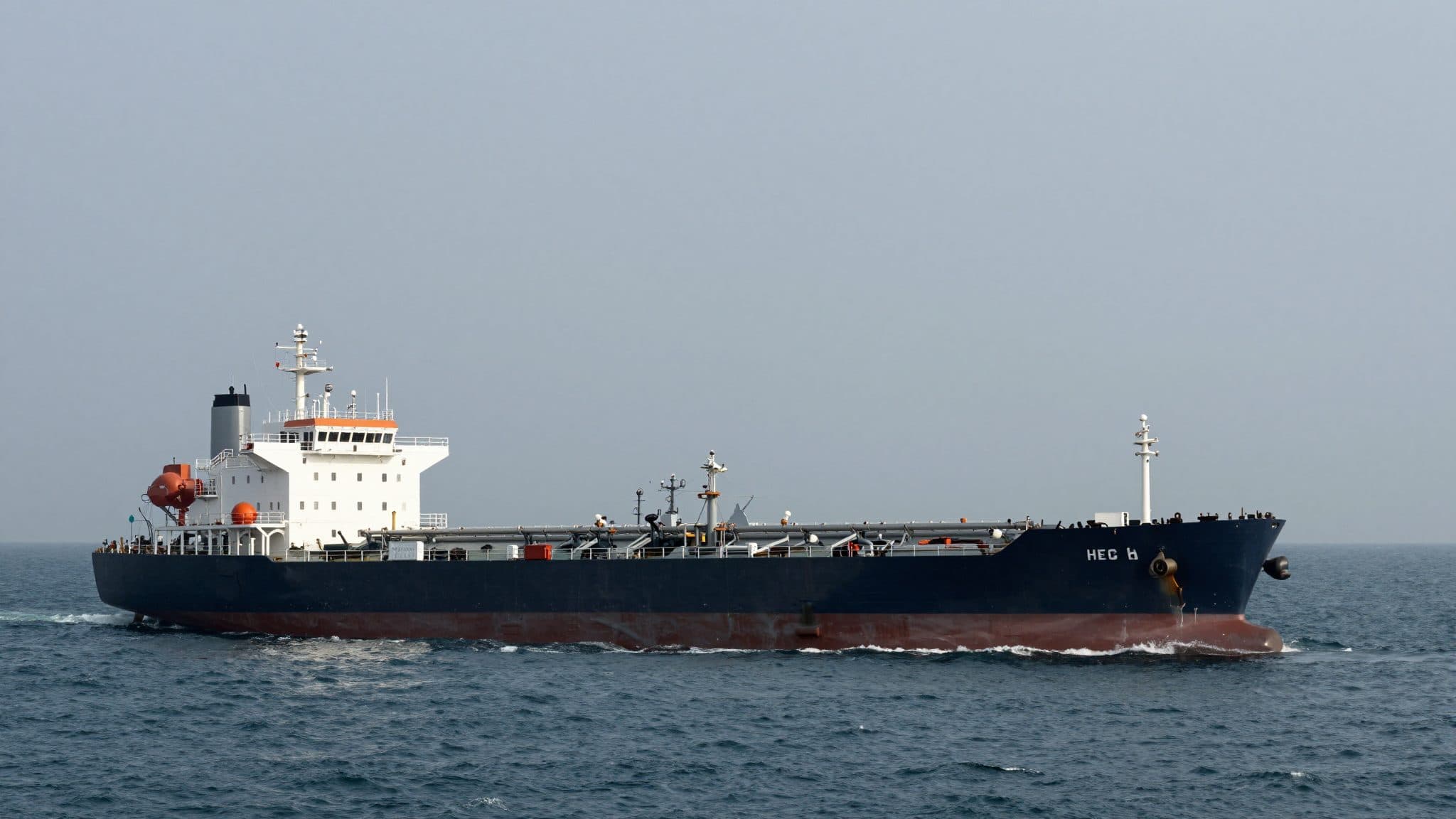
AI-generated image (z-image via Kie.ai)
Summary
The war between the United States and Iran has temporarily pushed the price of North Sea Brent above the $91 mark, its highest level since June. Ship traffic in the Strait of Hormuz has nearly ground to a halt for days according to LSEG data, while European natural gas futures rose to 60.66 euros per megawatt-hour.
Amsterdam, 20 July 2026
Amid the escalation in the Middle East, the price of a barrel of North Sea Brent temporarily rose above the $91 mark on Monday, while ship traffic in the Strait of Hormuz has nearly come to a complete halt according to data from financial services provider LSEG.
Background: Escalation between the US and Iran
The developments in the commodity markets reflect the intensification of the military confrontation between the United States and Iran. According to dpa-AFX, the quote for a barrel of Brent for September delivery climbed to $90.50 (79.16 euros) in Asian trading on Monday at around 3:00 a.m. CEST, a gain of 2.72 percent. As trading progressed, the price briefly broke through the $91 mark, reaching its highest level since June. The US benchmark West Texas Intermediate (WTI) also rose by 2.39 percent to $84.46.
The price increase is driven by the escalating situation in the Middle East, with mutual attacks between the US and Iran, as the news agency reported citing market experts. The officially known number of US soldiers killed in the Iran war has risen to 17, according to the responsible regional command Centcom. On Saturday, one US soldier was killed in northern Iraq during a controlled detonation of unexploded ordnance from a shot-down Iranian one-way drone, and another soldier was injured.
Strait of Hormuz: Key trade route under pressure
The Strait of Hormuz, through which roughly one-fifth of globally traded oil is normally transported, is one of the world's most important shipping lanes and of great significance for the transport of liquefied natural gas (LNG). According to data from financial data provider LSEG, only four ships passed through the strait on Sunday, compared with eight on Saturday. Since Thursday, no tankers carrying liquefied natural gas have been recorded passing through.
Freely accessible transit data on the internet shows that visible ship traffic in the Strait of Hormuz had nearly ground to a halt in the early hours of Monday. A blockade therefore has an impact on price developments on the world market. Overall, LNG tankers with a total capacity of nearly 1.9 million tonnes are currently in the region. On board seven loaded Qatari LNG tankers, an estimated 570,000 tonnes were in the middle of July.
The Iranian Revolutionary Guards said two oil tankers had been blown up on the southern route. During the night into Monday, the British maritime security authority (UKMTO) reported that a ship was on fire in the Strait of Hormuz near Oman. The cause of the fire was initially unclear; ships are advised to transit the region only with caution. The recent attacks on ships have raised new concerns about the safety of those traversing this passage.
Iranian threats and military response
From Tehran it was said that as long as "US aggression" in the region continued, the strait would not be safe for petrochemical products nor for "a single drop of oil and gas." Iran, for its part, is taking action against ships that in its view violate the rules in the Strait of Hormuz. The US government says it is enforcing a naval blockade off Iranian ports. However, there are also reports of tankers passing through the strait without their transponders switched on and being supported by the US military in doing so. Some ships temporarily switch off their transponders to conceal their route.
The price of European natural gas has continued to rise amid the latest escalation in the Middle East and attacks on merchant ships in the Strait of Hormuz. On Monday, the quote for the benchmark TTF natural gas futures contract for delivery in one month climbed to as much as 60.66 euros per megawatt-hour (MWh) on the exchange in Amsterdam. This is the highest level since 23 March, that is, since the early phase of the war between the US and Iran. Since the start of the month, the natural gas price has risen by about 35 percent and has reached its highest level in four months.
Impact on the European gas market
In further trading, the gas price fell back to 59.44 euros per MWh, but that is still 3.6 percent more than on Friday. LNG production in Qatar and the United Arab Emirates is holding up relatively stably despite the disruptions, according to S&P Global. If the de facto blockade of the Strait of Hormuz eases in the coming weeks, these ships could enable a rapid increase in exports, according to S&P Global analysts.
Energy transports through the Strait of Hormuz have repeatedly been the target of attacks. The incidents underscore the vulnerability of one of the central trade routes of the global economy and raise the question of how conflicts of this magnitude will affect global energy supply.
For consumers in Europe, the higher gas and oil prices mean an immediate burden, as heating costs, electricity bills and fuel prices are generally tied to wholesale prices. The rise in futures contracts on the European gas market is seen as an indicator of the burdens that end customers could face in the coming months.
Significance for consumers and markets
Volatility in the markets remains high. Observers point out that both the military situation and the response of energy exporters Qatar and the United Arab Emirates will determine price developments in the coming days. If the situation in the strait intensifies further, further price increases are to be expected. According to market experts, a sustained blockade would permanently tighten price developments on the world market.
Market participants are currently focusing above all on two questions: how the US government will respond to the attacks on tankers, and whether there are diplomatic channels for de-escalation. The statement from Tehran that the strait would not be safe for petrochemical products or for oil and gas in the event of ongoing "US aggression" makes a rapid calming of the situation appear unlikely.
Outlook: What the coming weeks could bring
At the same time, analysts point out that LNG production in the region has so far remained relatively stable. If the de facto blockade eases in the coming weeks, the waiting tankers could quickly ramp up exports again, thereby providing some relief to the markets.
Overall, the developments of recent days show how closely the interconnections between military conflicts and global energy prices are linked. The suspension of LNG transits through the Strait of Hormuz, the attacks on oil tankers and the mutual threats between the US and Iran have together led to one of the strongest price movements in the energy markets since the start of the conflict.
Questions & Answers
Why has the oil price risen above $91?
The price of North Sea Brent has risen to its highest level since June, according to dpa-AFX, because the mutual attacks between the US and Iran, as well as attacks on merchant ships in the Strait of Hormuz, have heightened supply concerns in the markets.
What is currently happening in the Strait of Hormuz?
According to data from financial data provider LSEG, only four ships passed through the strait on Sunday, no LNG tankers have been registered since Thursday, and the Iranian Revolutionary Guards said two oil tankers had been blown up on the southern route.
What consequences does the situation have for European gas prices?
The European natural gas future TTF climbed to 60.66 euros per megawatt-hour on Monday, its highest level since 23 March, and has thus risen by about 35 percent since the start of the month.
Oil price above $91: Hormuz blockade drives up energy prices | allfacts360