WMO warns of strong El Niño: Authorities urge preparations
Geneva, July 3, 2026
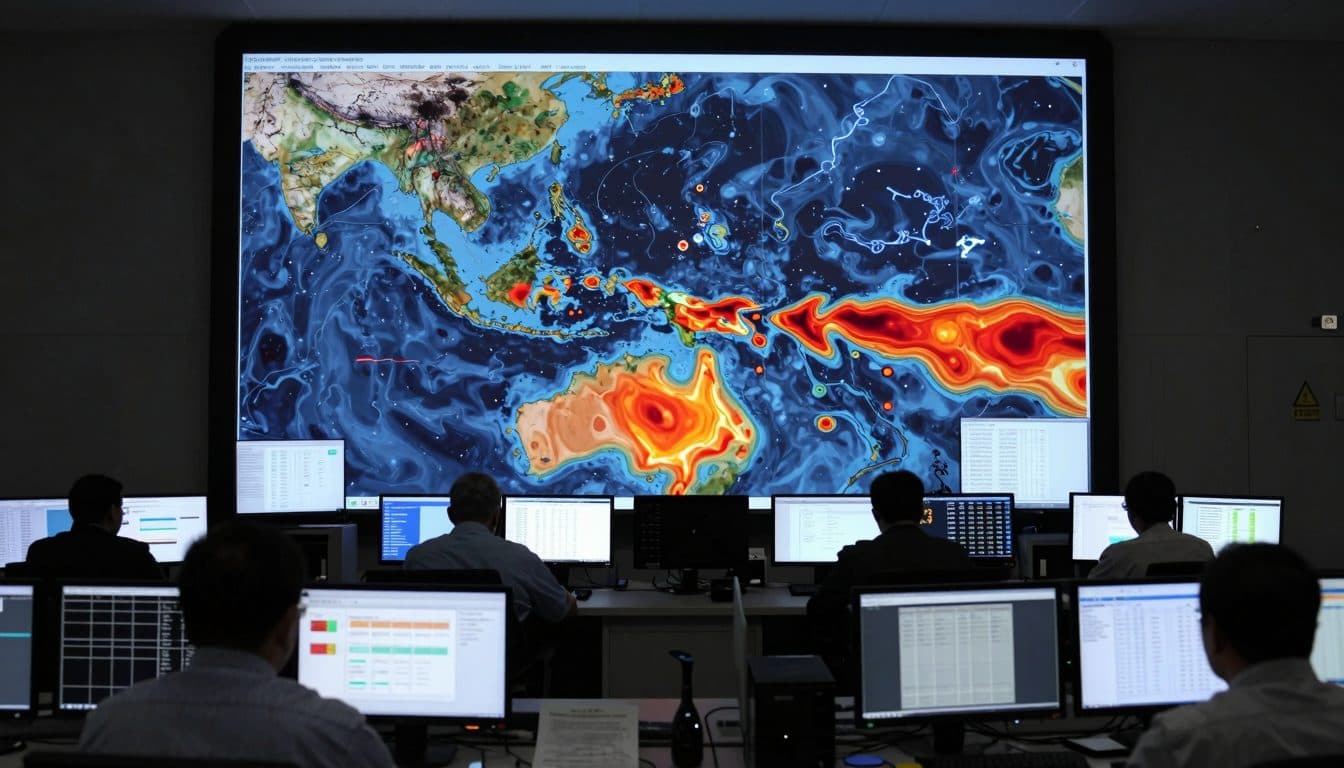
AI-generated image (z-image via Kie.ai)
Summary
The World Meteorological Organization has warned of severe impacts from the El Niño weather phenomenon and called on affected countries to prepare. The phenomenon is expected to reach strong intensity between July and September, according to the monthly climate report.
Geneva, July 3, 2026
The World Meteorological Organization (WMO) has warned of severe impacts from the El Niño weather phenomenon and called on affected countries to prepare for drought, heavy rainfall, and heatwaves.
What the WMO specifically expects
The UN agency's monthly climate report said El Niño conditions had developed in the tropical Pacific and were forecast to rapidly intensify in the coming months. „Die Bedingungen für El Niño haben sich im tropischen Pazifik entwickelt und werden den Vorhersagen zufolge in den kommenden Monaten schnell an Stärke gewinnen“, the WMO said. Between July and September, the phenomenon would reach „starke Intensität“.
WMO Secretary-General Celeste Saulo warned of drought, heavy rainfall, and heatwaves on land and at sea in many regions of the world. „El Niño habe bereits eingesetzt, und die Wahrscheinlichkeit von Extremwetterereignissen sei in vielen Regionen der Welt gestiegen“, Saulo said. She called on governments to take early precautions to limit damage.
Background: How El Niño works
„Fortgeschrittene saisonale Vorhersagen und frühe Warnungen sind entscheidend, um Leben zu retten und die Auswirkungen auf unsere Wirtschaften und Gemeinden abzufedern“, Saulo said. The WMO announced it would expand its early warning system so that more countries can respond in time to imminent weather extremes. The agency currently classifies this year's El Niño at the second-highest level, which is classified as „stark“.
El Niño is a naturally occurring climate phenomenon in which the surface of the Pacific Ocean warms. It begins as a warm ocean current that raises the water temperature off the coast of Latin America by a few degrees. Normally, trade winds push warm water westward along the equator, allowing cold, nutrient-rich water to rise along the coast. When air pressure changes, these winds weaken or even shift direction toward land – and warm water layers in the western Pacific drift back toward the coast.
The result is global changes in winds, air pressure, and precipitation. El Niño occurs every two to seven years and usually lasts between nine and twelve months. The strength of the phenomenon is classified into the categories weak, moderate, strong, and very strong.
Climate change as an amplifier
According to the WMO, human-made climate change can intensify the impacts of El Niño, even though it does not make the phenomenon itself occur more frequently or more strongly. In combination with global warming, however, El Niño aggravates heatwaves and precipitation extremes. The past year, 2024, was the hottest year ever measured, according to the WMO, due to the El Niño at the time. The years 2023 and 2024 also showed how severe the effects can be.
The EU climate service Copernicus and the WMO are presenting their final report on the climate year 2025 these days. Experts expect 2026 to be among the warmest years ever. Oceans are storing more and more heat, with new sea temperature records already measured. Against this backdrop, meteorologists view the El Niño forecast with particular concern.
Regional consequences worldwide
In earlier statements, the WMO had already warned of a possible return of the weather phenomenon and pointed to temperature records caused by El Niño. UN climate experts had indicated early in 2026 that El Niño would return. With the current classification as „stark“, this picture becomes more concrete.
The immediate consequences for affected countries are varied: some regions face droughts and crop failures, others heavy rain, flooding, and landslides. Heatwaves are expected simultaneously on land and at sea. Countries in Latin America, Africa, South Asia, and the Pacific region are often particularly affected, but Europe and North America can also experience weather extremes.
Early warning systems being expanded
The World Meteorological Organization emphasizes that, despite all preparations, every El Niño event leaves noticeable traces worldwide – from rising food prices to damage to infrastructure. This makes it all the more important to strengthen early warning systems and intensify international cooperation. Saulo's appeal is directed explicitly at governments, aid organizations, and the public alike.
By expanding the early warning system, the WMO aims to reach more countries in the future, especially in regions with high vulnerability. These include smaller island states in the Pacific, which are particularly susceptible to storm surges and droughts. Warning chains are also to be improved in sub-Saharan Africa and South Asia so that disaster management agencies can respond more quickly.
The international community is closely monitoring developments in the tropical Pacific. The pattern repeats every two to seven years, but intensity varies widely. While weak or moderate events often have only regionally limited consequences, strong or very strong El Niño years can noticeably raise global temperatures – with consequences for ecosystems, agriculture, and water supply.
Looking at the coming months
Despite the warnings, climate researchers emphasize that El Niño itself remains a natural phenomenon. The main concern is the interaction with human-made global warming, which can intensify individual extremes. Copernicus data show that sea surface temperatures worldwide are at record levels, further aggravating the starting point for the coming months.
Saulo's message remains clear: early forecasts determine how much suffering can be averted. The coming weeks and months are therefore considered a crucial phase in which governments, meteorologists, and aid organizations must intensify their coordination. The WMO plans to publish its reports at shorter intervals in order to reflect changes more quickly.
With regard to the daily lives of many people, the El Niño warning means above all: increased attentiveness to weather forecasts, heeding official warnings, and deliberate preparation for possible heat or heavy rainfall phases. Heatwaves and local storms can also increase in Europe, which is why the WMO explicitly understands its early warnings as global in scope.
Questions & Answers
What has the WMO said about the current El Niño?
The WMO stated that El Niño conditions have developed in the tropical Pacific and that the phenomenon is forecast to rapidly gain strength in the coming months. The monthly report expects „starke Intensität“ between July and September.
Who is Celeste Saulo and what role does she play?
Celeste Saulo is the WMO Secretary-General. She warned of drought, heavy rainfall, and heatwaves on land and at sea, and called on governments to prepare early.
What consequences are expected from El Niño and climate change?
According to the WMO, human-made climate change can intensify the impacts of El Niño without triggering the phenomenon itself more frequently. The combination threatens more severe heatwaves, heavier precipitation, and droughts, as already observed in 2023 and 2024.
WMO warns: El Niño 2026 reaches strong intensity | allfacts360