
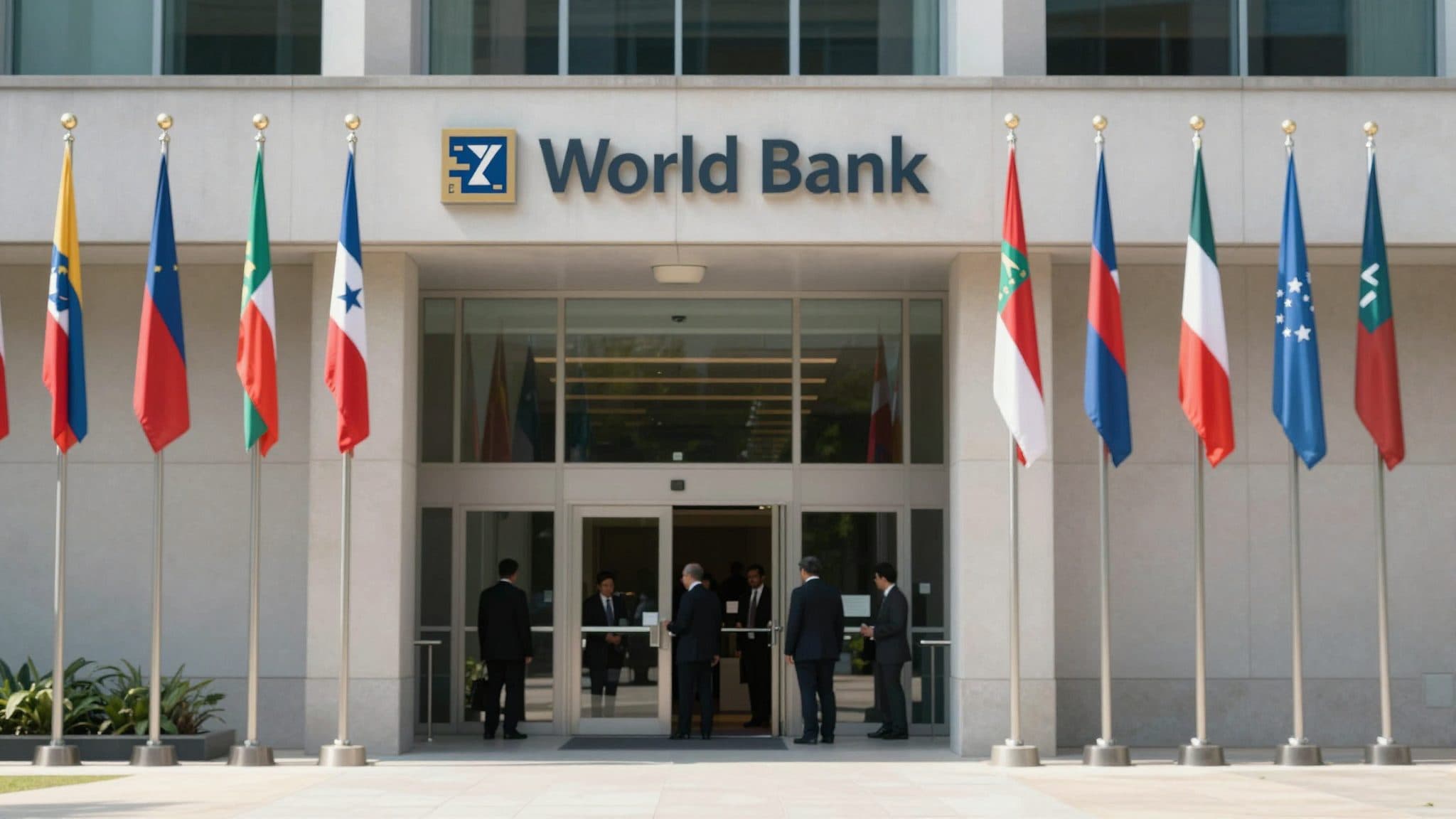
Washington, 05 August 2026
The World Bank warns that, contrary to what is often feared, it is high-income countries such as the United States and South Korea that have the highest share of jobs potentially exposed to artificial intelligence, while low-income economies remain less vulnerable but not exempt from the impact.
In an analysis released from its headquarters in Washington, the World Bank examined the composition of the labor market across different income brackets to assess exposure to the transformation driven by artificial intelligence. In high-income countries, the percentage of occupations considered potentially automatable or transformable by AI turned out to be higher than elsewhere. The authors of the study linked this finding to the concentration of cognitive and office-based tasks in advanced economies, sectors in which generative models and automation tools have already shown growing capabilities.