Air France Flight Diverted as Congo Ebola Death Toll Surpasses 200
Kinshasa, 21 May 2026
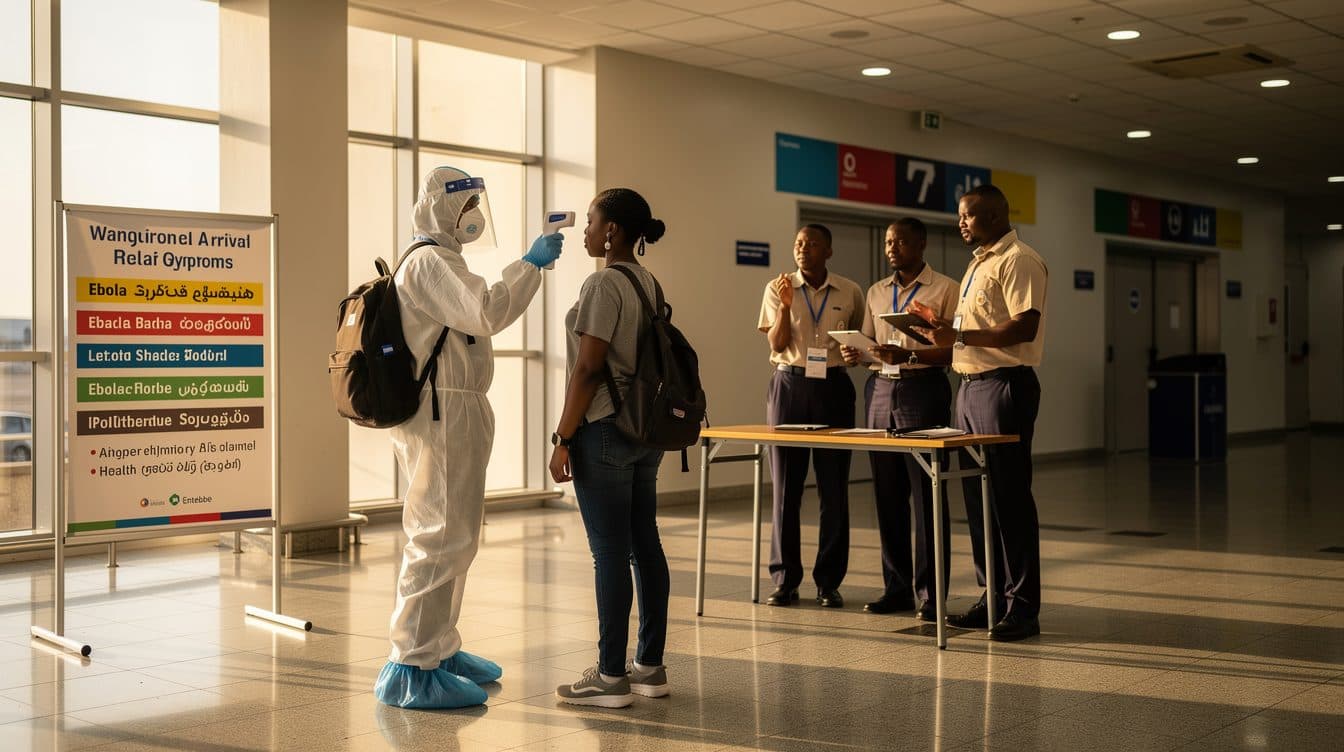
AI-generated image (flux-2/pro-text-to-image via Kie.ai)
Summary
An Air France flight was diverted after a Congolese passenger exhibited symptoms consistent with Ebola. The incident underscores a deepening health crisis in the Democratic Republic of Congo, where the death toll has surpassed 200 amid a surge of new infections.
Kinshasa, 21 May 2026
An Air France flight made an unscheduled landing on Saturday after a passenger from the Democratic Republic of Congo fell ill with symptoms that raised Ebola fears, as the death toll from the disease’s latest outbreak in the country climbed past 200.
According to the Congolese government, as of Saturday, 867 suspected Ebola cases had been reported, with 204 fatalities. The fresh data marked a sharp increase of more than 100 infections and over 30 deaths compared with the previous day’s tally, underscoring how quickly the virus is moving through vulnerable communities.
Laboratory tests have so far confirmed 91 infections, including ten fatal cases. Health officials caution that the true number of infections is likely higher because many suspect cases have not yet been tested.
The outbreak, centered in the eastern province of Ituri near the borders with Uganda and South Sudan, went undetected for weeks. The earliest known infection in the current wave was only officially confirmed in mid-May, when there were already more than 240 suspected cases.
“Der neuerliche Ebola-Ausbruch in der Demokratischen Republik Kongo verschärft die ohnehin prekäre Lage vieler Familien in Ostafrika dramatisch. Besonders betroffen ist die Provinz Ituri im Osten des Landes, wo Armut, Vertreibung und fehlender Zugang zu medizinischer Versorgung den Alltag vieler Menschen prägen”, teilte Caritas Österreich am Samstag mit.
This African nation is no stranger to Ebola. The 2014–2015 West Africa epidemic killed more than 11,000 people, and Congo has battled several flare-ups since. But the current crisis is unfolding in a region destabilized by conflict and displacement.
A Hidden Spread
The outbreak simmered unnoticed for weeks. According to local media citing a doctor on the ground, 18 people suspected of infection fled their isolation facility, potentially spreading the virus further. This revelation raises concerns about how many contacts might have gone untraced.
Three volunteer Red Cross workers became infected, likely on May 27, and died on June 5, June 15, and June 17, respectively, according to health reports. Their deaths highlight the extreme risks faced by frontline responders.
Volunteers Pay the Ultimate Price
The Congolese health ministry has reported at least 670 suspected cases and 160 presumed deaths from the outbreak so far, though figures vary between agencies because of difficult reporting conditions in remote areas.
To contain the outbreak, Uganda announced it would suspend all flights to the Democratic Republic of Congo within 48 hours as a precautionary measure. The move came as regional authorities scrambled to prevent cross-border spread.
Meanwhile, the World Health Organization warned that the actual number of cases could be far higher, given the challenges of tracking contacts in a region with limited roads, rampant insecurity, and a distrustful population.
Testing Bottleneck
Testing capacity remains a major bottleneck. Blood samples collected in Ituri must be flown more than 1,700 kilometers to the capital Kinshasa for analysis, a process that delays diagnosis and contact tracing. “Es kann nicht sein, dass Blutproben aus dem Kongo 1700 Kilometer weit nach Kinshasa geflogen werden, um dort getestet zu werden,” one health official complained.
The situation in Ituri is especially dire. According to United Nations estimates, about eight million people live in the province, including nearly one million internally displaced persons who have fled armed violence. Overcrowded camps and poor sanitation create ideal conditions for the virus to spread.
International Concern
The flight diversion involving Air France is the latest sign of global unease. The airline said the passenger was isolated upon landing and taken to a hospital for evaluation, while the remaining travelers were allowed to disembark after screening.
Neighboring countries are on high alert. Rwanda, South Sudan, and Uganda have all tightened border controls and stepped up surveillance at points of entry. The WHO has not yet declared a global health emergency, but it has urged countries to avoid travel or trade restrictions that could harm the Congolese economy.
The Caritas statement underscored the humanitarian dimension: “Poverty, displacement and a lack of access to medical care define the daily lives of many people.” Aid groups are struggling to deliver supplies and personnel amid ongoing militia activity.
Response and Next Steps
Vaccination campaigns, which proved effective in previous outbreaks, are being scaled up. An experimental Ebola vaccine has been dispatched to the region, but reaching remote villages with the required cold chain is a logistical nightmare.
Health experts stress that community engagement is crucial. In past outbreaks, rumor and fear led people to hide symptoms or attack health workers. Building trust through local leaders and clear information campaigns is now a priority.
As the Congolese government and international partners intensify efforts, the coming days will be critical. The world watches to see whether this outbreak can be contained before it becomes a crisis that echoes the horrors of 2014.
Congo Ebola outbreak: Air France diversion as deaths top 200 | allfacts360