Analyst Kuo: Google Gemini to Close Apple's AI Gap on iPhone and iOS
Cupertino, June 8, 2026
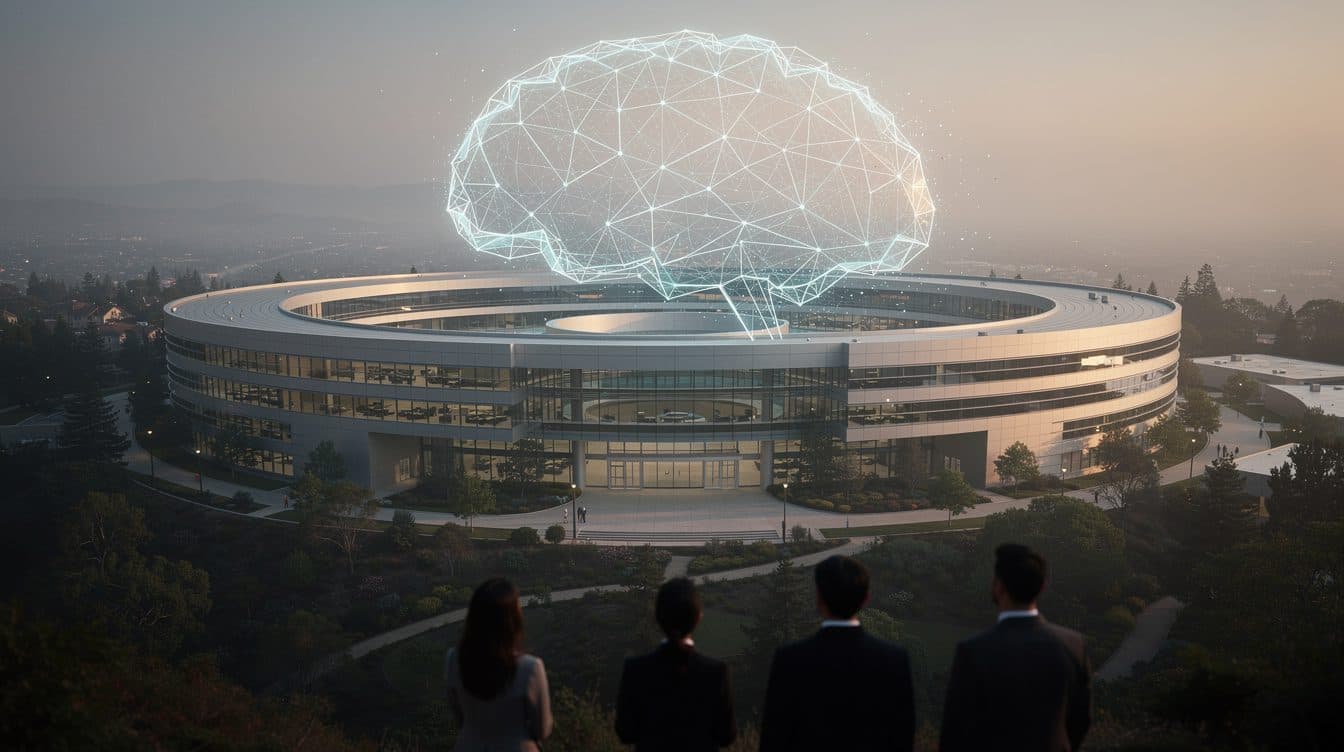
AI-generated image (flux-2/pro-text-to-image via Kie.ai)
Summary
According to a report, Apple plans to deeply integrate Google's Gemini models into iOS, paying approximately one billion dollars annually. Analyst Ming-Chi Kuo sees both opportunity and risk in this move: if Apple can deliver a better user experience with Gemini than Google itself, the company could catch up in the AI market — otherwise, Gemini will remain the ceiling of its own AI capabilities.
Cupertino, June 8, 2026
Analyst Ming-Chi Kuo has calculated various scenarios for Apple's AI strategy, at the center of which is the planned deep integration of Google's Gemini models into iOS, while Apple's own market capitalization approaches 4.6 trillion US dollars.
Apple's Bet on Google's Gemini
Apple wants to deeply integrate Gemini models into iOS and also use Google's cloud services. This is reported by well-known analyst Ming-Chi Kuo, who has calculated various scenarios for how Apple's AI strategy might proceed. Instead of relying on full in-house development, Apple is going all-in on combining its own models with Google's Gemini — in other words, on procurement.
Apple AI Strategy: Kuo Sees Gemini as Salvation for Siri | allfacts360
In doing so, Apple has participated neither in the hype around billion-dollar hyperscaler data centers nor in the recruitment of (very) expensive AI experts. Despite the fact that Apple lags behind the competition in terms of artificial intelligence, Kuo's contacts in Apple's supply chain say that business remains strong at least through the end of the year.
Apple had already made a massive blunder with its delayed context-sensitive Siri, which recently became very costly because users filed lawsuits over it. The iPhone maker had announced AI features for Siri two years ago that have still not been launched because, according to Apple, they did not work reliably enough. In the meantime, Google — as the developer of the competing mobile operating system Android — and the major iPhone rival Samsung repeatedly outdid each other with announcements of ever new AI assistant features.
Siri as the Central Cornerstone
A cornerstone of the new effort is an AI-enhanced version of the assistant software Siri, which is intended to offer direct competition to ChatGPT and the like. To gain more functions, Siri — which arrived on Apple devices as a voice assistant around 15 years ago — is getting a standalone app. Apple manager Mike Rockwell demonstrated in a recorded presentation how the new Siri can look up the date of the next concert by a musician nearby as well as ticket-sales information, create a reminder, and then play one of her new songs on request.
Apple also emphasizes that data protection is guaranteed, since the requests are processed on the devices and are not visible to the company. In the European Union, "Siri AI" will initially not be available on iPhones and iPad tablets at all, and the new AI-powered Siri will initially be offered only in English. Additional languages are to follow "quickly," said Apple's software chief Craig Federighi.
Bull Scenario: Catching Up Instead of Being Left Behind
The "bulls'" scenario, according to Kuo, is that Apple only has temporary AI weaknesses: the company can catch up and still end up in the lead. "If Apple is doing so well right now without AI, imagine what will happen with AI," the analyst summarizes the bull narrative. Should Apple succeed in achieving "more" with Gemini than Google does with its own apps, this would be a signal to the bulls that their assessment is correct. On Monday alone, shares have so far gained nearly 1.7 percent.
Apple would first need to show at WWDC that it can deliver a better user experience with Google's Gemini than Google itself. If it does not, Apple would become chained to Google: Gemini would then be the ceiling of what Apple can achieve in AI on its platforms. According to Kuo, this applies to AI applications — that is, the planned Siri app with voice control — agentic workflows, and AI use locally on the device (in the absence of network reception or for data protection reasons) and hybrid in the cloud.
Risk: Apple Could Become Chained to Google
The term "agentic" is found on Apple's website in only a few places on the developer site or in the App Store, where applications from OpenAI and others are offered. The price of the Gemini license, at one billion dollars per year, is said to be an outright bargain. Measured against this, Apple appeared to be lagging behind — but customers did not seem to care: sales of Apple devices continued to rise, and the iPhone knocked Samsung off the smartphone throne after many years, according to market researchers' calculations.
Apple's software chief Craig Federighi also took a swipe at companies pursuing an "AI for AI's sake" race and ignoring users' interests in the process. This means, he said, that artificial intelligence is integrated into the products people use every day and understands the personal context of each user. "Truly helpful AI" must be built around users' needs, Federighi emphasized.
This is the final WWDC for Tim Cook as CEO: in September, the top manager previously responsible for devices, John Ternus, is set to take over. Since details of this are expected to be revealed — at least in part — today at the WWDC 2026 developer conference, they should also be seen as a directional marker for the post-Cook era — particularly with regard to the question of whether Apple can turn the billion-dollar Gemini deal into a sustainable AI leadership position.
Market observers see the move less as a sign of weakness and more as a deliberate acceleration: Apple is buying itself time and reach to close the gap to Google and Samsung without entering a costly infrastructure race. Whether this becomes a lasting competitive advantage depends, according to Kuo, solely on whether Apple can integrate the Gemini models so deeply and seamlessly into iOS that the user experience surpasses that of Google's own apps.
Questions & Answers
Who is Ming-Chi Kuo and what role does he play in the report?
Ming-Chi Kuo is a well-known analyst recognized for his contacts in Apple's supply chain and has calculated various scenarios for Apple's AI strategy, at the center of which is the planned Gemini integration.
What exactly is Apple planning with Google's Gemini?
Apple wants to deeply integrate Gemini models into iOS and also use Google's cloud services, including for an AI-enhanced version of the assistant software Siri, which is intended to offer direct competition to ChatGPT.
What can be expected from Apple at WWDC 2026 regarding AI?
At WWDC 2026, according to Kuo's assessment, Apple aims to show that it can deliver a better user experience with Google's Gemini than Google itself, and to present at least some details of the new AI strategy.