Austria paramedic law reform: Platform Notfallmedizin | allfacts360
Austrian emergency medicine groups call for reform of outdated paramedic law
Vienna, 11 June 2026
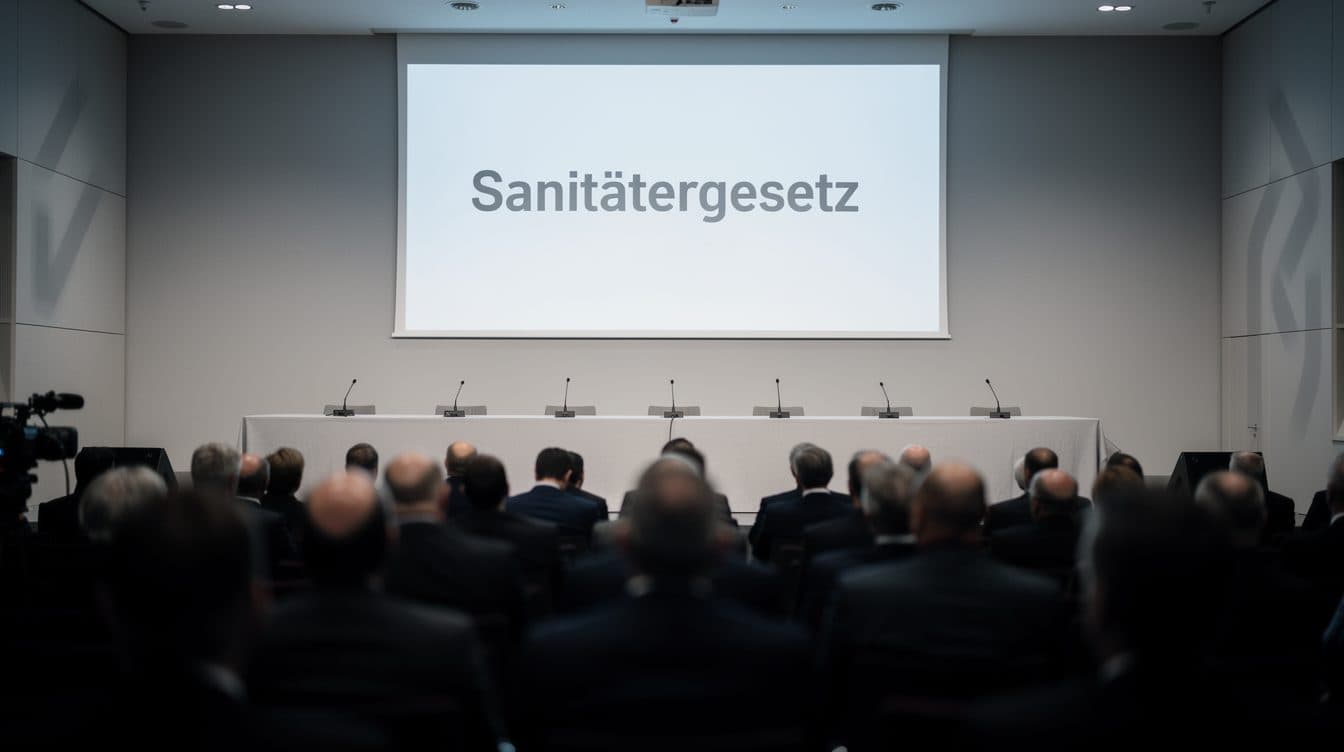
AI-generated image (flux-2/pro-text-to-image via Kie.ai)
Summary
Austria's Platform Emergency Medicine has called for an urgent overhaul of the country's more than 20-year-old paramedic law, saying that emergency doctors are dispatched to cases where their skills are not required. Representatives of several rescue organisations said in Vienna that better-trained paramedics could take on a much larger share of deployments and save the health system hundreds of millions of euros.
Vienna, 11 June 2026
Austria's Platform Emergency Medicine used a press conference in Vienna on Thursday to demand an urgent reform of the country's more than 20-year-old paramedic law, arguing that emergency doctors are routinely dispatched to cases that do not require their skills.
The platform, which networks Austria's emergency-physician organisations, said at the gathering in Vienna that roughly half of the deployments currently handled by emergency doctors could be covered by well-trained paramedics. "50 Prozent der Einsätze, die wir mit einem Notarzt beschicken, brauchen keinen Notarzt," said Mario Krammel, president of the Austrian Society for Emergency and Disaster Medicine and chief physician of Vienna's professional rescue service (Berufsrettung Wien).
Half of emergency doctor deployments do not need a doctor
Krammel, who also chairs the Österreichisches Netzwerk für Notfallmedizin (ÖNK), said that if better-trained paramedics took over these cases, the country's emergency doctors would be freed up for patients who truly need them. He said the change would require an overhaul of the Sanitätergesetz (SanG) and improved training for rescue personnel, adding that reforms were long overdue. "Es ist jetzt Zeit zu handeln," Krammel said.
Helmut Trimmel, an anesthesiologist and intensive care physician representing the Austrian Society of Anesthesiology, Resuscitation and Intensive Care Medicine (ÖGARI), said the country already operates a high-density emergency system. "Wir haben derzeit 120 Notarztfahrzeuge im Dienst, die 24/7 besetzt sind," he said, adding that between 29 and 40 emergency doctor helicopters are in service depending on the season. Yet, he argued, much of that capacity is not being used where it is most needed: "Notärzte müssen dort verfügbar sein, wo Menschen um ihr Überleben kämpfen."
Trimmel presented the findings of an analysis his society carried out on a single day in October 2024, recording every emergency-physician deployment in Austria. The study found that only around 20 percent of cases required an emergency-physician intervention, and that in more than half of deployments no medical intervention of any kind was needed. According to the data, only 3.3 percent of patients required intubation, the same share required resuscitation, and just four percent needed shock treatment.
Outdated training and a leaky career path
Clemens Kaltenberger, president of the Bundesverband Rettungsdienst (BVRD), said the problem is rooted in the current legal framework. "Das Sanitätergesetz erlaubt die Tätigkeit des Rettungssanitäters nur als Hilfstätigkeit," he said, noting that paramedics are restricted to working as auxiliary personnel. He said the country's roughly 50,000 paramedics include about 10,000 who would need higher qualifications to be effective in the system. Without reform, he added, around 10,000 paramedics leave the profession every year, forcing the entire rescue service to be retrained every four to five years. "In Österreich ist der Sanitätsberuf derzeit eine Sackgasse. Wer sich weiterentwickeln will, fällt aus dem System," said Manuel Winkler, an anesthesiologist and emergency physician with the Interessengemeinschaft Notfallmedizin Innsbruck (IGNI).
Kaltenberger said better training would also help retention. "Wir wissen aus Studien, dass je höher die Mitarbeiter im Rettungsdienst ausgebildet sind, desto länger bleiben sie," he said, adding that the cost of higher qualifications would be far outweighed by savings elsewhere. He said upskilling around 4,000 paramedics to become "Diplom-Notfallsanitäter" — about nine percent of the workforce — would cost roughly 200 million euros over a decade. The Association of Rescue Paramedics calculated in a separate study that better-trained paramedics could save the health system more than 800 million euros a year.
Pilot projects show what better training can do
Pilot projects back the call for change. In Vienna, a programme using specially trained paramedics and telemedicine in nursing homes prevented 60 percent of hospitalisations, while a similar scheme in Graz cut the emergency-doctor alarm rate to under nine percent. By contrast, the alarm rate elsewhere in Austria is around 23 percent. Krammel noted that Vienna's emergency doctor deployments had risen from 30,000 in 2020 to 39,000 in 2025. "Es wären noch 15.000 Einsätze mehr, wenn wir nicht Gegenmaßnahmen ergriffen hätten," he said. Vienna has also introduced a measure allowing paramedics to administer pain therapy in cases such as isolated forearm fractures.
Winkler pointed out that Austria's neighbours have already moved to multi-year training programmes. "Eine Reform in Österreich, die keine dreijährige Ausbildung vorsieht, wäre eine Reform in die Vergangenheit," he said, noting that paramedic training in the Czech Republic, Hungary, Slovenia, Italy, Switzerland and Germany is a three-year programme, often in the form of a bachelor's degree. In Austria, current paramedic training takes less than a year, and around 80 percent of those sent to emergencies have had fewer than 300 hours of instruction. The platform said studies from the Arbeitsgemeinschaft für Notfallmedizin (AGN) also show that emergency doctors are sometimes called "just to check" because of uncertainty among on-scene personnel. "Die Unsicherheit beim Personal ist teils sehr groß, sodass häufig der Notarzt ,zum Drüberschauen' gerufen wird, obwohl es nicht angezeigt wäre," said Matthias Aujesky of the Interessensgemeinschaft Notärzte Oberösterreich (INO).
Reform on paper, slow progress in practice
There are signs that a political opening may exist. The reform of the Sanitätergesetz is included in the current government programme, and all health spokespersons in parliament have committed to a revision, according to Andreas Trimmel of ÖGARI. The platform's representatives acknowledged, however, that federalism would complicate any overhaul. "Der Weg dahin sei aber aufgrund des Föderalismus 'sicherlich schwierig'," Trimmel said. The rescue organisations also pointed to provisions in the government programme that aim to make it easier to move between health professions, for example from paramedic to nursing, a measure they said would help address staffing shortages.
Krammel summed up the platform's position: better training for paramedics, a modernised legal framework, and a system that puts highly qualified emergency doctors where they are truly needed. The platform said it would continue to press lawmakers to act on a reform that has been on the agenda for more than two decades.
Questions & Answers
What is the Platform Notfallmedizin calling for?
The platform, which networks Austria's emergency-physician organisations, is demanding an urgent reform of the country's more than 20-year-old Sanitätergesetz to allow better-trained paramedics to take on cases that do not require a doctor.
How much of the workload could trained paramedics handle?
According to figures presented at the Vienna press conference, around 50 percent of emergency doctor deployments do not require a doctor, and studies cited by the platform suggest more than half of cases could be handled by well-trained paramedics.
What is the current state of reform?
The reform of the Sanitätergesetz is included in the Austrian government programme and has received backing from the health spokespersons of all parliamentary parties, but federalism is seen as an obstacle and no legislative text has yet been published.