China GDP Q2 2026: Growth slows to 4.3 percent | allfacts360
China GDP Q2 2026: Growth slows to 4.3 percent
Beijing, July 15, 2026
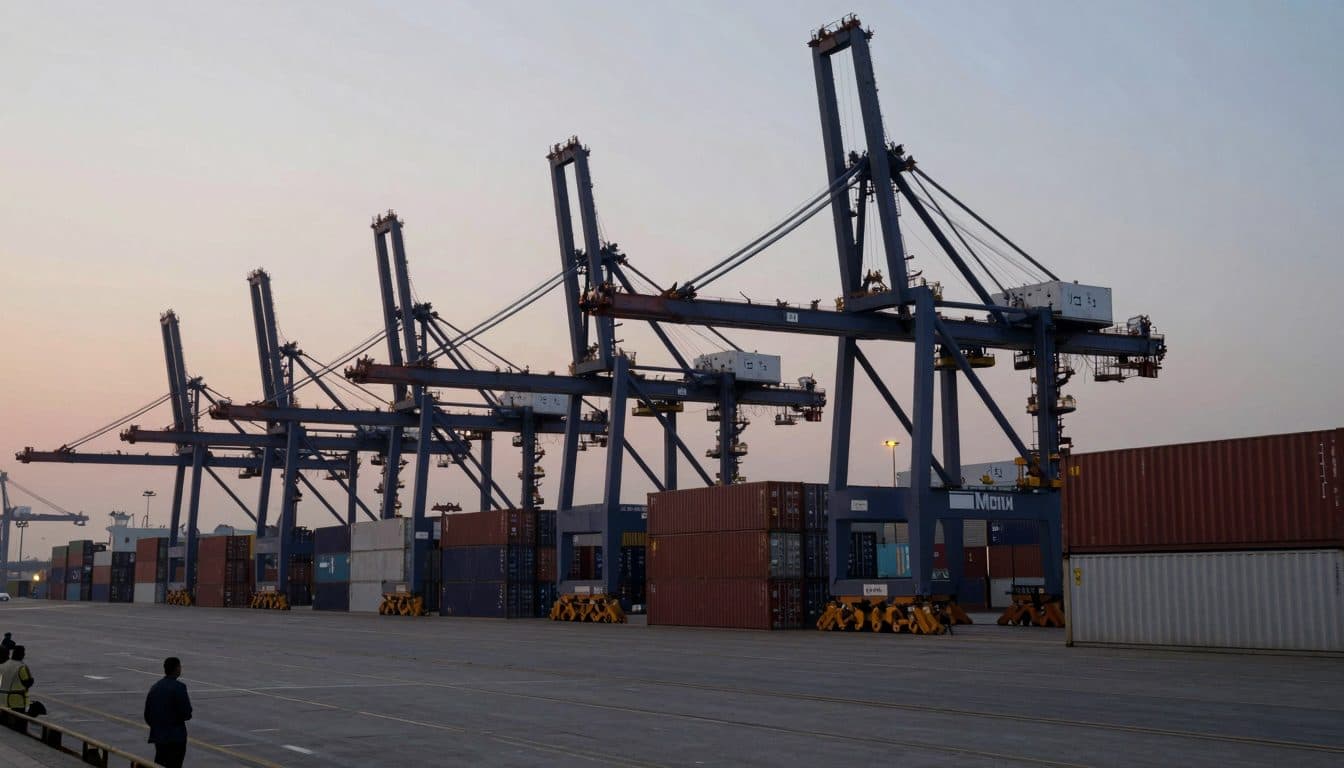
AI-generated image (z-image via Kie.ai)
Summary
China's economy grew by 4.3 percent in the second quarter of 2026, falling short of analyst expectations. While industrial production and exports are expanding, the real estate sector and domestic demand remain the major weak spots.
Beijing, July 15, 2026
The gross domestic product of the People's Republic of China grew by 4.3 percent from April to June 2026 compared to the same period last year, as announced by the national statistics office in Beijing; it is the weakest quarterly growth since the end of 2022.
Weakest quarterly growth since the end of 2022
The gross domestic product rose by 4.3 percent from April to June compared to the same period last year, as the national statistics office in Beijing announced today. Analysts had on average expected growth of 4.5 percent, as the agency further stated.
The figure thus remains below the annual target of the government in Beijing: for the full year, the Chinese government is aiming for growth between 4.5 and 5 percent. The first-half growth of 4.7 percent is therefore within the target range for the full year, as the statistics office explained.
Industry and exports as pillars
In the entire first half of the year, industrial production grew by 5.4 percent according to the statistics agency. Particularly strong foreign demand is supporting China's industry, as the announcement indicated.
Exports rose in June by 27 percent in US dollar terms compared to the same month last year, while imports increased by 36 percent. Above all, international demand for semiconductors, computer technology, and cars is supporting Chinese manufacturers.
In the first half of the year, China's industrial companies therefore produced 279.8 billion chips, an increase of 23.1 percent. In addition, the global technological shift in AI has enormously increased demand for computer chips, explained statistician Wang Guanhua.
AI and semiconductors as growth drivers
According to statistician Wang Guanhua, IT and corporate services contributed about a quarter to overall economic growth in the first half of the year. China is also increasingly promoting future-oriented industries such as the development of artificial intelligence (AI) and hopes this will generate further economic growth.
Among leading tech groups such as Alibaba and Tencent, there has long been intense competition, for instance in integrating AI into their apps. China is continuing to drive the modernization of traditional industries with the help of AI in order to create new growth impulses.
Real estate sector remains a worry
The figures paint the picture of an increasingly two-tiered economy. Industry and foreign trade continue to develop comparatively strongly. Consumption, investment, and the real estate market, by contrast, remain weak.
Investment in the sector collapsed by 18 percent in the first half of the year, as the statistics agency announced. The value of newly built residential properties sold fell by 13.6 percent in the same period.
The downturn in the real estate market is regarded as a burden on the confidence and willingness to spend of many households. According to statistician Mao, a survey by his agency showed that the real estate industry expects stable or even rising housing prices this year.
Initial policy measures to stimulate demand and reduce housing stock have shown an effect, said Mao Shengyong. First effects are visible, although the sector as a whole is lagging behind the rest of the growth.
Total fixed asset investment fell by 5.7 percent from January to June. Strong exports cannot offset the weakness at home, as the data shows.
Government calls for more economic stimulus
The decline in growth in the second quarter was attributable to "external factors," said the deputy commissioner of the statistics office, Mao Shengyong. He cited, for example, the conflict situation in the Middle East and slower growth in the global economy.
In China, the petrochemicals sector in particular was affected. All other sectors, however, developed normally, Mao Shengyong further explained.
Premier Li Qiang had on Monday called for stronger support for the economy and further measures to revive domestic demand at a meeting with experts and entrepreneurs. The government is thus under growing pressure to act in order to still reach the annual target.
Trade tensions with the EU as a risk
In Germany and the EU, discussions are underway on how to deal with the rapidly rising imports of Chinese products and overcapacity in individual industrial sectors. Trade tensions with Europe could additionally burden the export-driven recovery of Chinese industry.
China's economy is growing more slowly than expected, the statistics agency summarized the data situation. Observers consider the coming months decisive for whether Beijing will step in with additional stimulus measures to still secure the annual target of 4.5 to 5 percent.
Questions & Answers
Who is Mao Shengyong?
Mao Shengyong is deputy commissioner of the Chinese statistics office. He attributed the slowed growth in the second quarter to external factors such as the conflict situation in the Middle East and a weaker global economy.
Why did growth in the second quarter of 2026 turn out so weak?
At 4.3 percent, GDP growth was below analyst expectations of 4.5 percent. According to the statistics office, the causes are a weaker global economy, geopolitical tensions, and the ongoing crisis in the Chinese real estate market.
Which sectors are currently supporting the Chinese economy?
Industry, foreign trade, and semiconductor manufacturing are growing at above-average rates. International demand for computer chips, computer technology, and cars, as well as investment in artificial intelligence, are particularly driving growth.