Coalition Plans Sick Note Requirement from First Day of Illness – Family Doctors Mount Sharp Criticism
7/4/2026
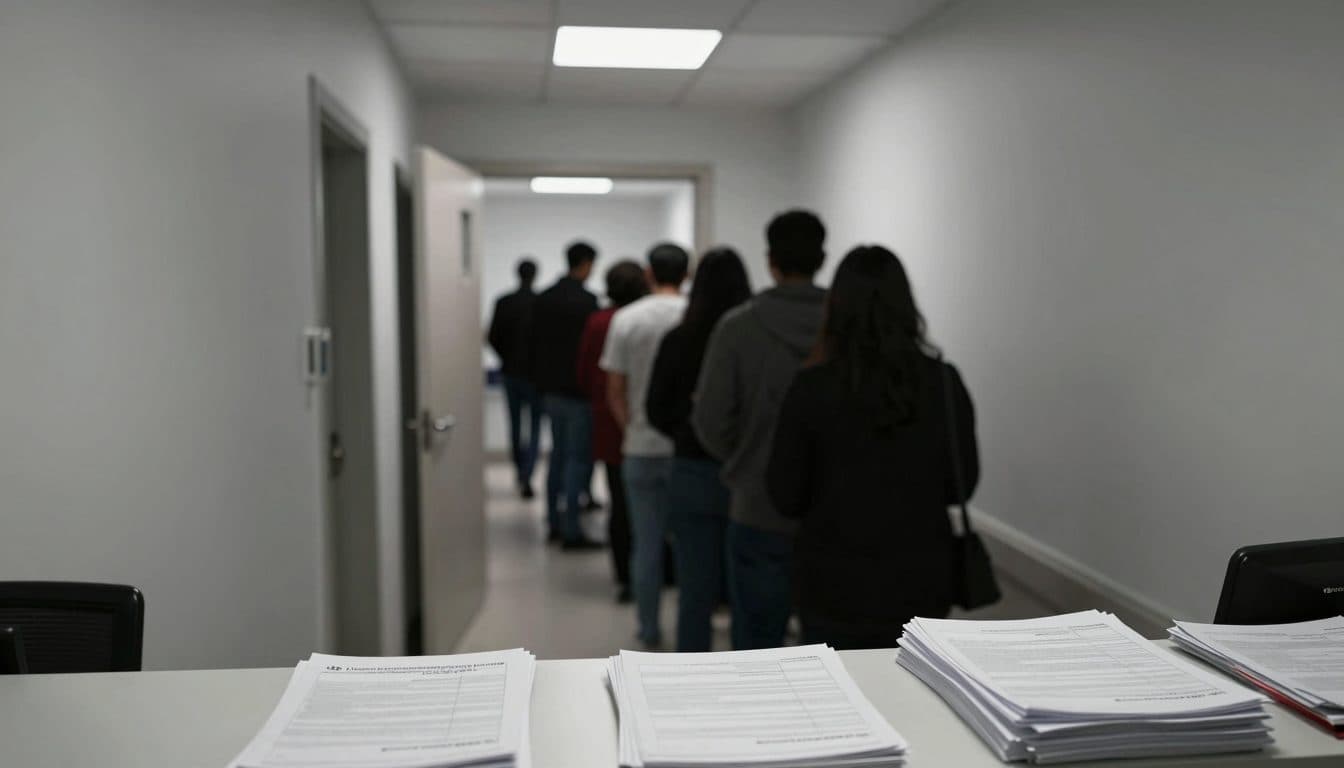
AI-generated image (z-image via Kie.ai)
Summary
The black-red coalition is tightening the rules for sick notes: in the future, a certificate of incapacity to work should be mandatory from the very first day of illness, and the option of sick notes issued by phone is to be dropped. Family doctors, the government's patients' representative, and voices within the SPD accuse the government of symbolic politics and warn of overcrowded practices.
The German federal government plans to require employees in Germany to present a medical certificate of incapacity to work starting from the very first day of illness and to abolish the option of sick notes issued by phone.
According to the federal government, the currently applicable three-day rule is to be replaced. Employees would then, as a rule, have to submit a certificate of incapacity to work (AU) to their employer from the first day of illness. The phone-based sick note is to be scrapped without replacement, as emerges from the 34-point reform paper under the slogan "Getting Germany moving again," on which the coalition committee of CDU/CSU and SPD agreed this week. So far, no formal legislative draft exists.
What the coalition specifically plans
Chancellor Friedrich Merz justified the push on Thursday evening on the ZDF show "Maybrit Illner," citing the high number of sick days. "The number of sick days in Germany is too high," Merz said. Asked whether employees would now have to go to the doctor on the first day, he replied: "You do not have to go to the doctor's office on the first day. You must have a certificate of incapacity to work from the first day." He also stated on the ARD "Brennpunkt": "We are returning to the rule we had before Corona." Before the pandemic, a three-day rule applied, under which a sick note only had to be presented starting from the fourth calendar day.
Justification from the Chancellor's Office
Government spokesperson Stefan Kornelius added in Berlin that the new rule does not automatically mean that those who are ill have to go to a practice on the first day of illness. "It does not mean that one should go to the doctor on the first day." The concrete design of the reform is still pending. Federal Health Minister Nina Warken (CDU) told the "Rheinische Post" that it must be ensured "that digital options such as video consultations with the treating family doctor continue to be possible and are used more extensively." According to the resolution, video consultations are to be retained; a corresponding provision is meant to prevent abuse while also further digitalizing entry into care.
However, there is broad resistance to the plans. The federal chairwoman of the Family Doctors' Association, Nicola Buhlinger-Göpfarth, spoke of "purely symbolic politics." Speaking to the "Rheinische Post" (Saturday edition), she said the planned new rule would "neither reduce the level of illness nor prevent abuse." She sees the greatest potential for abuse on anonymous platforms that profit from quick sick notes, not in family practices. "Wenn irgendwo großes Missbrauchspotenzial liegt, dann bei anonymen Plattformen, die damit Profit machen und ihre Kunden nicht einmal kennen. Dort ist Betrug Tür und Tor geöffnet und nicht in unseren Praxen!" Buhlinger-Göpfarth pointed out that the phone-based AU is tied to practice registration and does not offer more room for abuse than an in-person visit.
Criticism from family practices
The federal government's patients' representative, Schwartze (SPD), shared this assessment. Speaking to the Funke Mediengruppe, he warned that more employees would drag themselves to work while sick, fail to recover, and ultimately have more sick days, "wenn sich noch mehr Arbeitnehmende krank zur Arbeit schleppten, nicht genäsen und letztendlich aufgrund langwieriger Verläufe mehr Krankheitstage aufwiesen." He also said that "das Aufsuchen einer Arztpraxis bei vielen Krankheitsbildern eine unnötige Belastung für alle und erhöhe die Ansteckungsgefahr." He called on policymakers to continue expanding digital and telemedicine services.
The German Trade Union Confederation (DGB) also spoke similarly to the family doctors. The Baden-Württemberg branch of the Family Doctors' Association stated that the option of phone-based sick notes represented "eine wichtige Maßnahme zur Entbürokratisierung und Entlastung der Praxen da" for patients without severe symptoms. The association considers it very likely that under the reform same-day appointments will be harder to obtain. The deputy chair of the North Rhine Family Doctors' Association, Manfred Imbert, said the phone-based sick note had been a relief for family doctors: "Doch für uns Hausärzte war die telefonische Krankschreibung eine Erleichterung. Der demnächst zu erwartende Mehraufwand durch Patienten in der Praxis wird schwer zu schaffen sein." In a supplementary statement, he warned: "Wir ticken auch so am Limit – und wie soll das erst werden, wenn demnächst jeder dritte Arzt in Rente geht?"
The National Association of Statutory Health Insurance Physicians (KBV) expects at least 30 million additional practice visits per year if the reform is implemented as planned. The chair of the Association of Female and Male Family Doctors, Markus Blumenthal-Beier, warned: "Es werden in dieser Kombination mehrere Millionen mehr Patientinnen und Patienten in unsere sowieso schon sehr vollen Praxen drängen." Family doctor Axel Bullerkotte from Pattensen in Lower Saxony described the phone-based sick note as having been "eine große Entlastung"; during flu season, he issues up to 30 sick notes by phone. He criticized that with the reform, "aufwändige Prozesse wieder eingeführt, die wir längst abgeschafft haben": "Wir kommen in die Situation sinnloser Bürokratie." It is also expected "dass wir alle Patienten in der Praxis sehen müssen, dann werden wir automatisch normale Termine für Patienten nach hinten verschieben müssen".
Resistance within the SPD as well
Resistance to the plan is growing within the SPD. SPD General Secretary Tim Klüssendorf and party chief Lars Klingbeil pointed out that the Union had originally demanded a waiting day without continued pay, which the SPD had rejected. Klingbeil said on ZDF: "Natürlich müssen wir das jetzt so machen, dass niemand krank zur Arbeit geht." SPD health policy-maker Christos Pantazis demanded that "tiefgreifende Änderungen bei den Regelungen zur Arbeitsunfähigkeit müssen auf einer belastbaren wissenschaftlichen und empirischen Grundlage beruhen." The Berlin SPD state chief and leading candidate for the House of Representatives election in September, Steffen Krach, called the reform package internally contradictory. He told the "Süddeutsche Zeitung": "Die Hausärzte sind zurecht empört, die Union sollte das dringend noch einmal überdenken." He added: "Kein Mensch, der sich mit dem Gesundheitssystem auseinandersetzt, hält das für sinnvoll, da das Arztpraxen verstopft und es noch schwerer macht, schneller an Behandlungstermine zu kommen." The reform is "ein Misstrauensvotum gegen Ärzte wie Patienten".
Employers, on the other hand, are offering backing. Johannes Pöttering, managing director of the metal and electrical industry association in North Rhine-Westphalia, welcomed the elimination of the phone-based sick note and the sick note requirement from day one. He said that in Germany there are "den höchsten Arbeitsschutz und die besten Arbeitsbedingungen im europäischen Vergleich, aber eben auch die höchsten Ausfalltage. Pauschalisierungen sind zwar fehl am Platz, aber sich krankzuschreiben war einfach zu leicht." Janika Woltering-van Haag, owner of the bakery wholesale company Hefe van Haag, also sees the rule as a gain: "Hier schafft man, wenn man da dran geht an das Thema, dass es mehr zur Zuverlässigkeit gibt und ich mehr auf mein Personal setzen kann."
Support from employers
CDU/CSU parliamentary group leader Jens Spahn pointed on the ARD "Morgenmagazin" to around 18 sick days per employee per year. He described the behavior of many employees with the words: "Man sitzt auf der Bettkante und überlegt: Passt das heute?" According to CDU/CSU and SPD, employers also have "als Einfallstor für Missbrauch identifiziert und ihre Abschaffung gefordert" the phone-based sick note.
Exceptions to the sick note requirement from day one are to remain possible – through individual agreements, works council agreements, or collective bargaining agreements. The threat of punishment for issuing incorrect medical certificates under Section 278 of the Criminal Code is also to be tightened. Under current law, the offense carries a prison sentence of up to two years or a fine. Merz emphasized that the new rule had been "eine 'harte Entscheidung'."
Figures and comparisons
Labor law expert Arndt Kempgens pointed out that employees would have to inform their employer on the morning of the day of illness. Anyone who takes no action risks a formal warning and, in extreme cases, dismissal. If employees cannot prove they are ill, employers can reduce their pay. Even today, under Section 5 of the Continued Remuneration Act, employers can require a sick note from day one – but in practice this has frequently not been done. Some employers have, however, already anchored the day-one sick note requirement in employment contracts, works agreements, or collective agreements.
The phone-based sick note was introduced as a
Sick Note Requirement from Day 1: Coalition Plans and | allfacts360