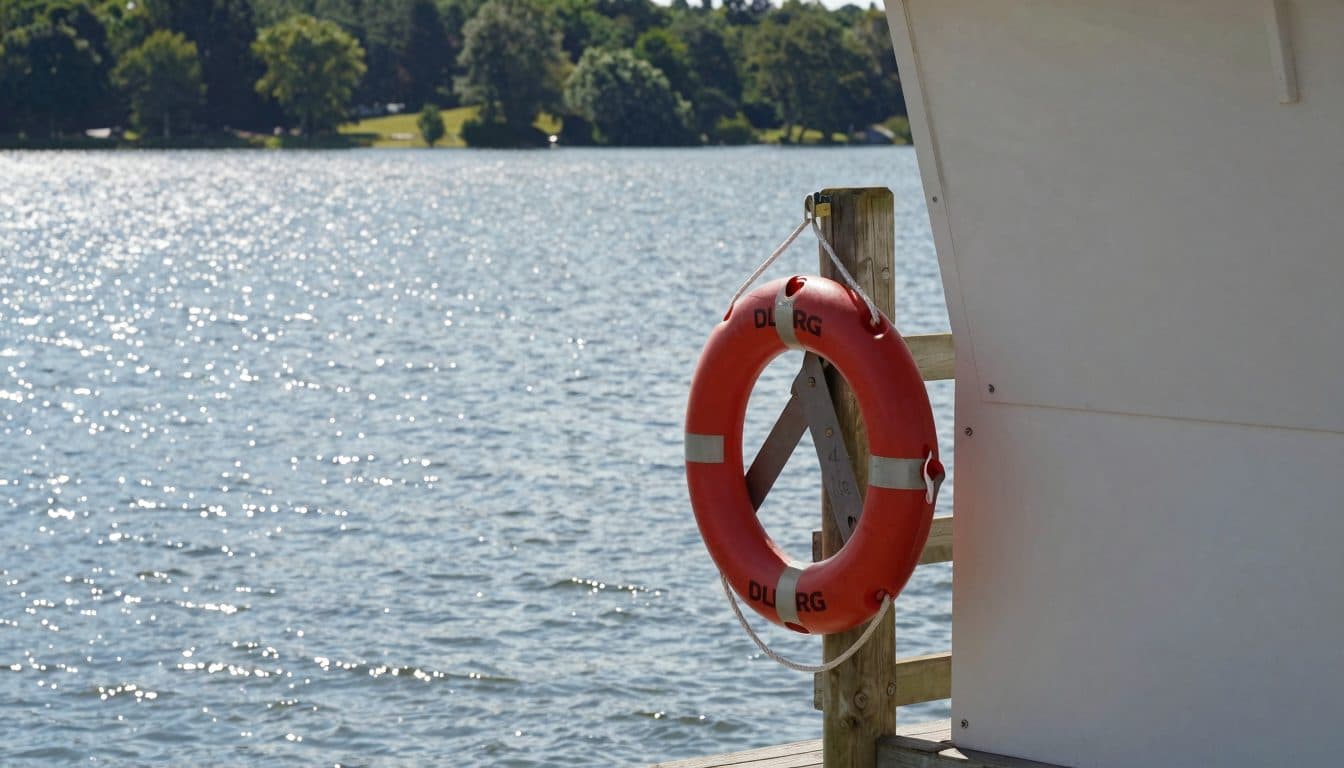
DLRG reports at least 99 swimming deaths in June – highest figure in 23 years
Bad Nenndorf, July 12, 2026
AI-generated image (z-image via Kie.ai)
Summary
The Deutsche Lebens-Rettungs-Gesellschaft has counted at least 99 drowning deaths in Germany for June 2026 – the highest June figure since the heatwave summer of 2003. Over 90 percent of the victims are male; the DLRG is appealing especially to boys and men to assess risks more realistically.
Bad Nenndorf, July 12, 2026
The Deutsche Lebens-Rettungs-Gesellschaft (DLRG) has reported at least 99 drowning deaths in Germany for June 2026 – more than in any June since the heatwave summer of 2003, the organization announced on Sunday in Bad Nenndorf.
Highest June figure since the 2003 heatwave summer
At least 99 people drowned in Germany in June – more than in the past 23 years. The Deutsche Lebens-Rettungs-Gesellschaft (DLRG) published the tally on Sunday in Bad Nenndorf. As a result, June 2026 has reached the highest level since the 2003 heatwave summer, when 107 people lost their lives in German waters.
The DLRG describes itself as the world's largest water rescue organization – with just under 630,000 members. Its analysis shows that most of the fatal accidents (55) occurred in lakes in June. 21 people drowned in rivers, with six each in swimming pools, the sea, and canals.
Lakes and rivers as the most common accident locations
North Rhine-Westphalia recorded the most deaths with 22 swimming fatalities in June. In the same month the previous year, there had been twelve. Bavaria (21) followed, ahead of Baden-Württemberg with 13 (7) swimming fatalities. Overall, the statisticians recorded significantly higher figures in several federal states than in the previous year.
More than 90 percent of them were male. In the previous year, the share of male swimming deaths had been somewhat lower, with four out of five drowning victims according to the DLRG. DLRG President Ute Vogt also pointed out that among young people, all of the victims had been male.
Men and boys particularly affected
Most of the victims in June were young – 40 of them were no older than 30. At the same time, 35 victims of known age were over 50. The DLRG sees this as an interplay of various risk factors that cannot be reduced to a single cause.
Florian Stoeck of the Berufsverband Deutscher Psychologinnen und Psychologen explained that men tend to assess their physical abilities and their control over potentially dangerous situations more optimistically in comparison. Other framework conditions are also likely to play a role: men more often swim alone and presumably take greater risks.
They also more frequently enter the water while intoxicated by alcohol or other drugs. Vogt said: „Es sind vor allem Männer, die zu viel Risiko eingehen und Gefahren unterschätzen.“ The DLRG also pointed to other known risk patterns: lack of swimming ability, overconfidence, jumps into water that is too shallow and murky, and medical emergencies.
Risk factors: alcohol, overconfidence, lack of swimming ability
Many people underestimate dangers, according to the DLRG, especially the current and the temperature difference when jumping into the water. In addition, many people are poor swimmers. Last year, just under 400 people drowned in Germany, the DLRG added.
The DLRG recommends only swimming at supervised bathing sites, never jumping into the water while overheated but cooling down first, avoiding currents and unknown bodies of water, and never swimming under the influence of alcohol or drugs. Furthermore, adults should always supervise children, look out for those around them, wear a life jacket when paddling or surfing, drink enough fluids, and not stay in the sun too long.
Vogt appealed especially to boys and men: „Wir appellieren deshalb besonders an Jungen und Männer, die eigenen Fähigkeiten realistisch einzuschätzen und auf riskante Aktionen zu verzichten.“ In an urgent warning she added: „Es gibt im Badesee keinen Preis zu gewinnen – aber das Leben zu verlieren.“
In view of the start of the season with persistent heat in several federal states, the president warned of further heat waves in midsummer: „Der tragische Start in die Badesaison gibt Anlass zur Sorge, dass bei weiteren Hitzewellen im Hochsommer erneut viele Menschen ihr Leben im Wasser verlieren könnten.“
Operation on the Neckar and other incidents
The DLRG published its warning parallel to the start of the summer holidays in several federal states. From politicians came calls for prevention and more swimming lessons to curb the rising casualty figures.
Concrete operations illustrate the risks: On the Neckar in Heidelberg, DLRG lifeguard Alexander Walter observed from the watchtower on the Neckar meadows as young men swam far out into the river. A colleague raised the alarm. Walter and two other responders set off in a DLRG boat to intercept the men and escort them back to shore. The Neckar has a fairway in the middle of the river that is used by large inland vessels.
In Speyer, another incident occurred on Saturday afternoon: a 37-year-old got into a distress situation in the Binsfeldsee for unknown reasons. Rescue services searched for hours for the missing man but did not initially find him; the search was ongoing. In Heddesheim near Mannheim, a 74-year-old man was recovered dead from the water at the end of June after having been reported missing.
DLRG appeal at the start of the holidays
The DLRG emphasizes that most of the fatal accidents in June occurred in lakes and rivers – fewer people died in swimming pools, canals, and the sea. The organization is calling on people to always realistically assess their own limits, to supervise children continuously, and to wear a life jacket during water sports. With temperatures expected in July and August, the DLRG urges increased caution at lakes and rivers.
Last year, just under 400 people drowned in Germany. The June tally now presented suggests that the annual number of swimming deaths could rise again in 2026 if the trend continues in the summer months. The DLRG announced that it would intensify its public information campaigns and advocate for more swimming lessons in schools.
Questions & Answers
How many people drowned in Germany in June 2026?
According to the DLRG, at least 99 people drowned in German waters in June 2026 – the highest June figure since the 2003 heatwave summer, when there were 107 deaths.
Who is most frequently affected by drowning accidents?
Over 90 percent of the swimming deaths in June 2026 were male; among the young victims, according to DLRG President Ute Vogt, all were male. 40 victims were no older than 30.
What does the DLRG recommend to reduce the risk?
The DLRG advises swimming only at supervised bathing sites, avoiding currents and unknown bodies of water, cooling down before jumping into the water, never swimming under the influence of alcohol or drugs, and supervising children at all times.
DLRG: 99 swimming deaths in June 2026 – highest level since | allfacts360