Ebola Outbreak in the Congo: More Than 500 Dead and 1,561 Confirmed Cases
Kinshasa, 06 July 2026
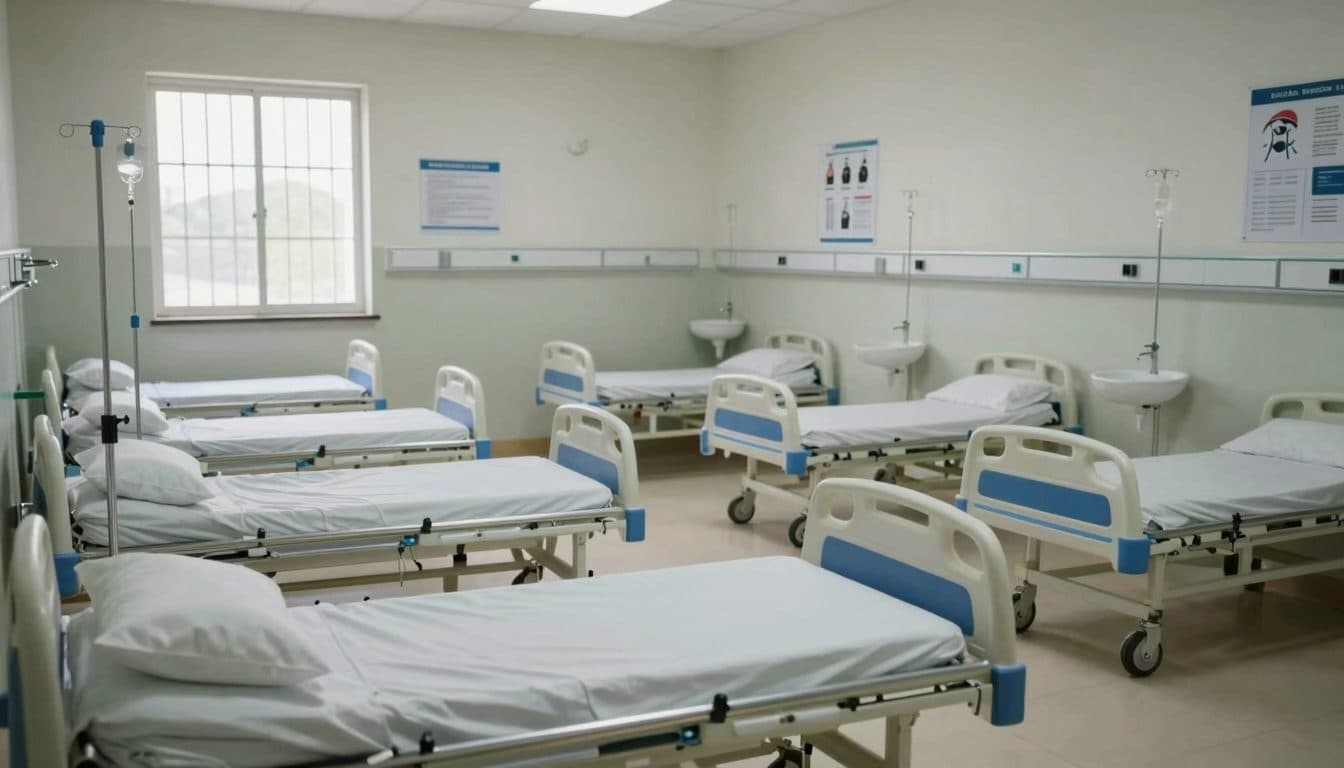
AI-generated image (z-image via Kie.ai)
Summary
In the Congo, more than 500 people have verifiably died of Ebola since May, with 1,561 cases considered confirmed. The health organization Africa CDC warns that patients who tested positive have repeatedly fled isolation centers, significantly complicating efforts to contain the Bundibugyo outbreak.
Kinshasa, 06 July 2026
In the Democratic Republic of the Congo, more than 500 people have verifiably died of Ebola since the outbreak began in May, while authorities have simultaneously registered 1,561 confirmed infections.
Current Figures from the Congo
The Ministry of Information of the Democratic Republic of the Congo reported on Sunday that the number of confirmed cases currently stands at 1,561, including 506 deaths. This means the death toll has risen continuously since the outbreak began. More than 500 people have verifiably died of Ebola, as the ministry confirmed. An independent comparison shows: Of the registered patients, 253 are considered recovered, while 628 patients are currently undergoing treatment in clinics and isolation centers.
Ebola in the Congo: Over 500 Dead – Outbreak Hard to Contain | allfacts360
The Ebola outbreak in the Democratic Republic of the Congo, officially announced in May, has now been ongoing for nearly two months. The current outbreak is particularly difficult to contain because it involves the Bundibugyo strain of the Ebola virus, for which, according to experts, there is still no specific therapy. Ebola fever is a life-threatening disease whose pathogen is transmitted through physical contact and contact with bodily fluids. These modes of transmission make hygiene, safe burials, and consistent isolation measures the central tools in the fight against the epidemic.
Bundibugyo Strain Without Specific Therapy
One cause for concern, including for the African health organization Africa CDC, is that patients who tested positive have repeatedly fled isolation centers. These escapes undermine the already difficult containment efforts, because infected individuals can return to their villages and infect additional people there. The Africa CDC is an African health organization that coordinates member states in combating disease outbreaks. The repeated incidents show, in the organization's assessment, that public education about modes of transmission is insufficient to deter patients from leaving the quarantine stations.
Outbreak Spreads to Uganda
Since the outbreak was announced in May, 19 people have also fallen ill with Ebola in neighboring Uganda, with the cases linked to the outbreak in northeastern Congo. Of these 19 infected individuals, two of them have died of the highly dangerous disease. This means the epidemic has spread beyond the borders of the Democratic Republic of the Congo, further exacerbating the regional health situation. The Ugandan authorities now face the challenge of detecting and treating imported cases within a likewise poorly equipped healthcare system.
A glimmer of hope in the fight against the virus lies in clinical research: Since last week, clinical testing of two antiviral therapies against the virus has been underway. Should these therapies prove effective, they could decisively improve treatment options for those affected. Until results are available, care for the sick remains limited to symptomatic measures, isolation, and contact tracing.
The African health organization Africa CDC has repeatedly pointed out the urgency of the situation in recent days. Above all, it criticizes the fact that individuals who tested positive have repeatedly fled isolation centers. These incidents illustrate a gap between medical infrastructure and societal acceptance of protective measures – a gap that evidently cannot be closed by classic public-awareness campaigns alone.
Clinical Trials of New Antiviral Therapies
Added to this is the fact that no specific therapy is available for the Bundibugyo strain predominant in the current outbreak. This distinguishes the situation from earlier outbreaks, for example in West Africa, where more specific treatment options were available. Ebola fever remains a life-threatening disease whose pathogen is transmitted through physical contact and contact with bodily fluids. It is precisely these modes of transmission that can be carried into the wider population particularly easily by fleeing patients.
Overall, the tally of the outbreak shows the scale of the catastrophe: 506 deaths stand against 1,561 confirmed infections, corresponding to a mortality rate of around 32 percent. Although this figure is lower than in some earlier outbreaks, it remains alarming given the total number of fatalities. For the coming weeks, experts expect case numbers to continue rising unless the escapes from isolation centers can be stopped.
At the regional level, the World Health Organization (WHO), which is working together with the Africa CDC, has stepped up its support for the Congolese authorities. International aid organizations are also active in the affected provinces to expand the capacity of isolation facilities and operate mobile laboratories. Providing protective clothing, disinfectants, and safe burial teams is among the most urgent tasks.
Challenges for Containment
The Central African authorities face a dual challenge: On the one hand, they must win the population's trust so that infected individuals remain in isolation centers and undergo treatment. On the other hand, they must contain the spread to neighboring countries such as Uganda, where 19 people have already fallen ill and two have died. Both objectives require close coordination between local health authorities, international organizations, and the communities on the ground.
The current situation makes clear that Ebola outbreaks in Central Africa remain difficult to control despite decades of experience with the disease. Conflicts in the affected regions, poor infrastructure, and mistrust of medical facilities are factors that complicate any containment strategy. The Africa CDC warns that these structural problems are further aggravating an already complicated situation.
The outbreak also highlights the limits of existing early warning systems: Despite the announcement in May, it took weeks before sufficient isolation capacity was created. The result was overcrowded treatment centers and reports of fleeing patients, as described by the Africa CDC. These reports suggest that capacity is also currently insufficient to care for all infected individuals under controlled conditions.
Structural Problems Impede the Fight
Ebola fever is a life-threatening disease whose pathogen is transmitted through physical contact and contact with bodily fluids. These modes of transmission make consistent protective measures for medical staff and family members indispensable. According to reports from local health authorities, several dozen aid workers have already become infected themselves, further worsening the staff shortage.
The Ebola outbreak in the Democratic Republic of the Congo is the country's worst since 2018. At that time, more than 2,000 people died in an outbreak in North Kivu province before it could be declared over after nearly two years. The current outbreak, announced in May, has not yet reached this scale, but according to the Africa CDC's assessment, it is developing in an alarming direction.
Questions & Answers
How many cases have been registered in neighboring Uganda?
In neighboring Uganda, 19 people have fallen ill with Ebola since the outbreak was announced in May, with the cases linked to the outbreak in northeastern Congo; two of them have died of the disease.