EU agrees on air passenger rights: compensation payments remain in place
Brussels, 13 June 2026
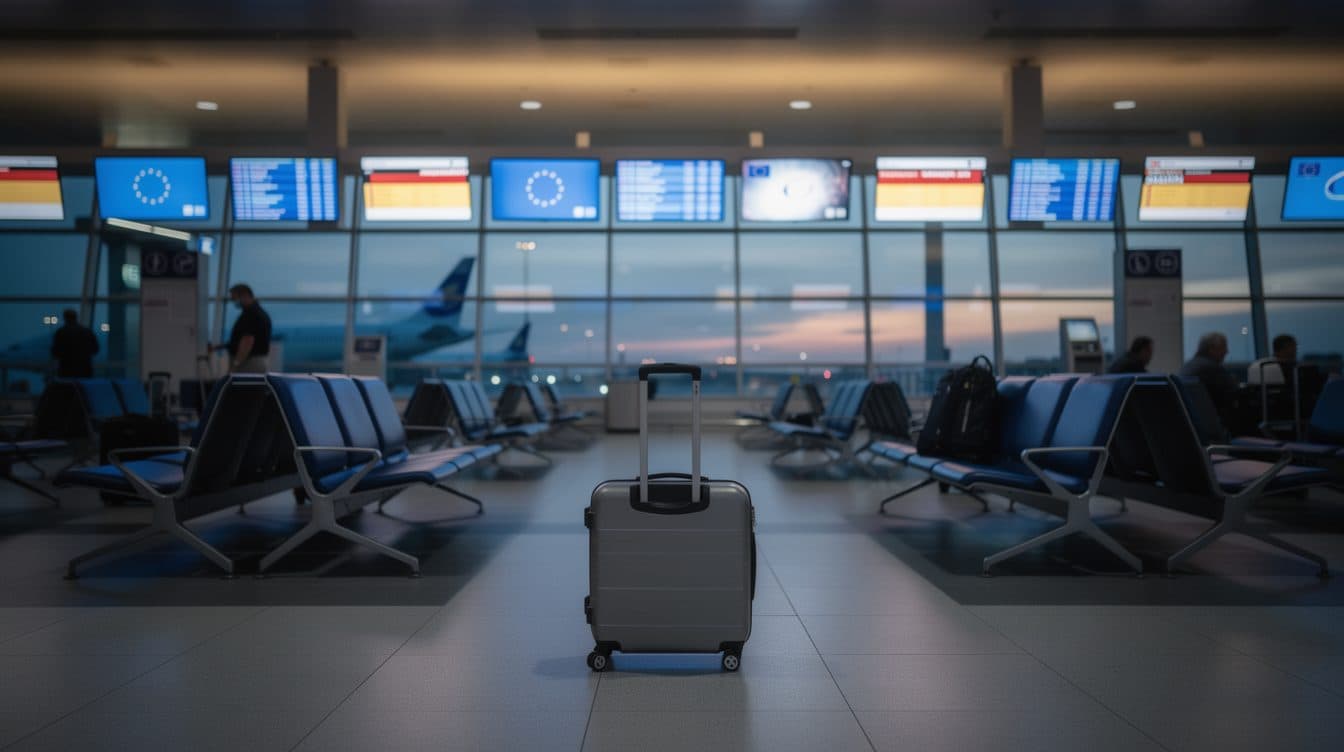
AI-generated image (flux-2/pro-text-to-image via Kie.ai)
Summary
After years of dispute, the EU member states and the European Parliament have agreed on a reform of air passenger rights. The well-known compensation payments of up to 600 euros for delays are therefore retained, and airlines must in future inform passengers of their rights within 96 hours.
Brussels, 13 June 2026
Representatives of the EU member states and of the European Parliament agreed on 13 June 2026 in Brussels on a reform of air passenger rights that essentially preserves the existing compensation rules and introduces new transparency obligations for airlines.
Agreement after years of wrangling
After years of negotiations, the member states of the European Union have reached agreement in the dispute over the rights of air passengers. As several sources reported in unison, negotiators from the EU states and from the European Parliament reached a compromise over the weekend that secures the central consumer protection rights in air travel. Formal confirmation by the Council of Member States and the plenary of the European Parliament is considered a formality; the vote was expected to take place on Monday.
German Federal Transport Minister Patrick Schnieder expressly welcomed the agreement. The compromise would finally create "after years of negotiations the necessary legal clarity", he declared. In addition, the solution now found drew on "what has been lived practice for years and is familiar to passengers and air carriers". The aim of the federal government had been "to adopt a regulation that strikes a balance between the interests of consumer protection and the economic and operational requirements of the air transport industry".
What the compensation provides for
At the heart of the reform is the preservation of the previous flat-rate compensation amounts. Passengers who arrive at their destination with a delay of at least three hours will continue to receive tiered compensation payments: 250 euros for flights of up to 1,500 kilometres, 400 euros for distances of up to 3,500 kilometres, and 600 euros on long-haul flights of more than 3,500 kilometres. The prerequisite is that the airline is responsible for the delay.
This entrenches the line that the European Parliament and consumer advocates had long championed. Member states had originally demanded that compensation be paid only from a delay of four hours and in lower amounts. This position did not prevail. The compensation rates that have applied in the EU for years remain unchanged.
Alongside the financial compensation, the reform provides for additional transparency obligations. In future, airlines must inform passengers in writing within 96 hours of which rights they have and how they can assert them when problems occur. This is intended to improve the situation, which has often been unclear for those affected.
New obligations for airlines
A further component concerns the reservation of seats for children. In future, children may sit next to their parents on the aircraft without a fee being charged for reserving the adjacent seat. In addition, the reform obliges airlines to make name corrections on tickets free of charge.
The reform also provides for a clearer list of so-called extraordinary circumstances under which the airline cannot be held liable. This is intended to make the distinction between delays for which the airline is responsible and those for which it is not more precise. The new rules apply to flights by EU airlines as well as to flights by non-EU airlines that depart from the EU.
Timeline and scope
After the reform enters into force, the airlines have twelve months to implement the new requirements in practice. If the reform is not confirmed in time, the original proposal of the EU Commission from 2013 would fail. The deadline for confirmation expired on Monday at midnight.
The agreement meets with a positive response from consumer advocates in Germany. Ramona Pop, board member of the Federation of German Consumer Organisations, said that air passenger rights thus remained "a positive example of successful EU consumer policy". SPD member of the Bundestag Udo Schieder declared that "reason had prevailed" and that air travellers would still receive tiered compensation.
Reactions from Berlin and Brussels
Approval also came from the ranks of the federal government. Justice Minister Stefanie Hubig, who had supported the German negotiating position, assessed the outcome as a success for travellers. The federal government had worked together with other member states to ensure that existing protection standards would not be lowered.
Critics from the aviation industry had warned beforehand of rising costs and a hollowing-out of the principle of personal responsibility. The argument advanced by the airlines – that an expansion of compensation could lead to price increases – was, however, rejected by the majority of member states in the course of the negotiations.
Positions of the aviation industry
Lufthansa, the largest German airline, had in the past also advocated strongly for a reform that would harmonise the rules and provide greater legal certainty. From company circles it was said that, above all, clearer definitions of extraordinary circumstances were expected from the reform, in order to be able to delimit disputes more effectively in future.
Overall, the agreement shows that, despite pressure from various interest groups, the EU is sticking to its standards in consumer protection. With confirmation by the European Parliament and the Council, the compromise is considered secure. Travellers can rely on the fact that the well-known compensation payments for delays remain in place and that the enforcement of their claims will be more clearly regulated in future.
The reform now adopted will enter into force after formal adoption. This brings to an end a process that began back in 2013 with a proposal from the EU Commission and has since been repeatedly postponed in numerous rounds of negotiations between Parliament, Council and Commission. The solution reached is considered politically viable because it neither lowers consumer protection rights nor entirely ignores the economic concerns of the aviation industry.
Questions & Answers
What compensation do the new air passenger rights provide for?
The compensation remains at 250 euros for up to 1,500 kilometres, 400 euros for up to 3,500 kilometres and 600 euros for more than 3,500 kilometres, provided the airline is responsible for a delay of at least three hours.
What new obligations do the airlines face?
In future, airlines must inform passengers in writing of their rights within 96 hours, make name corrections free of charge and reserve a seat for children next to their parents without an additional fee.
When and for whom do the new rules apply?
The reform enters into force after formal confirmation by the Council and the European Parliament; airlines then have twelve months to implement it. It applies to flights by EU airlines as well as to flights by non-EU airlines departing from the EU.
Air passenger rights: EU agrees – compensation remains | allfacts360