EU announces entry ban for Russian soldiers and new sanctions package
Brussels, 09 June 2026
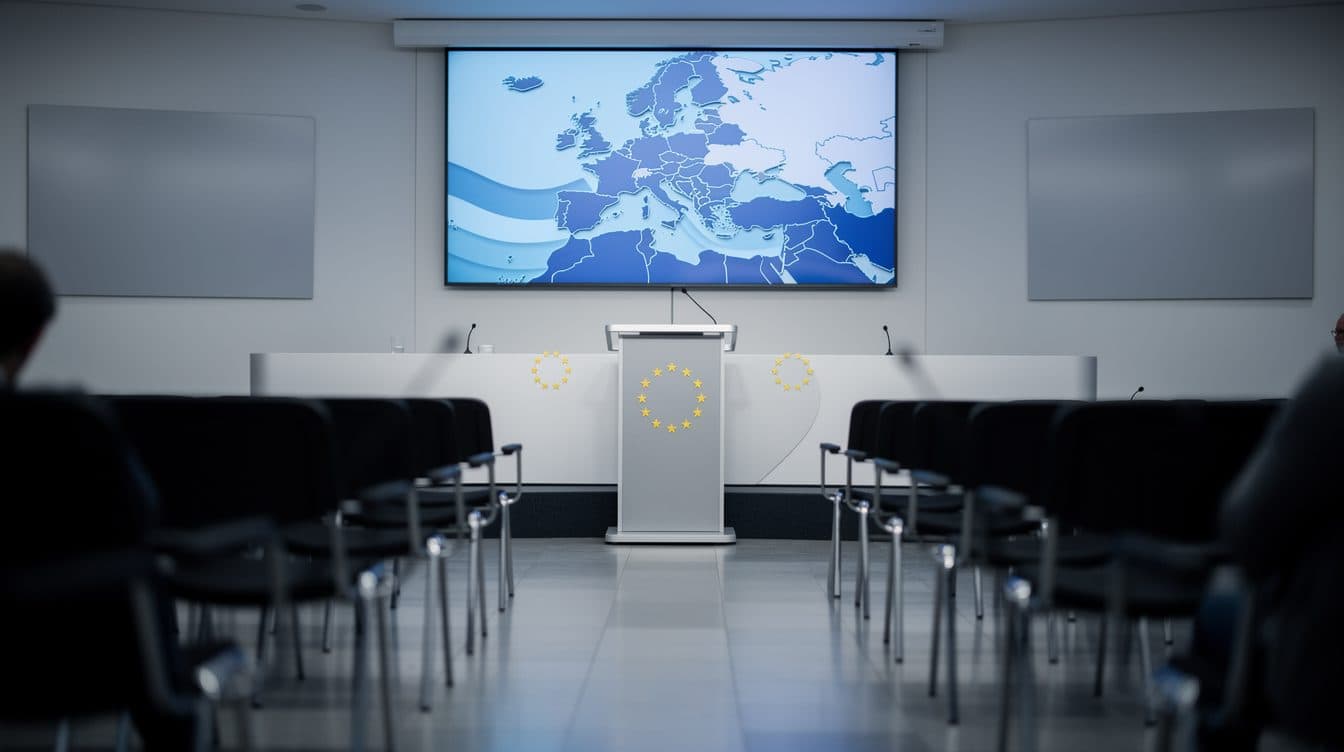
AI-generated image (flux-2/pro-text-to-image via Kie.ai)
Summary
European Commission President Ursula von der Leyen announced a new sanctions package against Russia in Brussels. It provides, among other things, for an entry ban on Russian soldiers as well as restrictions in the financial, energy, and fisheries sectors.
Brussels, 09 June 2026
European Commission President Ursula von der Leyen has announced a new sanctions package against Russia in Brussels, which provides for an entry ban on Russian soldiers as well as sanctions on financial, energy, and fisheries companies.
Entry ban for soldiers since the start of the war
According to European Commission President Ursula von der Leyen, the European Union is preparing a new sanctions package against Russia. Part of the punitive measures is to be adopted as early as next Monday at an EU foreign ministers' meeting. Further parts are to follow in the coming weeks after additional necessary consultations. The EU is responding to Russia's ongoing war against Ukraine.
A central component of the package is a far-reaching entry ban. According to von der Leyen, anyone who has served in the Russian armed forces since the start of the war is to be banned from entering the EU. The measure is thus directed for the first time as a blanket ban against active and former members of the Russian army. It supplements the existing visa regulations, which apply primarily to individual officeholders, oligarchs, and suspected perpetrators of war crimes.
Export restrictions and energy sanctions
In addition, the EU is planning export restrictions on goods and technologies that can be used by the Russian military industry. This is intended to further disrupt supply chains for Russian arms production. Further punitive measures affect Russia's financial and energy sectors. Additional ships, banks, crypto firms, and oil traders from Russia and from supporting states are to be added to the list of actors with which EU companies are no longer allowed to do business.
For the first time, according to von der Leyen, the EU also wants to sanction fisheries companies. They are to be banned from importing certain commercial goods such as cod into the EU. This brings an economic sector that had previously been largely exempt from EU measures into the sanctions framework. Industry circles had pointed out in the past that Russia is one of the largest fish suppliers to the European market.
Fisheries sector affected for the first time
In order to limit Russia's revenues from oil exports, the scheduled adjustment of the oil price cap is to be suspended until January, according to von der Leyen. The background to this, according to her, is higher world market prices resulting, among other things, from the Iran war and a far-reaching blockade of the Strait of Hormuz. Without the suspension, the price cap would have had to be raised, which would have brought Russia additional revenues.
Another new instrument concerns crypto services. According to this, the EU is proposing to ban crypto services for certain third countries that help Russia circumvent EU sanctions. Von der Leyen said: „Das wird eine starke abschreckende Wirkung auf Länder haben, die Plattformen beherbergen, die Russland bei der Umgehung unserer Sanktionen helfen." With this, the EU wants to close loopholes through which Moscow has hitherto been able to move sanctioned goods and currencies past the Western financial architecture.
Crypto sanctions against third countries
Von der Leyen justified the tightening with a positive interim assessment of the sanctions imposed so far. „Die Sanktionen zeigten schon jetzt Wirkung; die russische Wirtschaft verlangsame sich deutlich", she said. At the same time, she emphasized that „der Preis, den Russland für seine Angriff auf die Ukraine zahle, werde von Tag zu Tag höher" – an indication that Brussels considers the sanctions pressure to be an effective lever in the ongoing war.
Timeline and open questions
With regard to the timeline, only part of the package is to be formally adopted on Monday by the EU foreign ministers. The larger part, including the export restrictions on arms goods, the measures against the financial and energy sectors, and the entry ban for Russian soldiers, depends, according to information from Brussels, on further coordination among the member states. Observers expect that the question of precisely which officers and soldiers are to fall under the entry ban will in particular still give rise to discussion.
At the same time, concern about economic side effects within the EU itself is growing in Brussels. While some member states are pushing for a swift tightening of sanctions, others – including countries heavily dependent on Russian energy and fisheries products – are warning of sharply rising prices and supply bottlenecks. The EU Commission wants to cushion these concerns with transitional periods and targeted compensation payments for affected industries.
Overall, the EU's aim with the new package is to further narrow Russia's financial and military room for maneuver while at the same time strengthening its own economic resilience. Whether the entry ban for soldiers and the sanctions on the fisheries sector actually enter into force in the proposed form will be shown by the upcoming negotiations between the EU member states.
Questions & Answers
Who announced the entry ban for Russian soldiers?
European Commission President Ursula von der Leyen presented the plan on 9 June 2026 in Brussels. The entry ban is to become part of the next EU sanctions package against Russia.
Which economic sectors are to be targeted by the new sanctions?
According to von der Leyen, export restrictions on goods and technologies for the Russian military industry are planned, as well as sanctions on the financial and energy sectors and, for the first time, on fisheries companies.
When is the new sanctions package to enter into force?
Part of the punitive measures is to be adopted at next Monday's meeting of EU foreign ministers, with the remainder in the coming weeks after further consultations.
EU entry ban for Russian soldiers: New sanctions package | allfacts360