EU ambassadors agree on 21st sanctions package against… | allfacts360
EU ambassadors agree on 21st sanctions package against Russia
Brussels, 23 July 2026
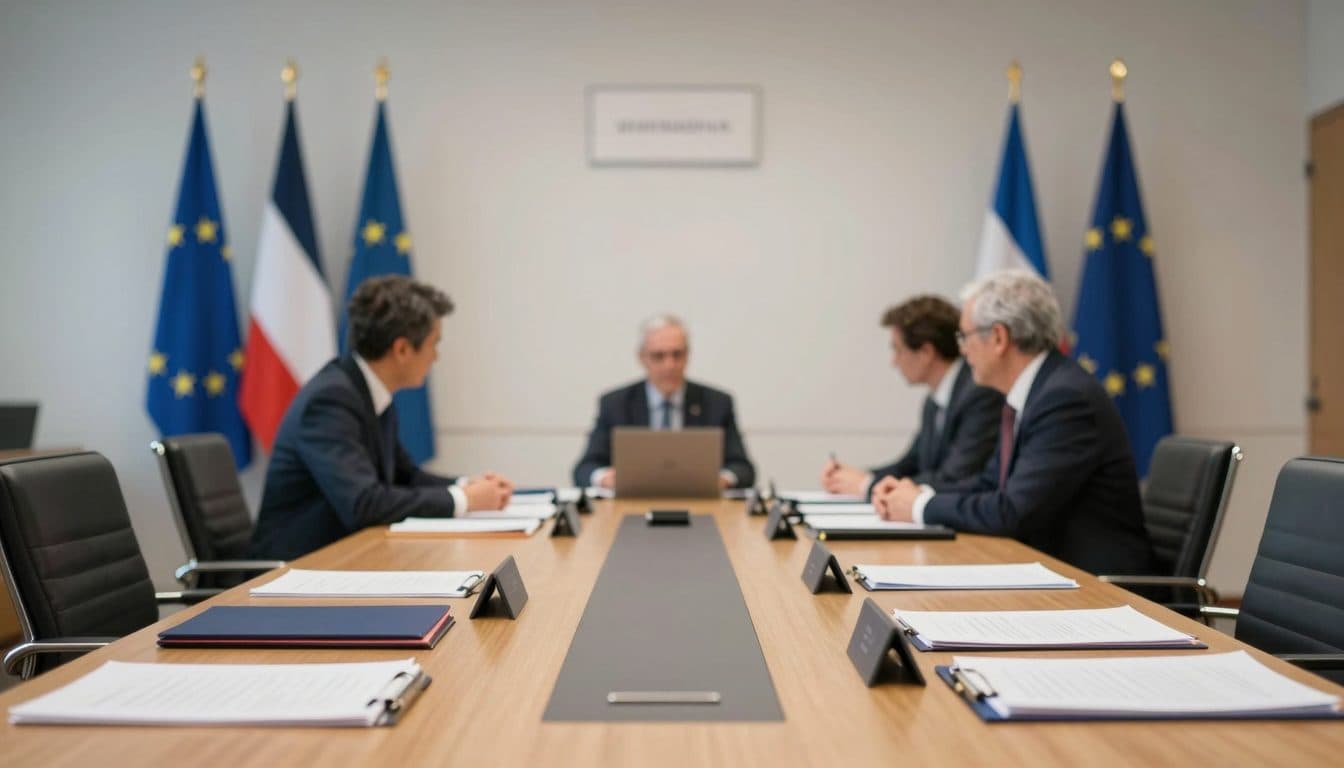
AI-generated image (z-image via Kie.ai)
Summary
The EU ambassadors agreed on 23 July 2026 in Brussels on a 21st sanctions package against Russia, which includes further measures against the financial and…
Brussels, 23 July 2026
The EU ambassadors agreed on 23 July 2026 in Brussels on a 21st sanctions package against Russia, which includes further measures against the financial and energy sector as well as an entry ban for Russian soldiers.
The agreement followed weeks of difficult negotiations between member states. As EU diplomats announced today in Brussels, the package includes, among other things, further sanctions against the Russian financial and energy sector as well as an entry ban for Russian soldiers. The legislative decisions still need to be formally adopted by the Council of Ministers, which is considered a formality.
The new sanctions package is the 21st because of Russia's war of aggression against Ukraine. The plan is to suspend the automatic adjustment of the so-called oil price cap for twelve months in order to limit Russia's revenues from oil exports despite rising world market prices. "Die EU-Botschafter haben sich auf ein 21. Sanktionspaket gegen Russland mit Maßnahmen gegen den Finanz- und Energiesektor sowie einem Einreiseverbot für russische Soldaten verständigt.
Content of the 21st sanctions package
The price cap is being extended by one year and is planned to suspend the automatic adjustment of the oil price cap for twelve months. "ist geplant, die automatische Anpassung des sogenannten Ölpreisdeckels für zwölf Monate auszusetzen. This would otherwise have to be raised due to the increased world market prices as a result of the Iran war and the extensive blockade of the Strait of Hormuz, which would mean more money for Russia.
The oil price cap was already frozen at the current level last week until 23 July to prevent an increase. It currently stands at around 44 dollars (about 38 euros) per barrel of Russian crude oil. Had the adjustment been made as planned, Russia would have generated an estimated 3.5 billion euros in additional revenue. The price cap was introduced in 2022 together with the USA, Japan, Canada and the United Kingdom and applies to the sale of Russian oil to third countries such as India, China and Turkey.
To enforce the cap, companies involved in the transport of Russian oil at a price above the price cap are threatened with sanctions. "Um ihn durchzusetzen, werden Unternehmen Sanktionen angedroht, die am Transport von russischem Öl zu einem Preis oberhalb des Preisdeckels beteiligt sind. The regulation also targets shipping companies, but also companies that offer insurance, technical assistance as well as financing and brokerage services.
The new package is intended to subject more than 30 additional Russian banks to a transaction ban and cut them off from the SWIFT payment service system. This would mean that around half of all Russian banks are sanctioned, whereby the share measured by transaction volume is significantly higher. Crypto firms and oil trading platforms that work with sanctioned Russian companies and persons or circumvent EU measures are also covered.
Background: The oil price cap
"Wir setzen weitere 32 russische Banken auf unsere Liste der Transaktionsverbote, announced Ursula von der Leyen on the online platform X. She thanked the Irish Council Presidency for mediating the agreement. The EU Council is also planning a record number of new sanctions listings: over 200 persons and organizations with connections to the Kremlin are to be included – more than in any previous package in the past four years.
The package also provides for extensions of the export restrictions for goods and technologies used by Russia's military industry. "Es sieht auch Ausweitungen bei den Ausfuhrbeschränkungen für Güter und Technologien vor, die von Russlands Militärindustrie genutzt werden. In addition, more ships, banks, crypto firms and oil traders from Russia and supporting states are to be added to the list of those actors with whom companies from the EU are not allowed to do business.
For the first time, ships supporting Russia's shadow fleet would be targeted. A total of around three dozen additional ships of the so-called Shadow Fleet are to be excluded from business transactions with European companies. Drones are also affected, according to the plans. "Auch Drohnen sind betroffen.
Financial sector and shadow fleet in focus
The background to the sanctions is the Russian war of aggression against Ukraine that has been ongoing since February 2022. "Die EU-Staaten haben sich angesichts des anhaltenden russischen Angriffskrieges gegen die Ukraine auf ein neues Sanktionspaket verständigt, the statement said. The 20th sanctions package came into force in April and was strongly aimed at reducing Russia's revenues from the sale of gas and oil and at hitting companies with connections to the Russian arms industry, banks and other financial service providers.
Ursula von der Leyen had said about the initiative for the visa ban that Europe should be closed to everyone involved in the invasion of Ukraine. On Russia's current situation, she said that four years after the start of the large-scale invasion, the country had clearly failed to subjugate Ukraine and the price Russia was paying was getting higher by the day. "Die Menschen müssten um Söhne, Brüder und Ehemänner trauern und seien zudem mit einem sinkenden Lebensstandard konfrontiert.
"Zu einem Zeitpunkt, an dem die Ukraine militärisch an Schwung gewonnen hat, schwächen unsere Sanktionen weiterhin die wirtschaftlichen Grundlagen der russischen Kriegsanstrengungen, von der Leyen added. According to diplomats, Kaja Kallas also described the package as the most extensive package of measures by the European Union against Russia in four years. António Costa spoke of an "entschiedener Schritt, um den Druck auf Russland zu verstärken.
Greece, fish and national interests
In the negotiations, several capitals pushed through mitigations or concessions in favor of domestic companies. "Sie argumentierten unter anderem, die Sanktionen dürften in der EU keine größeren wirtschaftlichen Schäden verursachen als in Russland. Thus, the import restrictions for Alaska pollock from Russia proposed by the EU Commission as well as an import ban for cod are not included in the package. According to EU diplomats, countries such as Germany, Portugal and France pushed for a weakening in the negotiations.
In the Federal Republic, it was above all the Commission proposal that caused concerns about halving the import of Alaska pollock from Russia into the EU within two years. "In der Bundesrepublik hatte vor allem der Kommissionsvorschlag für Bedenken gesorgt, die Einfuhr von Alaska-Seelachs aus Russland in die EU innerhalb von zwei Jahren um die Hälfte zu reduzieren. ... Production restrictions for the industry and higher prices for consumers would have been threatened. Germany is home to the world's largest fish stick factories, according to expert estimates. Portugal, France and Germany in particular also referred to domestic consumer or processing industries.
Greece, meanwhile, pushed through – because of the interests of domestic shipping companies – that a transport ban on Russian liquefied natural gas (LNG) to third countries is not implemented quite as comprehensively as planned, because old contracts are initially excluded. "Ein Beispiel in dieser Sanktionsrunde waren Forderungen Griechenlands, das wegen Interessen heimischer Reedereien durchsetzte, dass ein Transportverbot für russisches Flüssigerdgas in Drittländer nicht ganz so umfassend realisiert wird wie geplant, weil Altverträge erst einmal außen vor bleiben.
Greece argued that a complete ban would have cost 2,000 jobs and would have had no impact on Russian revenues, as the business would have shifted to other actors, especially Chinese ones. Specifically, the Greek company Dynagas benefits most from the compromise, which may continue to transport LNG under pre-war contracts and in quantities of a maximum of 2025. A limited exemption concerns the delivery of LNG to third countries (as well as related purchases) under contracts concluded before 24 February 2022. "Eine Ausweitung dieser Lieferungen durch EU-Betreiber soll eingeschränkt werden.
Patriarch Kirill and the Austrian RBI regulation
The Council wants to review the exemption annually. The head of the Russian Orthodox Church, Patriarch Kirill, will also not be sanctioned for the time being – mainly under pressure from Bulgaria. "Auch das russisch-orthodoxe Kirchenoberhaupt Patriarch Kirill wird vorerst nicht sanktioniert - vor allem auf Druck Bulgariens hin.
According to Council circles, Austria pushed for a legal regulation for the business activities of Raiffeisenbank International (RBI) in Russia in order to prevent a double enrichment of the Russian oligarch Oleg Deripaska. There had been concessions, which is why Austria did not block the package with a veto, it was said. The background, according to the information, is the demand of RBI to release sanctioned and frozen shares of the Austrian construction company Strabag worth around two billion euros, currently held by the Russian company Rasperia, and transfer them to RBI.
A originally planned entry ban for Russian persons who took part in the Ukraine campaign was not included in this package. According to the diplomats, the entry ban is postponed; a practical solution on visa issuance should be found by autumn at the latest. Tourism-dependent European countries had expressed concerns about checking participants, as Russia would not voluntarily provide the relevant information.
The proposals for the sanctions package had been presented by the EU Commission at the beginning of June. "Die Vorschläge für das Sanktionspaket waren Anfang Juni von der EU-Kommission vorgestellt worden. Given the already very long list of punitive measures, observers consider it increasingly difficult to find further sanctions that hit Russia noticeably without excessively burdening companies and people in the EU and in third countries.
The EU had previously decided in January that Russian LNG imports would be banned from 2027 and that European companies would