EU Commission Weakens Emissions Trading: Industry to Be Allowed to Emit CO2 Longer
Brussels, 17 July 2026
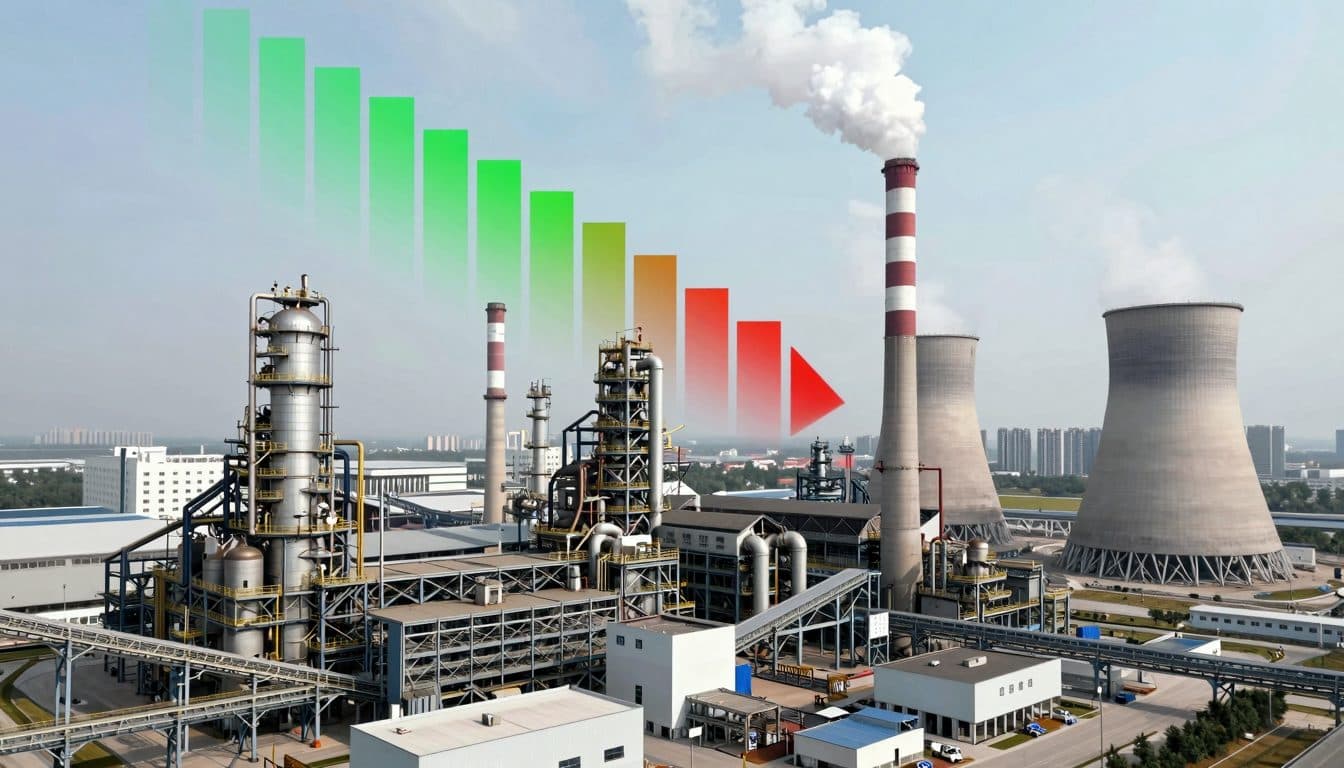
AI-generated image (z-image via Kie.ai)
Summary
On Friday, the EU Commission proposed a reform of emissions trading that allows industry to emit CO2 for longer and in greater quantities. Critics warn of a weakening of climate protection, while the Commission emphasises that the 2040 climate target remains achievable.
Brussels, 17 July 2026
On 17 July 2026, the EU Commission presented a reform of the European Emissions Trading System (ETS) that allows industry to emit carbon dioxide for longer and extends free certificates for energy-intensive sectors until 2037.
Slower Reduction of Certificates
On Friday, the EU Commission proposed adjusting the European Emissions Trading System (ETS) and reducing the available quantity of CO2 certificates more slowly than previously planned. This is intended to give heavy industry in the economic bloc more leeway for decarbonisation. The proposal still has to be approved by the European Parliament and the 27 EU member states.
At its core, the system means: anyone who emits climate-harmful carbon dioxide (CO2) must pay a price for it. Since 2005, industrial plants and power stations have had to present a certificate for every tonne of CO2 they emit, which they must either purchase or receive for free. The CO2 price is currently around 80 euros per tonne; when the ETS was introduced 21 years ago, it was below 10 euros.
Until now, the plan was to reduce the number of certificates to zero by 2039. Now, trading is to continue into the 2040s. The annual reduction in the total quantity of available pollution rights – the so-called linear reduction factor – is to drop from the current 4.3 percent to 3.7 percent from 2031 and to 1.7 percent from 2036. Steel companies or chemicals manufacturers will still be allowed to emit CO2 into the 2040s.
Three Goals: Climate Protection, Competitiveness, Independence
EU Climate Commissioner Wopke Hoekstra said: "Der heutige Vorschlag zur Überarbeitung des ETS vereint drei zentrale Ziele: Klimaschutz, Wettbewerbsfähigkeit und Unabhängigkeit". He described the ETS as a "phänomenales Werkzeug" in the EU's climate protection toolkit and added: "Kein anderes politisches Instrument hat den Emissionsausstoß in ähnlichem Maße reduziert". The proposals were "voll auf einer Linie" with the climate targets for 2040.
The responsible Vice-President of the EU Commission, Teresa Ribera, emphasised: "Wir wissen, dass die Dekarbonisierung die beste Sicherheitsstrategie für Europa ist" and "Europas Wettbewerbsfähigkeit wird auf sauberen Energien aufgebaut sein, nicht auf fossilen Brennstoffen". She further said: "Wir sind der Klimaneutralität bis 2050 verpflichtet".
More Free Certificates – Tied to Conditions
The Commission wants to issue more free certificates than previously planned – albeit under conditions. For companies to receive them, they must either already produce in a particularly environmentally friendly way or make a commitment to invest in environmentally friendly production facilities within the EU. Specifically, companies are to receive 80 percent of these free allocations in the future if they submit plans for investments in decarbonisation, with a further 20 percent following the implementation of these plans. The Commission wants to extend the deadline for issuing these free certificates until the end of 2037.
For sectors falling under the CBAM carbon border adjustment mechanism, the reduction in free allocation will be slowed and the phase-out extended until 2038. In addition, the EU Commission wants to increase free allocation to industry via the benchmarks for heat and fuels by 6 billion euros over the period from 2026 to 2030. Overall, since the system was introduced, the EU has allocated free CO2 certificates worth 250 billion euros to industry.
Billions in Revenues to Flow into Decarbonisation
Under the Commission's plan, EU member states are to invest at least 50 percent of revenues from emissions trading in the decarbonisation of ETS sectors. Currently, only around 5 percent of these funds are used for this purpose. Overall, EU emissions trading has generated revenues of around 260 billion euros since 2013; about 80 percent of that flowed into the national budgets of the member states. Italy is considered the biggest offender when it comes to diversion into general budgets.
EU Climate Commissioner Hoekstra criticised: "Aber gerade einmal zehn Prozent davon gehen dann wirklich in die Dekarbonisierung". He named three weaknesses of the ETS: international competitive pressure, insufficient transformation efforts on the part of some industries, and too little investment by member states in industrial restructuring. "Aber die europäischen Unternehmen selbst tun auch noch zu wenig", said Hoekstra.
Extension to Air Travel and Other Sectors
The EU Commission also wants to extend emissions trading to additional sectors. In the future, the CO2 price is to apply to flights to states outside the EU as well – according to the proposals, however, only up to a distance of 5,000 kilometres from the geographical centre of Europe. Flights to Doha, Dubai, and Istanbul, among others, would be affected. Private jet flights are also to be priced for their CO2 emissions going forward. Waste incineration plants are to be priced more heavily as well.
Independent of the current reform proposals, 2028 will see the launch of ETS2, a second EU system for fuels such as petrol and natural gas. This ETS2 is a thorn in the side of countries such as Poland and the Czech Republic, as it could significantly increase prices for consumers there.
Sharp Criticism from Industry and Environmental Organisations
Reactions to the proposal have been sharp. The Chief Executive of the German Chemical Industry Association (VCI), Wolfgang Große Entrup, said: "Die Pläne der EU-Kommission sind gefährliche Augenwischerei und riskieren, den Industrieumbau zu einem brutalen Industrieabbau zu machen". The EU's transformation policy borders on "wirtschaftspolitischen Kahlschlag". Holger Lösch, Deputy Chief Executive of the Federation of German Industries (BDI), spoke of "teils sinnvolle Signale", but complained: the proposals provided "weder ausreichende Voraussetzungen für Investitionen [...], noch eine überzeugende Antwort auf die fortschreitende Deindustrialisierung".
The Green Party MEP Michael Bloss criticised: "Die Kommission erteilt der Industrie die Lizenz, noch länger und günstiger zu verschmutzen". The proposal is "ein Trojanisches Pferd: Er sieht aus wie ein Geschenk für Unternehmen, um ihre Emissionsreduktionen hinauszuzögern. In Wirklichkeit verschafft er aber einen Wettbewerbsnachteil gegenüber chinesischen Unternehmen, die in der Zeit ihre Anteile an sauberen Märkten erhöhen." The Austrian parliamentary group leader Leonore Gewessler spoke of an "Angriff auf unsere Heimat Europa und auf die Welt, in der künftige Generationen groß werden".
EU Parliament member Tiemo Wölken (SPD) declared: "So werden nur 85 Prozent der CO2-Emissionen in den ETS-Sektoren eingespart, auch wenn wir gerade gesetzlich verankert haben, dass 90 Prozent eingespart werden müssen". The social conditionality – i.e. the preservation of jobs – falls "uns Sozialdemokraten deutlich zu kurz". "Dieses Paket ist insgesamt eine Enttäuschung und muss dringend verbessert werden."
The Christian Democrat Peter Liese in the European Parliament, by contrast, called the proposal "einen guten Tag für den Klimaschutz": "Jeder, der den ETS stoppen oder ganz abschaffen wollte, muss nun sehen, dass das nicht passieren wird. Der ETS wird bleiben, und er wird denen Vorteile bringen, die in Klimaneutralität investieren." Austrian Economics Minister Wolfgang Hattmannsdorfer (ÖVP) said: "Die Kommission stärkt mit ihrem Vorschlag grundsätzlich Wettbewerbsfähigkeit, Dekarbonisierung und strategische Unabhängigkeit Europas". Climate Minister Norbert Totschnig (ÖVP) welcomed the fact that the proposal was heading in the right direction and corresponded to Austrian demands.
Background: Concerns about Industrial Jobs
The background to the reform is the concern that high CO2 prices could trigger mass job cuts in European industry. In Austria alone, around 37,000 industrial jobs have been lost in recent years, while in Germany the figure was already over 500,000. In March, Federal Chancellor Christian Stocker (ÖVP) and his counterparts from Italy, Poland, the Czech Republic, Hungary, Croatia, Slovakia, Greece, Bulgaria, and Romania had called for an extension of free certificates beyond 2034. Federal Chancellor Friedrich Merz (CDU) had also publicly advocated for this.
According to calculations by the environmental organisation Carbon Market Watch, emissions on the path to the 2040 target could rise by around two billion tonnes of CO2 as a result of the reform. Karl Steininger from the Wegener Center at the University of Graz said: "Der neue Reduktionspfad bedeutet eine deutliche Verzögerung im Klimaschutz". Tina Deutsch from Kontext Institute warned that the proposal weakens planning certainty.
International Context and Swiss Linkage
In the Commission's view, the EU remains on course to achieve its 2040 climate target – greenhouse gas emissions are to be reduced by 90 percent compared to 1990 by then. By 2050, the EU wants to be climate neutral. According to the Umweltbundesamt, recorded emissions
EU Commission Reforms ETS: Industry Allowed to Emit CO2 | allfacts360