Fire on North Sea Island Trischen: NABU Bird Observatory Burns Down Completely, Bird Warden Rescued
Friedrichskoog, July 9, 2026
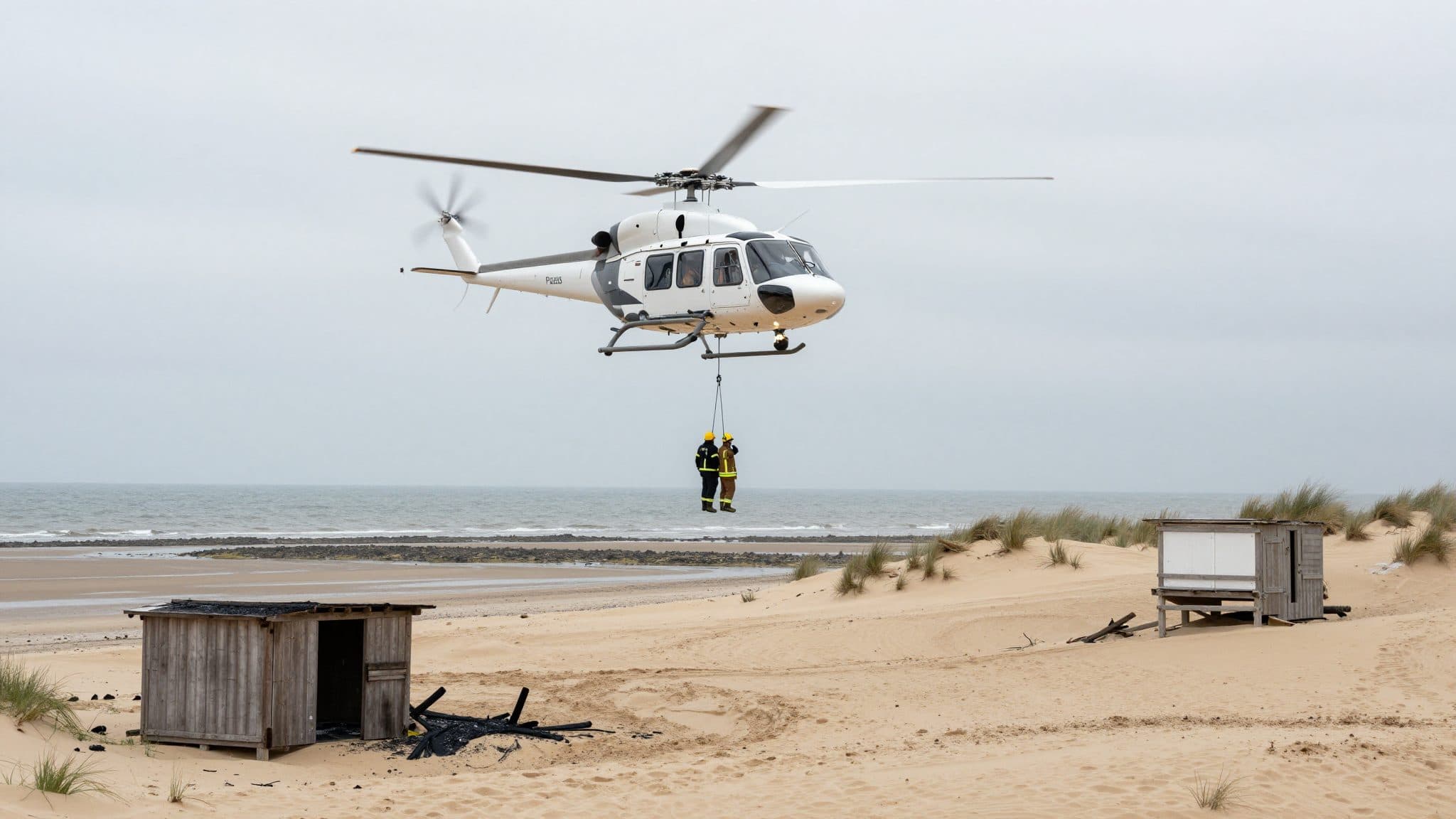
AI-generated image (z-image via Kie.ai)
Summary
On the North Sea island of Trischen, the bird warden's hut burned down completely overnight on Thursday. The 33-year-old ornithologist David Grupp was able to escape and was taken to a hospital with suspected smoke inhalation poisoning.
Friedrichskoog, July 9, 2026
Overnight into Thursday, a fire broke out on the North Sea island of Trischen off the Meldorf Bay, completely destroying the hut of the bird warden of the nature conservation organization NABU; the 33-year-old ornithologist David Grupp was rescued injured.
Fire at Night
According to the fire department, the fire broke out around 10:30 p.m. on the North Sea island of Trischen, as several reports indicate. The island is located approximately 14 kilometers southwest of Büsum in the Dithmarschen district of Schleswig-Holstein and covers about 180 hectares. In the blaze, the wooden stilt hut of the island's sole inhabitant was completely destroyed.
The 33-year-old ornithologist David Grupp, who had been living on Trischen on behalf of NABU since the end of March to observe and count the birds, among other tasks, alerted the rescue services after the fire broke out. He saved himself by making his way to the northern tip of the crescent-shaped sand island, where, according to reports, he was standing in the water lightly dressed when the rescuers arrived.
Difficult Access
Due to low tide, a ship from the German Maritime Search and Rescue Service (DGzRS) was initially unable to reach the island, as the reports indicate. Since the sea rescue cruiser could not dock, a helicopter from the Naval Air Arm brought six firefighters onto the island.
According to the Dithmarschen District Fire Brigade Association, six people were on board the helicopter, who were flown to the island to fight the fire. Since rescue by ship was initially not possible, the only option left was by air to bring the emergency personnel to the hard-to-reach island.
Extinguishing with Fire Beaters
Spokesperson Ole Kröger of the Dithmarschen District Fire Brigade Association told NDR Schleswig-Holstein in the morning that the firefighters had used so-called fire beaters to beat out the flames. These devices, which look like large broom handles, had been necessary because otherwise the rescuers would have had to bring pumps to get extinguishing water.
Operations leader Mathias Clausen of the Friedrichskoog Volunteer Fire Department explained that the focus when extinguishing had been on the vegetation. He justified this with the protection of the bird population on the island. Clausen said verbatim: "Um die Hütte an sich haben wir uns gar nicht gekümmert, sondern nur um den Vegetations-Brand, damit wir den Vogelbestand schützen können."
According to the German Maritime Search and Rescue Service, the hut was already "lichterloh in Flammen" when the sea rescue cruiser arrived. By the time the emergency personnel arrived on the island, not much was left of the hut, the rescuers reported consistently.
Bird Warden Rescued Injured
Bird warden David Grupp was brought to safety by sea rescuers from the northern tip of the island and then taken by ship to Büsum. From there, he was transported onward to the West Coast Clinic in Heide, where he was treated for suspected smoke inhalation poisoning.
According to NABU state chairman Alexander Schwarzlose, David Grupp has since been discharged from the hospital. Schwarzlose said that he was doing as well as could be expected under the circumstances, after having spent the night in the hospital.
In addition to the hut, approximately 350 square meters of grassland were destroyed by the fire, according to the fire department. The emergency personnel managed to prevent the vegetation fire from spreading further, so that damage to the rest of the island's infrastructure remained limited.
Cause of Fire Still Unclear
The cause of the fire is still unclear, according to the German Maritime Search and Rescue Service. The NABU managing director also told NDR Schleswig-Holstein that they would think about how to proceed on the island once the cause of the fire had been determined.
How things will continue for NABU on the island remains open. The observation and counting of birds in the summer — one of the bird warden's core tasks — is made more difficult by the loss of the hut, as the accommodation served as a base for the nature conservation work.
Impact on Nature Conservation Work
Trischen, a crescent-shaped sand island, is normally inhabited during the summer months by a nature conservation warden from NABU, who lives in a wooden stilt hut and observes the resident birds. The island is an important breeding and resting area for numerous bird species on the North Sea coast.
The recovery of the injured ornithologist and the firefighting operation on the remote island demonstrated the special logistical challenges that operations on the Halligen and islands of the Wadden Sea entail. The combination of low tide, the lack of landing options for ships, and the need to procure extinguishing water made the operation a coordinated action involving several rescue organizations.
During the operation, the Friedrichskoog Volunteer Fire Department, the Dithmarschen District Fire Brigade Association, the German Maritime Search and Rescue Service, and the Naval Air Arm worked hand in hand to bring the fire under control and to care for the injured bird warden. The rescue of the 33-year-old proceeded successfully, according to those involved.
Questions & Answers
Who is the bird warden on Trischen?
The bird warden is the 33-year-old ornithologist David Grupp, who had been living on the island on behalf of NABU since the end of March and was observing and counting the birds there, among other tasks.
Why couldn't the hut be saved?
Operations leader Mathias Clausen explained that the emergency personnel had focused exclusively on the vegetation fire in order to protect the island's bird population.
How was the bird warden rescued?
Sea rescuers picked up David Grupp from the northern tip of the island and brought him by ship to Büsum, from where he was transported to the West Coast Clinic in Heide.