Five Years After the Ahr Valley Flood: Flood Protection Stalls, Retention Basins Not Yet Built
Ahr Valley, 13 July 2026
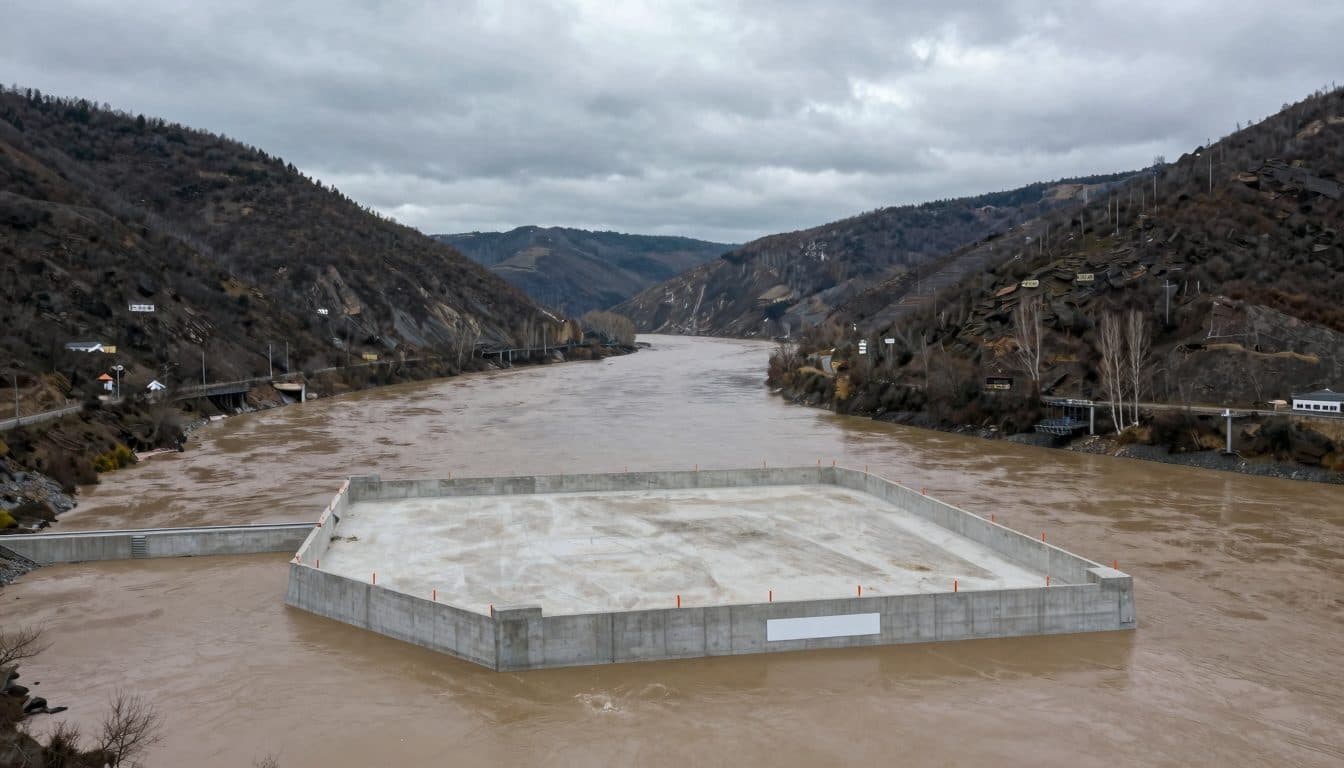
AI-generated image (z-image via Kie.ai)
Summary
Five years after the devastating flood in the Ahr Valley, not all the damage has been repaired by far, and comprehensive flood protection continues to be delayed. Seventeen potential sites for retention basins are on the table – but whether they will actually be built remains open.
Ahr Valley, 13 July 2026
Five years after the flood disaster in the Ahr Valley, comprehensive flood protection in the Ahrweiler district has still not been implemented, and 17 potential sites for retention basins have not been realized to date.
Five years after the devastating flood in the Ahr Valley, the damage along the Erft, Kyll, and above all the Ahr has still not been fully repaired. "Fünf Jahre ist die Hochwasserkatastrophe jetzt her" – that is how SWR Aktuell summarizes in its series "5 Jahre nach der Ahrtal-Flut: Schicksal als Chance?". Many of those affected continue to struggle with the consequences of the catastrophic night of July 2021.
During the flood night in the Ahr Valley, the water in some houses rose as high as the second floor – a level that can hardly be prevented through structural measures. During the 2016 century flood, the Ahr's water level was 3.50 metres, according to the report. During the 2021 flood, it ultimately reached a height of ten metres – "Am Ende waren es zehn Meter." Already on the afternoon before the flood, the fire brigade had warned, according to the accounts, that levels could reach up to six metres.
Bonn-based geographer Thomas Roggenkamp describes the danger that continues to emanate from the river: "Das Potenzial für eine solche extreme Sturzflut, ein extremes Hochwasser wie 2021, das steckt in diesem Fluss drin." Roggenkamp considers it likely, due to climate change, that extreme weather events will occur more frequently – and that future floods in the Ahr Valley could potentially be even larger. Lothar Kirschbauer, Professor of Urban Water Management and Hydraulic Engineering at Koblenz University of Applied Sciences, shares this assessment: "Wir wissen, dass es diese extremen Ereignisse häufiger geben wird… wird auch mehr Wasser in der Luft sein. Das heißt, es kann durchaus sein, dass die Ereignisse noch größer werden."
Scientific Assessment: Risk Remains High
As a consequence of the flood, the entire catchment area of the Ahr, covering approximately 900 square kilometres, was examined. According to the reports, 17 potential sites for retention basins have been identified, which could significantly reduce damage in the event of a major flood. In total, 18 flood retention basins are to be built in the Ahr's source area. The Ahrweiler district puts the cost at around 1.7 billion euros.
17 Sites, 1.7 Billion Euros – Still Uncertain
At the same time, it remains open whether the basins will actually be built. Currently, funds from the Reconstruction Aid Fund may only be used for local flood protection, according to Kirschbauer. Cornelia Weigand, the district administrator of Ahrweiler, is therefore demanding additional money from the state for personnel and flood protection in the Ahr Valley. According to the report, Rhineland-Palatinate's Minister-President Gordon Schnieder also intends to push for a change so that the funds can be used for retention basins.
Those Affected Report
Anita Bongard emphasizes the urgency of the project: "Es geht schließlich um unser Menschenleben." She herself has rebuilt her house in Altenburg higher up and closer to the slope, and has connected a new escape route to the embankment. "Das war mir ganz wichtig, nicht eingesperrt zu sein." In 2021, her family had been trapped by the rapidly rising water and had to flee to the attic while water metres high surged into the village.
Restaurateur Thorsten Rech, 44, owner of the restaurant "Bahnsteig 1" in Mayschoß, also recalls: "Gegen 20 Uhr habe ich gemerkt, dass es ernst wird." The water rose, and soon the ground floor of his establishment was flooded. "Am Ende fehlten dem Wasser noch drei Treppenstufen, dann wäre es auch in meine Wohnung in den ersten Stock hochgekommen." Tree trunks slammed against the walls below him, and the building had shaken. Today, as the founder of an initiative for flood victims, he is waiting for the approval of aid applications.
Reconstruction with Protective Walls and New Bridges
During the reconstruction, buildings and infrastructure are being built more robustly based on the lessons learned from the flood; in particularly endangered areas, protective walls are being installed, and new bridges are to be built higher and without pillars in the river. As part of the so-called river restoration, tonnes of earth are being removed at many points along the Ahr so that the water can spread out and slow down.
However, Kirschbauer warns that these measures will not yet have any significant effect against extreme flash floods. In his assessment, the planning and construction of the retention basins will in some cases take decades: "Das sind Projekte, die auch teilweise Jahrzehnte dauern werden." He also points to the bottleneck at the "Bunte Kuh," where the river cannot expand any further.
Reconstruction is further complicated by the scarcity of building land outside flood zones. In the Ahr Valley, there are restrictions due to nature conservation areas and vineyards, as SWR Aktuell describes. Insurers are also sometimes only paying out if houses are renovated at their original location – "dass es zum Beispiel von den Versicherungen teilweise nur Geld gibt, wenn man an dieser Stelle, wo man gebaut hatte, sein Haus wieder saniert."
In the private sector, Kirschbauer therefore suggests elevating or building houses higher in endangered locations, as is common practice along major rivers such as the Rhine or Moselle. At the same time, he emphasizes: "dass es keinen hundertprozentigen Schutz gibt. Ich kann für mich selbst ein privates Schutzniveau festlegen." Flood protection must consider the entire catchment area of the Ahr and other low-mountain waterways as well.
Meanwhile, the tourism industry in the valley has reinvented itself with the slogan "We AHR open." The region is making a comeback – five years after a night that, for many, remains palpable every single day, as the example of the destroyed Wellkyller Mühle, with its damage running into the millions, and the affected Massem family shows.
Looking ahead, the concern remains: "wir können nicht sagen, die nächste Flut wird nur maximal genauso hoch. Die kann auch größer werden," says Kirschbauer. It is also for this reason that Anita Bongard calls for solidarity where the basins are to be built – "Es geht schließlich um unser Menschenleben."
Questions & Answers
What is the state of flood protection in the Ahr Valley five years after the flood?
In the Ahr Valley, 17 potential sites for retention basins have been identified, which, according to expert assessment, could significantly reduce damage in the event of a major flood. Whether they will actually be built remains open according to the report, with costs estimated at around 1.7 billion euros.
What role does the Reconstruction Aid Fund play in the retention basins?
Currently, funds from the Reconstruction Aid Fund may only be used for local flood protection, according to Kirschbauer. District Administrator Cornelia Weigand is demanding more money, and Minister-President Gordon Schnieder intends, according to the report, to push for a change.
Why are experts warning of a possible new flood in the Ahr Valley?
Geographer Thomas Roggenkamp and Professor Lothar Kirschbauer continue to see the potential for an extreme flash flood like 2021 and consider it possible, due to climate change, that future floods in the Ahr Valley could be even larger.
Ahr Valley Flood: State of Flood Protection in 2026 | allfacts360