
Paris, July 13, 2026
The French energy company EDF has shut down several nuclear reactors or curtailed their output during the third heatwave of this year, in order to avoid additional warming of the already heated rivers through cooling water.
According to the state meteorological service Météo France, France is in the midst of its third heatwave of the year. At the start of the week, the highest warning level, red, was in effect for 37 departments, with temperatures in the west of the country once again climbing above 40 degrees Celsius. The peak reading measured was 42.3 degrees Celsius, and forecasts predicted that the heat would likely persist until the middle of the week.
France's largest energy company, EDF, announced that three nuclear power plants had been completely taken off the grid. Initially, one of the two reactors at the Golfech nuclear power plant was shut down. On Sunday, one additional reactor each at the Bugey and Chooz nuclear power plants was shut down. In addition, two reactors each at Saint-Alban, Blayais and Bugey, as well as one at Chooz, had been curtailed, the largest energy company in France said.
Why cooling water becomes a problem
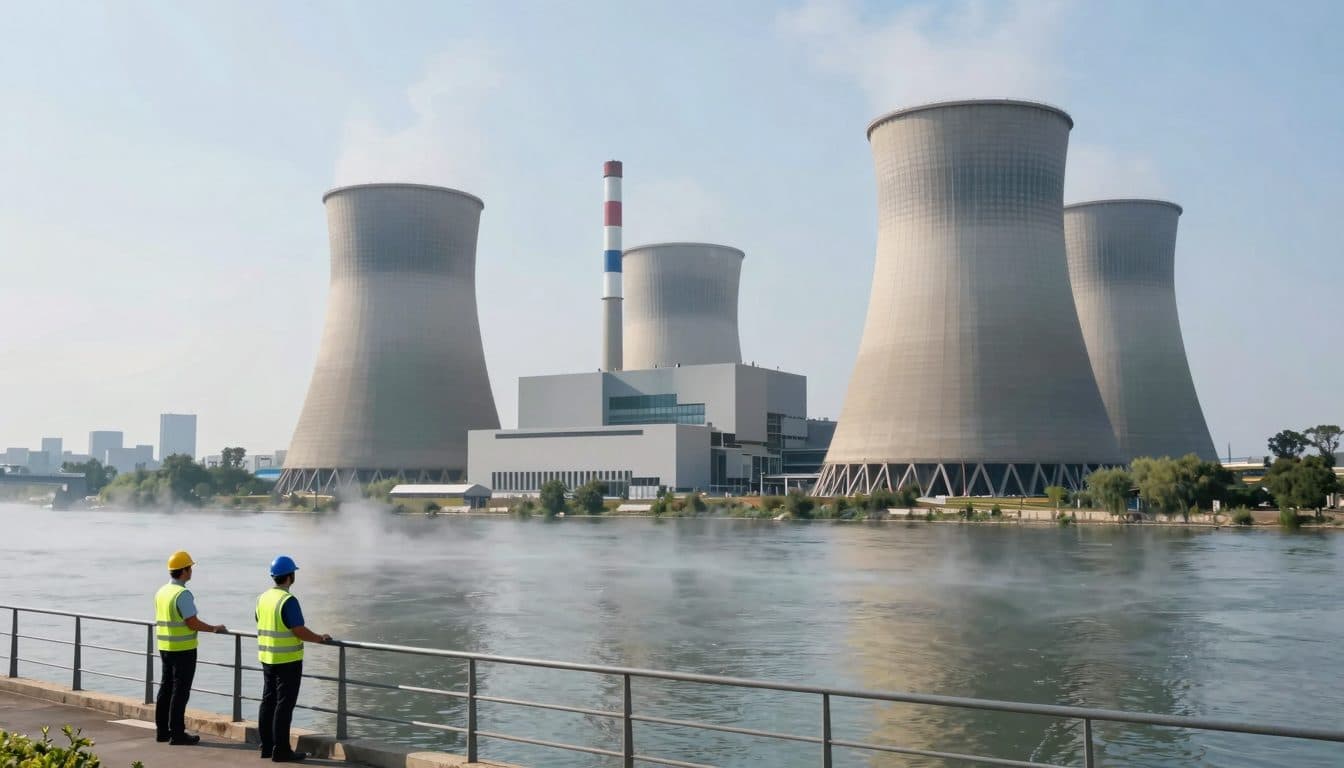
The shutdowns serve to protect the rivers: the measures are intended to prevent too much warm cooling water from being discharged into the already heated rivers. All of France's nuclear power plants are located on rivers or the sea and use the water to cool the reactors. The wastewater used for cooling is partly discharged back into rivers or the sea. Because the wastewater can be as warm as 33 °C, every additional discharge increases the burden on the waterways.