German coalition lets Tankrabatt fuel discount expire as planned, leaves door open to further relief
Berlin, 11 June 2026
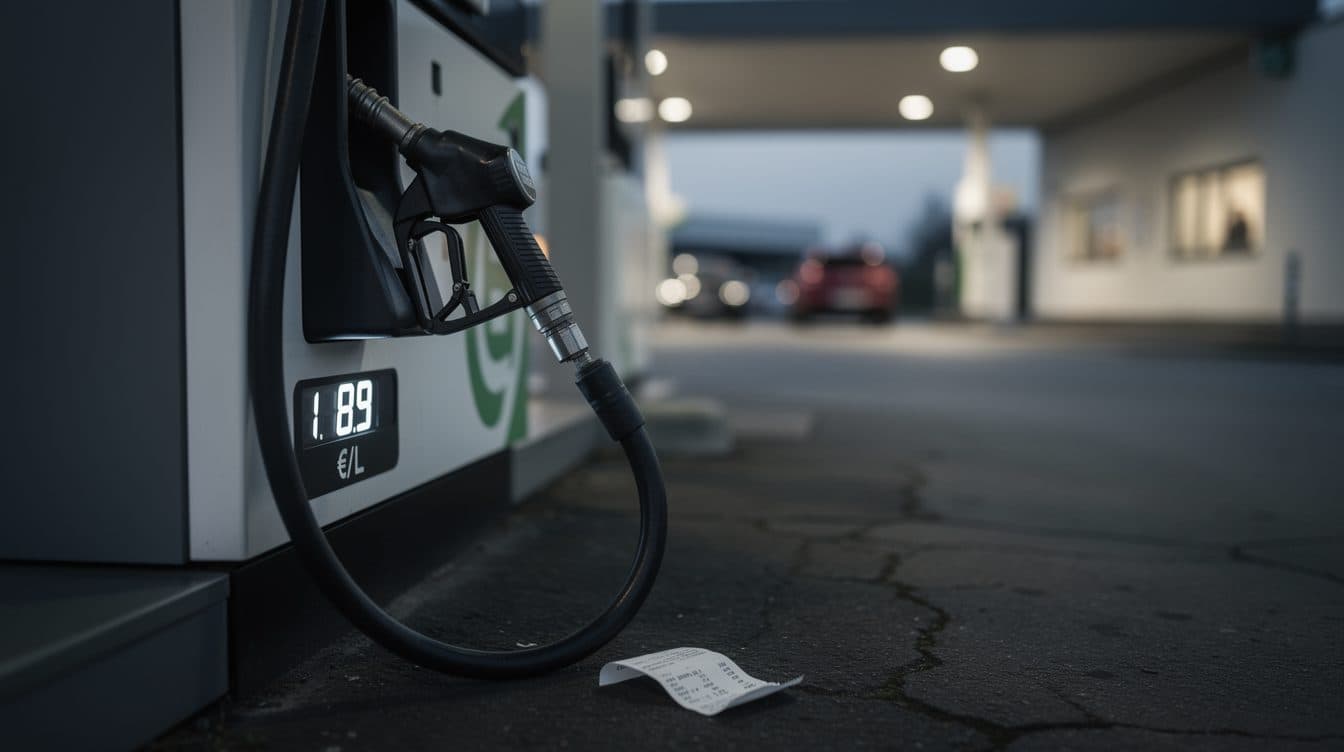
AI-generated image (flux-2/pro-text-to-image via Kie.ai)
Summary
The Union and SPD parliamentary groups have decided to let Germany's two-month Tankrabatt fuel discount expire on June 30 as originally planned, though coalition figures left open the possibility of new measures if energy prices rise sharply. Critics from consumer groups and the ADAC argue the roughly 1.6 billion euro tax break failed to deliver full relief to drivers.
Berlin, 11 June 2026
Germany's governing Union and SPD parliamentary groups have decided to let the two-month Tankrabatt fuel discount expire on June 30 as planned, while leaving open the possibility of further relief measures if energy prices surge over the summer.
How the Tankrabatt worked
The decision, announced after lengthy internal deliberations, brings to a close a temporary cut to the fuel tax that had been in effect since May 1. Sepp Müller, deputy parliamentary group leader of the Union, said the decision came after extensive debate. "Wir haben nach langen Beratungen entschieden, dass wir den Tankrabatt wie geplant am 30. Juni auslaufen lassen werden," Müller said. He added that extending the discount was not financially responsible: "Wir können es uns in der aktuellen Lage nicht leisten, Schulden dafür aufzunehmen."
The Tankrabatt had reduced the fuel tax by nearly 17 cents per liter. According to the Ifo Institute, the federal government deployed approximately 1.6 billion euros in tax funds to finance the measure, and oil companies passed on a large share of the relief to drivers — but not all of it. The institute calculated that part of the roughly 1.6 billion euros remained with the companies rather than reaching consumers at the pump.
Industry says it passed relief on in full
Industry representatives say they complied fully with the policy. A spokesperson for the mineral oil association Fuels und Energie said gas stations passed the tax reduction on petrol and diesel on to customers in full from the start and would continue to do so until the discount ended. "Die Tankstellen haben von Anfang an die Steuersenkung auf Benzin und Diesel in voller Höhe an die Tankkundschaft weitergegeben und werden dies bis zum Ende der Laufzeit ebenso tun," the spokesperson said.
Herbert Rabl, spokesperson for the Tankstellen-Interessenverband (TIV), struck a similar note, saying the industry had expected nothing else regarding the end of the discount. "Wir haben nichts anderes erwartet," Rabl said. But he also pointed to what he described as record industry profits during the period, arguing that politicians should not be in the business of subsidizing oil-company earnings. Oil companies had made "so viele Gewinne eingefahren wie nie zuvor - gerade auf dem deutschen Markt," he said.
ADAC flags intraday volatility
The ADAC motoring club has been more critical. It views the wide intraday price swings seen during the discount period as evidence that oil companies priced in risk premiums tied to the regulatory environment. According to the ADAC, the difference between the highest and lowest price of an average day reached 14.6 cents per liter for Super E10 and 18.4 cents per liter for diesel. The club attributes the volatility to the so-called 12 o'clock rule, which since early April has limited gas stations to only one fuel price increase per day, and which the federal government introduced on April 1 to dampen price spikes linked to the Iran war.
An ADAC spokesperson said drivers could be expected to see prices above two euros per liter at the pumps again once the discount ended, and warned that the war in the Middle East would continue to push energy prices higher. The club also called on the government not to abandon the broader debate over relief. "Das Ende des Tankrabatts darf nicht bedeuten, dass Überlegungen für die Entlastung der Menschen eingestellt werden," the spokesperson said, adding that the coalition must "kurzfristig Maßnahmen abstimmen, die zielgerichtet besonders Betroffene entlastet."
Consumer groups push for permanent measures
Consumer advocates took a similar line. Ramona Pop, board member of the Verbraucherzentrale Bundesverband, said the fuel discount had not delivered. "Der Tankrabatt hat sich nicht bewährt, daher ist es gut, dass er nicht verlängert wird," Pop said. She argued against further short-term fixes and called for sustainable measures instead. "Statt neuer Schnellschüsse braucht es jetzt dauerhaft wirksame Vorschläge," she said, singling out a cut to the electricity tax for private households as a form of direct relief: "Eine Senkung der Stromsteuer für private Haushalte könne direkt entlasten."
Müller struck a different tone, calling the Tankrabatt effective. "Müller sagte, der Tankrabatt habe gut gewirkt," according to reporting on his remarks. He also used the occasion to announce an intention to tighten competition law, with the stated aim of "Den Markt aufräumen und mehr Transparenz schaffen."
Coalition keeps the door open
The political backdrop is the ongoing Iran conflict, which officials say is a key driver of elevated energy prices. SPD chairwoman and Federal Minister of Labour Bärbel Bas, speaking on ZDF's Morgenmagazin, said the situation would be monitored beyond the summer. "Der Rabatt sei für zwei Monate festgelegt, bis zum Sommer und darüber hinaus werde man die Lage aber beobachten und 'natürlich andere Entscheidungen vielleicht noch treffen müssen,'" she said. She also stressed that the conflict driving high energy prices was continuing: "Der hinter den hohen Energiepreisen stehende Iran-Konflikt gehe ja weiter."
Bas left the door open to further measures. "Wenn es zu großen Belastungen kommt, werden wir sicherlich darüber auch nochmal reden müssen," she said. Müller and SPD parliamentary group vice-chair Armand Zorn offered a similar assurance, saying the coalition could move quickly in the event of a dramatic change in the situation from July 1, even during the summer holidays. They did not, however, commit to specific measures or to reintroducing a price cap. "Ändert sich die Lage ab 1. Juli dramatisch, können wir schnell reagieren," Müller and Zorn said.
What happens next
Focus magazine had previously reported that the coalition would not extend the fuel discount, framing the decision as settled within the governing bloc. The end of the Tankrabatt will now place renewed attention on the question of what, if anything, replaces it, with consumer advocates pointing to long-term tax relief and Union figures pointing to competition-law reform.
Berlin's governing mayor Kai Wegner has also been drawn into the broader debate over the cost of living, though his involvement concerns municipal-level measures rather than the federal Tankrabatt. The federal decision nonetheless sets the stage for fresh political arguments about how to cushion households against energy costs once the temporary tax cut expires at the end of the month.
Questions & Answers
What is the Tankrabatt and when does it end?
The Tankrabatt is a temporary German fuel tax cut of nearly 17 cents per liter that has been in effect since May 1; the Union and SPD parliamentary groups have decided it will expire as planned on June 30.
Why did the ADAC and consumer groups criticize the Tankrabatt?
The ADAC documented intraday price swings of 14.6 cents per liter for Super E10 and 18.4 cents per liter for diesel, and the Verbraucherzentrale Bundesverband's Ramona Pop said 'Der Tankrabatt hat sich nicht bewährt,' arguing for permanent measures such as cutting the electricity tax for private households.
Could the government introduce new relief measures after June 30?
Yes. SPD chairwoman and Federal Minister of Labour Bärbel Bas said further decisions might still be needed 'natürlich andere Entscheidungen vielleicht noch treffen müssen,' and Union faction vice Sepp Müller and SPD faction vice Armand Zorn said the coalition could react quickly if the situation changes dramatically from July 1.
Tankrabatt ends June 30: Germany debates further relief | allfacts360