
allfacts360
Briefing
  • Arts, culture & entertainment
  • Crime, law & justice
  • Disasters & accidents
  • Economy, business & finance
  • Education
  • Environment
  • Health
  • Human interest
  • Labour
  • Lifestyle & leisure
  • Politics
  • Religion & belief
  • Science & technology
  • Social issues
  • Sport
  • Unrest, conflicts & war
  • Weather
BlindspotStatisticsAbout UsLoginRegister
FREE
About usEditorial standardsContactCorrectionsTermsPrivacyImprint
Briefing
Topics
  • Arts, culture & entertainment
  • Crime, law & justice
  • Disasters & accidents
  • Economy, business & finance
  • Education
  • Environment
  • Health
  • Human interest
  • Labour
  • Lifestyle & leisure
  • Politics
  • Religion & belief
  • Science & technology
  • Social issues
  • Sport
  • Unrest, conflicts & war
  • Weather
BlindspotStatisticsUpgradeAbout UsLogin

Synthesized by the MediaIntel Engine

Published: 5/28/2026

Updated: 5/29/2026

Author: allfacts360 Politics Desk

Category: Politics

Source Coverage:

0L3C0R
High Factuality

Story updates

What we've added since the first publication.

  1. May 29, 2026 · current

    New: Consumer Advocates Slam Fuel Tax Cut as 'Expensive' and 'Inefficient' Amid Extension Debate

  2. May 29, 2026

    New: German Politicians Debate Extension of Fuel Tax Rebate

Advertisement
Ads break focus. Upgrade to 360 Plus.

German Politicians Debate Extension of Fuel Tax Rebate

Berlin, 28 May 2026

German Politicians Debate Extension of Fuel Tax Rebate
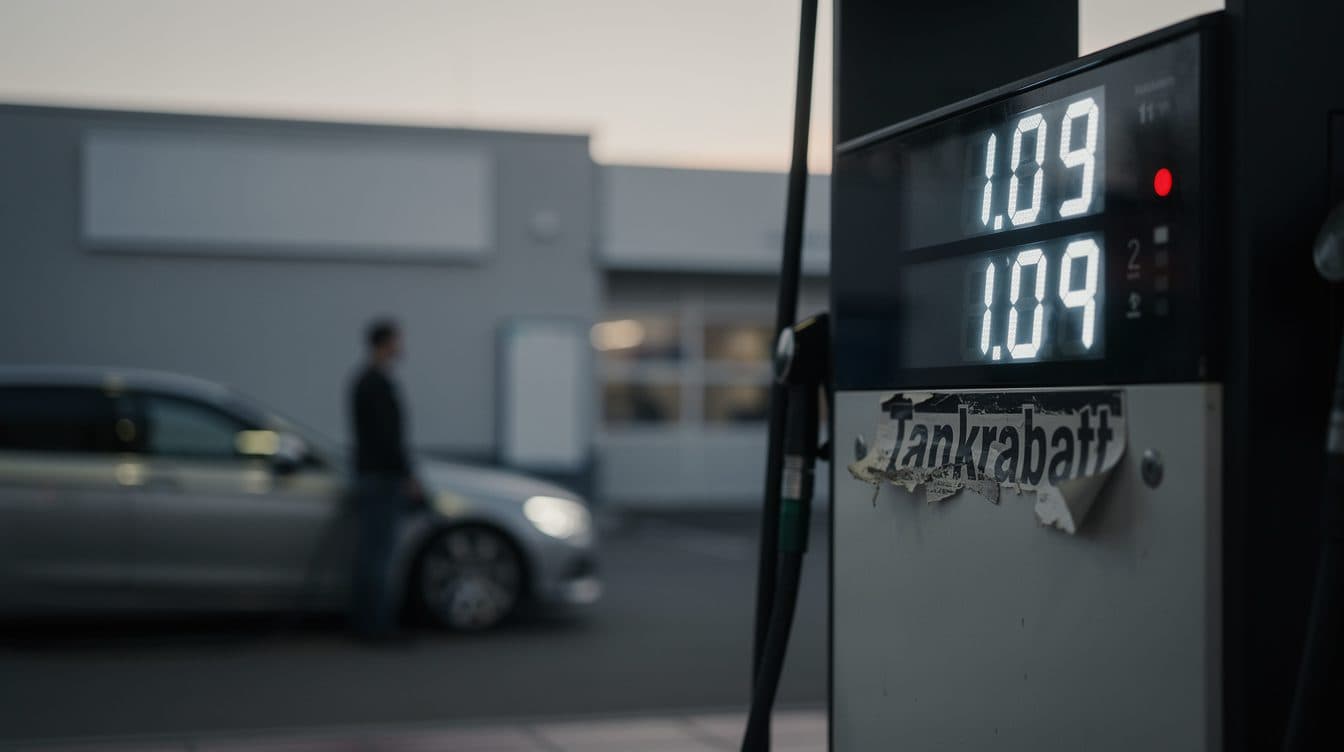
AI-generated image (flux-2/pro-text-to-image via Kie.ai)
Summary

The German government is considering extending the fuel tax rebate, a temporary measure to alleviate high fuel prices. The rebate has been in effect since May and is set to expire at the end of June.

Berlin, 28 May 2026

German politicians are debating the extension of the fuel tax rebate, a temporary tax reduction on fuels aimed at relieving drivers and businesses amid high fuel prices resulting from the Iran war.

The 'Tankrabatt' is a temporary tax reduction on fuels to relieve drivers and businesses amid high fuel prices resulting from the Iran war.

Energy taxes on diesel and gasoline were reduced by 14.04 euro cents per liter, with a total reduction of 16.7 euro cents per liter due to the elimination of VAT on the reduced energy tax.

Background

Brandenburg's Minister President Dietmar Woidke, a member of the SPD party, spoke in favor of extending the fuel tax rebate, stating that everything must be done to ensure people can live well from their work, including ensuring tolerable fuel prices.

Woidke also stated that the demand to take tougher action against corporations was justified and must still be raised, emphasizing the need for closer scrutiny and more action regarding fuel pricing.

Federal Transport Minister Patrick Schnieder, a member of the CDU party, dampened expectations for an extension of the fuel tax rebate beyond July 1, citing the state's limited possibilities.

Schnieder told Handelsblatt that the state eventually reaches the limits of its possibilities, highlighting the need for a balanced approach to addressing high fuel prices.

Debate and Criticism

The fuel tax rebate has been in effect since the beginning of May and runs until the end of June, with the government considering an extension amid ongoing debates about its effectiveness and fairness.

Critics argue that the rebate is inefficient and benefits the wealthy more than low-income households, while supporters see it as a necessary measure to alleviate the burden of high fuel prices on drivers and businesses.

The German government is expected to make a decision on the extension of the fuel tax rebate in the coming weeks, with politicians and stakeholders continuing to debate its merits and drawbacks.

Future Outlook

As the debate continues, it remains to be seen whether the fuel tax rebate will be extended, and if so, in what form and for how long.

The outcome of the debate will have significant implications for drivers, businesses, and the broader economy, highlighting the need for a careful and balanced approach to addressing high fuel prices.

In the meantime, drivers and businesses are advised to plan accordingly, taking into account the potential expiration of the fuel tax rebate and its impact on their finances.
Questions & Answers

Who is Dietmar Woidke and what is his stance on the fuel tax rebate?
Dietmar Woidke is the Minister President of Brandenburg and a member of the SPD party. He has spoken in favor of extending the fuel tax rebate, citing the need to ensure tolerable fuel prices for drivers and businesses.
What is the current status of the fuel tax rebate and when is it set to expire?
The fuel tax rebate is currently in effect and is set to expire at the end of June. The government is considering an extension, but a decision has not yet been made.
What are the arguments for and against extending the fuel tax rebate?
Supporters of the rebate argue that it is necessary to alleviate the burden of high fuel prices on drivers and businesses, while critics argue that it is inefficient and benefits the wealthy more than low-income households.
Note: This article was produced from verified facts drawn from multiple independent sources. Synthesis and initial drafting are assisted by AI tooling on the MediaIntel platform. Methodology & sources

More on this topic

  • Study: Fuel Rebate Largely Reaches Consumers, But Relief Evaporates
  • Austria's Coalition Rifts Over Fuel Price Brake Extension as Deadline Nears
  • Ifo Institute Criticizes Fuel Discount: Pass-Through Incomplete, Impact Missed
  • Fuel rebate shows effect: Fuel prices significantly lower in May
65%

Truth-Score

Konsens über verifizierte Quellen

Synthesized from 2 verified sources.

Fuel Tax Rebate Extension Debated in Germany | allfacts360