Hantavirus Outbreak on the Hondius: WHO Sees an End
Geneva, 30 June 2026
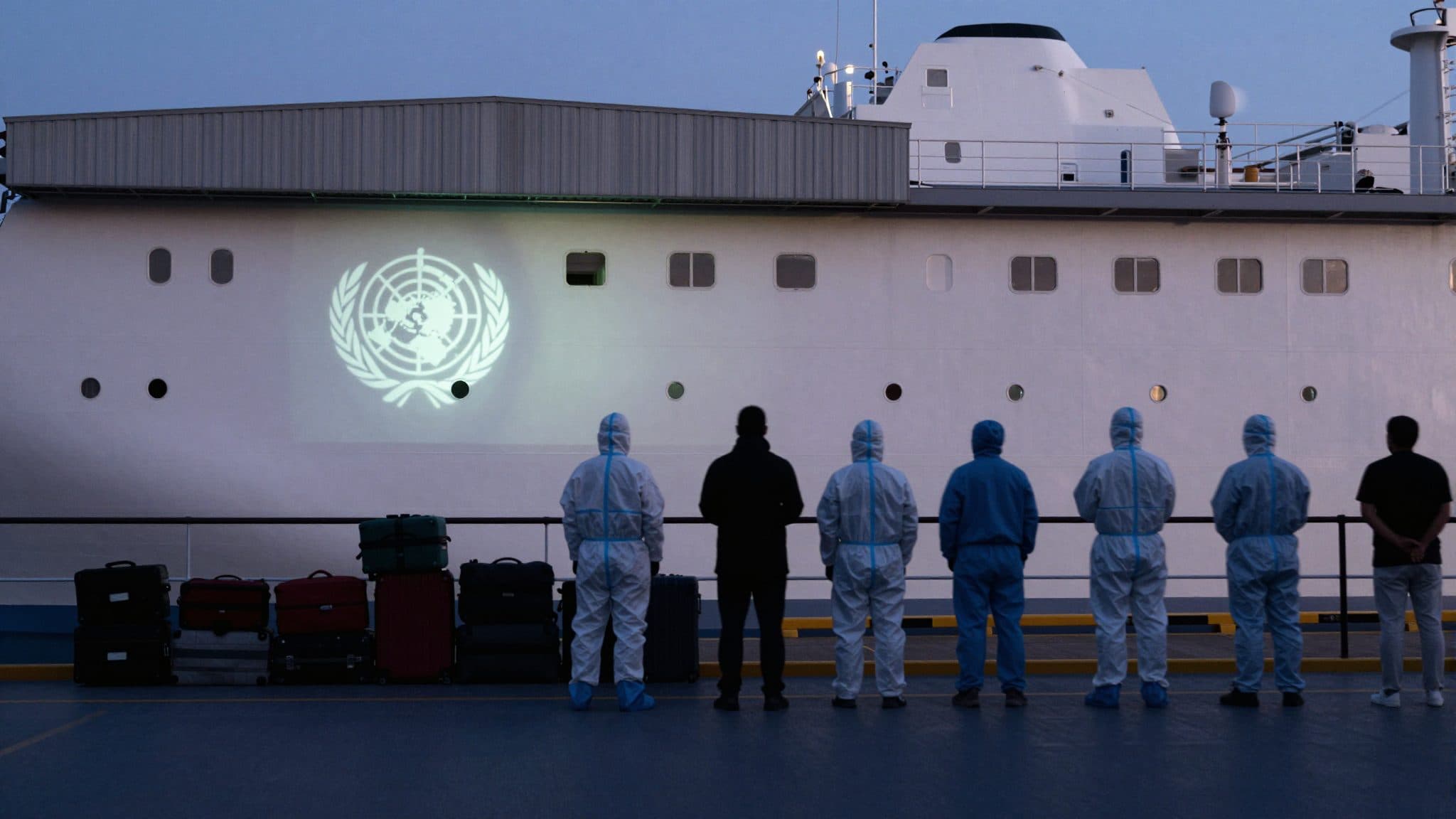
AI-generated image (z-image via Kie.ai)
Summary
The World Health Organization assesses the hantavirus outbreak on the cruise ship "Hondius" as largely over. A total of 13 cases were counted, including three deaths; the follow-up observation of contact persons is coming to an end.
Geneva, 30 June 2026
The hantavirus outbreak on the cruise ship "Hondius" of the Dutch shipping company Oceanwide Expeditions is drawing to a close according to the assessment of the World Health Organization (WHO), as WHO Director-General Tedros Adhanom Ghebreyesus announced.
On the cruise of the ship "Hondius," operated by the Dutch shipping company Oceanwide Expeditions and launched in Argentina, several people had become infected with the hantavirus — specifically with the South American Andes type of the virus. Ghebreyesus wrote on the platform X that the situation remains stable. In doing so, he confirmed the assessment expressed by the WHO weeks earlier that there is no danger of a large wave of infections or a pandemic.
Total Number of Cases and Assessment
The total number of cases remains at 13, including three deaths. The WHO assesses the risk for the general population as low. "Die Lage bleibe stabil," Ghebreyesus continued. This assessment aligns with the words of Lars Schaade, President of the Robert Koch Institute (RKI), who had said beforehand: "Im Moment sieht es gut aus". Schaade was also confident regarding possible transmissions in Europe: "Das ist kein Virus, das sich verbreitet".
The first infected person, a 70-year-old man, had boarded the ship before he actually became ill. He infected another person, his wife. This was followed by two more generations of transmissions. All of this occurred before strict infection control measures were put in place on the ship.
First Chain of Infection on Board
Initially, it was speculated that she had become infected while birdwatching at a landfill in Argentina. That was investigated, but the virus was not found in rodents there. Where and when the man actually became infected has not yet been conclusively clarified.
Hantaviruses are typically transmitted by rodents, for example through fecal particles in stirred-up dust. Hantaviruses are also widespread among rodents in Europe. In South America, the more dangerous Andes variant is common in long-tailed pygmy rice rats. The Andes virus is considered the only hantavirus for which human-to-human transmissions can occasionally occur. Official figures on the incubation period so far range from one to six weeks.
Properties of the Andes Virus
This variant can trigger the accumulation of fluid in the lungs (pulmonary edema) and circulatory shock, which within hours can lead to respiratory arrest or cardiovascular failure. The Andes variant is also the only hantavirus variant for which human-to-human transmissions are known. Scientific investigations clearly showed that the outbreak originated from a long-known variant, meaning it is not a new, more dangerous, or more contagious form.
The cramped conditions on the cruise ship with 147 passengers favored the spread of the virus. Around 150 people from 23 countries were reportedly on the "Hondius." A passenger died on the cruise ship "Hondius" on 11 April. However, that it had been a hantavirus infection was not confirmed until 2 May.
Cruise Under Quarantine
Due to the outbreak, the ship docked at the island of Tenerife in May. On 10 May, the "Hondius" docked at Tenerife, and the passengers were flown out from the holiday island. From there, the people on board were brought to their home countries under special safety precautions.
All contact persons of the two cases that had been identified in South Africa had completed their follow-up observation period without further cases being reported. In Spain and the Netherlands as well, the quarantine and follow-up observation periods have been completed. 30 contact persons were still being monitored, it was said.
Follow-up Observation in Europe and South Africa
At the same time, the WHO emphasized that surveillance would be maintained in case individual late cases still appeared. Experience shows that illnesses can also break out weeks after the suspected infection. The responsible health authorities of the affected countries remain in contact, it was said from Geneva.
Overall, the authorities assess the outbreak as contained. Neither the RKI nor the WHO see indications that the virus has spread more widely outside the cruise ship and its immediate contact persons. Travel restrictions were not recommended.
The shipping company Oceanwide Expeditions has so far not publicly commented on the incident. The Dutch shipping company had originally designed the ship for expedition trips to remote regions such as Antarctica and the Arctic. After the outbreak, the "Hondius" sailed directly to a port in the Canary Islands in order to fly out the passengers.
For medical research, the outbreak nevertheless provides important insights: For the first time, it was possible to document on this scale how the Andes variant spreads from person to person under cramped conditions. The scientific investigations clearly showed that the outbreak originated from a long-known variant.
Research and Lessons from the Outbreak
The incident is reminiscent in several respects of earlier hantavirus events in South America, where limited human-to-human chains also occurred. In Europe, on the other hand, hantaviruses have long been considered endemic; certain variants typically trigger milder courses here with flu-like symptoms, known as nephropathia epidemica.
The WHO stated that it would continue to monitor the case and publish new recommendations if necessary. Tedros Adhanom Ghebreyesus thanked the involved health authorities for the prompt cooperation. The hantavirus outbreak on the "Hondius" is thus not yet fully declared over, but according to experts it is close to being concluded.
With a view to the upcoming cruise season, experts pointed out that ship operators should review their hygiene concepts. For trips to regions with endemic rodent populations, proactive education of passengers is advisable in order to be able to react more quickly in an emergency.
The WHO evaluates the outbreak on the "Hondius" as an example of how consistent contact tracing and rapid quarantine measures can stop a potential spread. The RKI shared this assessment and referred to the smooth course of follow-up observation in Germany.
If no new cases occur in the coming weeks, the WHO is likely to officially declare the outbreak over. Until then, health authorities worldwide remain vigilant — not least because the incubation period can be up to six weeks according to the WHO.
Overall, the course of the outbreak shows that the responsible authorities in several countries reacted quickly across borders. From the identification of the first cases to the evacuation of the passengers and seamless follow-up tracking, it took only a few weeks.
Questions & Answers
Who is Tedros Adhanom Ghebreyesus?
Tedros Adhanom Ghebreyesus is the Director-General of the World Health Organization (WHO) and has commented on the situation of the hantavirus outbreak on the "Hondius" on the platform X.
How many people have died in the hantavirus outbreak?
According to the WHO, the total number of cases is 13, including three deaths connected to the outbreak on the cruise ship "Hondius."
What makes the Andes variant of the hantavirus special?
According to the WHO, the Andes variant is the only hantavirus variant for which human-to-human transmissions are known, and it can lead to pulmonary edema or cardiovascular failure within a few hours.
Hantavirus Outbreak on the Hondius: WHO Sees an End | allfacts360