Heavy Russian Strikes on Kyiv Precede NATO Summit as Trump Hints at Ukraine Deal
Kyiv, 06 July 2026
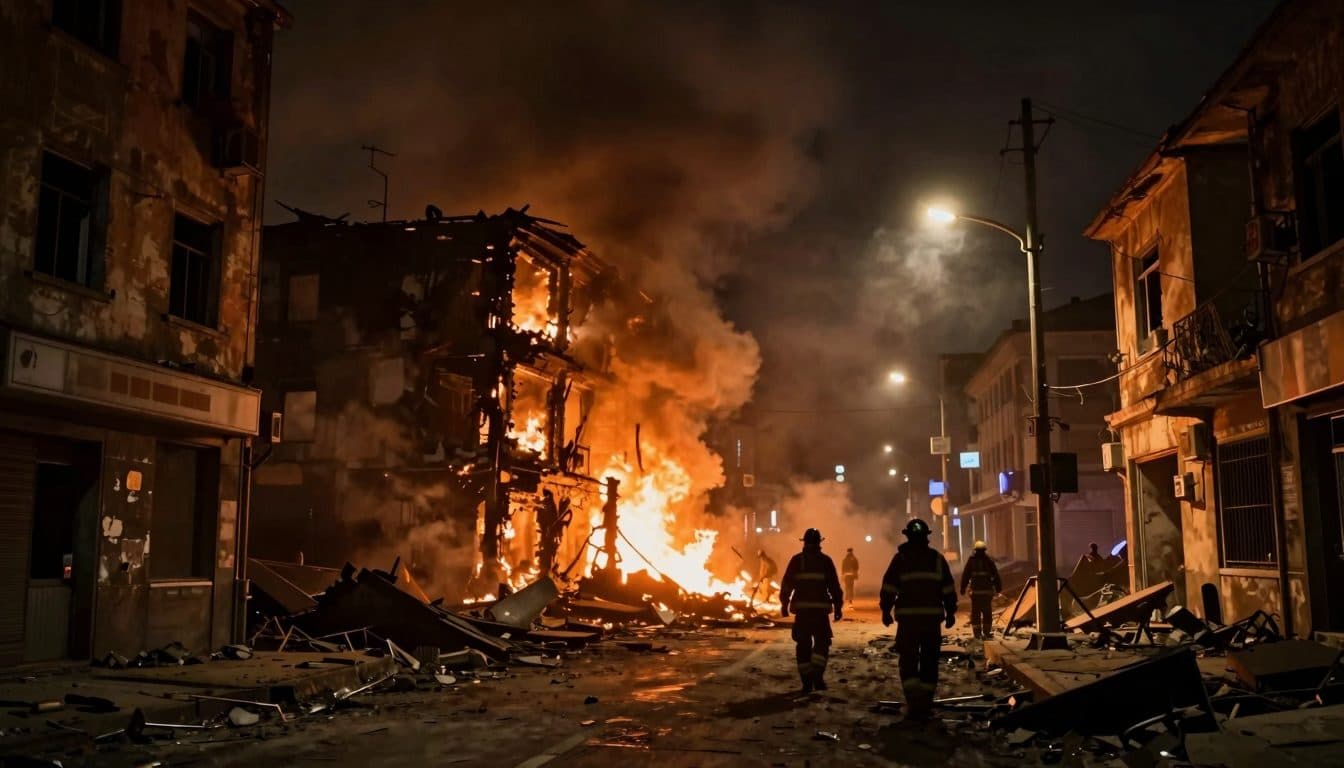
AI-generated image (z-image via Kie.ai)
Summary
Russia launched one of the heaviest attacks of the war on Kyiv and other Ukrainian cities overnight, killing at least 21 people hours before a NATO summit opens in Ankara. US President Donald Trump said he believes a settlement is closer than people think and announced he will meet Ukrainian President Volodymyr Zelensky on the sidelines.
Kyiv, 06 July 2026
Russia struck Kyiv and other Ukrainian cities with hundreds of drones, cruise missiles and rockets overnight, killing at least 21 people and injuring around 90, on the eve of a two-day NATO summit in Ankara where Ukraine's air defense and longer-term financial support are set to dominate the agenda.
Scale of the Overnight Assault
According to Ukrainian President Volodymyr Zelensky, the Russian military deployed 351 drones as well as 68 rockets and cruise missiles during the night. "Es war ein brutaler Angriff," Zelensky wrote, describing the assault on Kyiv and the surrounding area as brutal. Residential blocks in the capital were struck, with some partially collapsing under the bombardment.
In the Kyiv region, authorities said at least 17 people lost their lives, while in the wider area around the capital the death toll rose to at least 21, a figure Ukrainian officials warned is expected to climb further as rescue operations continue. Around 90 other people were reported injured in the attacks on Kyiv and its surroundings, according to information relayed by SRF and news agencies.
The Patriot Gap
Cruise missiles, which can be maneuvered more readily by attackers and fly at low altitude, are difficult for air defense radar to detect. Ballistic missiles, by contrast, travel at very high speeds and are therefore even harder to defend against. Ukraine can only intercept ballistic missiles with the help of Western air defense systems, specifically the US Patriot system — described by Zelensky as the only effective means against Russian ballistic threats.
Zelensky said Ukraine has been successful in defending against drones and cruise missiles but not against ballistic missiles. "Unsere Kämpfer haben heute ein gutes Resultat beim Abschuss von Drohnen und Marschflugkörpern gezeigt, aber leider nicht gegenüber der russischen Ballistik," he said. He attributed the gap to a lack of suitable interceptor missiles in Ukrainian inventories.
As early as spring, Zelensky had warned that Ukraine was running low on ammunition for Patriot systems, and global stocks of the interceptor missiles have also been reduced by the US war against Iran. Zelensky later indicated that Ukraine could produce Patriot missiles itself but would require US licenses and approval — a concession that underscores how dependent the country's current defense remains on Washington and allied warehouses.
"Wenn Patriot-Raketen in den Lagern der Verbündeten verstauben, ermutigt das Russland nur, seinen Krieg gegen Wohnhäuser fortzusetzen," Zelensky wrote, urging the alliance to act. He said Ukraine's air defense achieves high interception rates when adequate defense means are available, but the shortage of interceptors is leaving cities exposed.
What Is on the NATO Agenda
European Commission President Ursula von der Leyen wrote on X that "Russland habe in der Nacht erneut Zivilisten aus der Luft angegriffen" and called for Ukraine to be supplied with more air defense weapons. "Die Ukraine braucht dringend mehr Luftabwehr. Wir werden dies diese Woche in Ankara beim NATO-Gipfel besprechen," she said. NATO Secretary General Mark Rutte similarly urged allies and partners to continue their support, particularly in air defense.
The political backdrop is the two-day NATO summit opening Tuesday in Ankara. According to German government circles, the draft summit declaration commits European partners together with Canada to 70 billion euros for 2026 and at least 70 billion euros for 2027 — a combined total of at least 140 billion euros for the next two years. A German government representative said the figure consists of a 90 billion euro EU loan and bilateral aid.
Trump's Diplomatic Push
Ukrainian NATO membership is not expected to be on the Ankara agenda, since the United States has not changed its position against offering Kyiv a membership path. US President Donald Trump largely withdrew American aid to Ukraine at the start of his term, a shift that has placed the financial burden increasingly on European shoulders. After the G7 summit in Evian, France, there is hope among European partners that Trump can be drawn back into closer involvement in supporting Ukraine.
In remarks ahead of the summit, Trump struck a notably optimistic note. He said he spoke by phone with both Putin and Zelensky on Saturday, that talks are ongoing with Russia and Ukraine, and that he is certain Putin wants the war to end. "Präsident Putin will, dass es endet. Das kann ich Ihnen sehr deutlich sagen," Trump said. He added: "Ich glaube, wir werden den Krieg beenden," and that "Eine Einigung sei näher, ‚als die Menschen glauben'." He said Zelensky also wants an end to the fighting.
A White House spokeswoman announced that Trump will meet Zelensky on the sidelines of the Ankara summit on Wednesday, with a senior US government official saying the meeting will address possibilities for ending the war. Trump is then expected to speak with Russian President Vladimir Putin, and the schedule signals a renewed push for negotiations despite the military escalation on the ground.
Ukraine's Deep Strikes Into Russia
On the military front, Ukraine struck back with attacks deep inside Russian territory. According to the Ukrainian General Staff, Ukrainian drones attacked the largest Russian oil refinery in Omsk, deep in Western Siberia, on Monday. The industrial center of Omsk lies approximately 2,700 kilometers from the border, making it one of the Ukrainian drone strikes with the greatest range since the war began more than four years ago.
According to the Russian Defense Ministry in Moscow, Ukraine attacked around 20 Russian and Russian-controlled regions overnight, including Crimea, which has been annexed by Moscow since 2014. Ukrainian drones also struck Baltic Sea ports, while in Sevastopol energy infrastructure was hit, according to governor Mikhail Razvozhayev, who later said power supply for most households had been restored after switching to reserve capacity.
On the Crimean peninsula, drone attacks killed one woman and injured two others, according to the Moscow-installed governor Sergei Aksyonov. The independent internet portal Astra separately reported a new attack on the refinery in the city of Yaroslavl, north of Moscow, and Russia said the Ukrainian drone wave targeted port and oil infrastructure. Two ships of the Russian 'shadow fleet' were also attacked during the exchange, according to the same sources.
Pressure and Expectations
Russian authorities said the military intercepted more than 600 Ukrainian drones overnight, a claim that has not been independently verified. The exchange of long-range strikes underscores how the war has expanded geographically even as diplomatic activity intensifies at the alliance level.
Von der Leyen summed up the European position succinctly: "Der Druck auf Russland müsse steigen, damit das Blutvergießen ein Ende habe," she wrote, arguing that pressure on Moscow will continue to rise until the bloodshed stops. Zelensky echoed that the NATO summit must not produce only "leere Worte," but deliver more protection for Ukraine.
Questions & Answers
What happened in the overnight Russian attacks on Ukraine?
Russia launched a heavy wave of drones, cruise missiles and rockets at Kyiv and other Ukrainian cities overnight, killing at least 21 people and injuring around 90, according to Ukrainian officials and reports compiled by news agencies and SRF.
Why is Ukraine struggling to intercept Russian ballistic missiles?
Zelensky said Ukraine can only intercept ballistic missiles with Western systems, specifically the US Patriot, and Kyiv is running low on the necessary interceptor missiles — a shortage exacerbated by reduced global stocks following the US war against Iran.
What is expected from the NATO summit in Ankara?
European partners and Canada are set to commit at least 140 billion euros in financial support over two years, and air defense for Ukraine is a central topic; Ukrainian NATO membership, however, is not expected to be on the agenda because the US has not changed its rejecting stance.
Russian Strikes Kyiv Before NATO Summit; Trump Hints Deal | allfacts360