Trump threatens Iran with retaliation after Houthi attacks on Saudi tankers
Washington, July 23, 2026
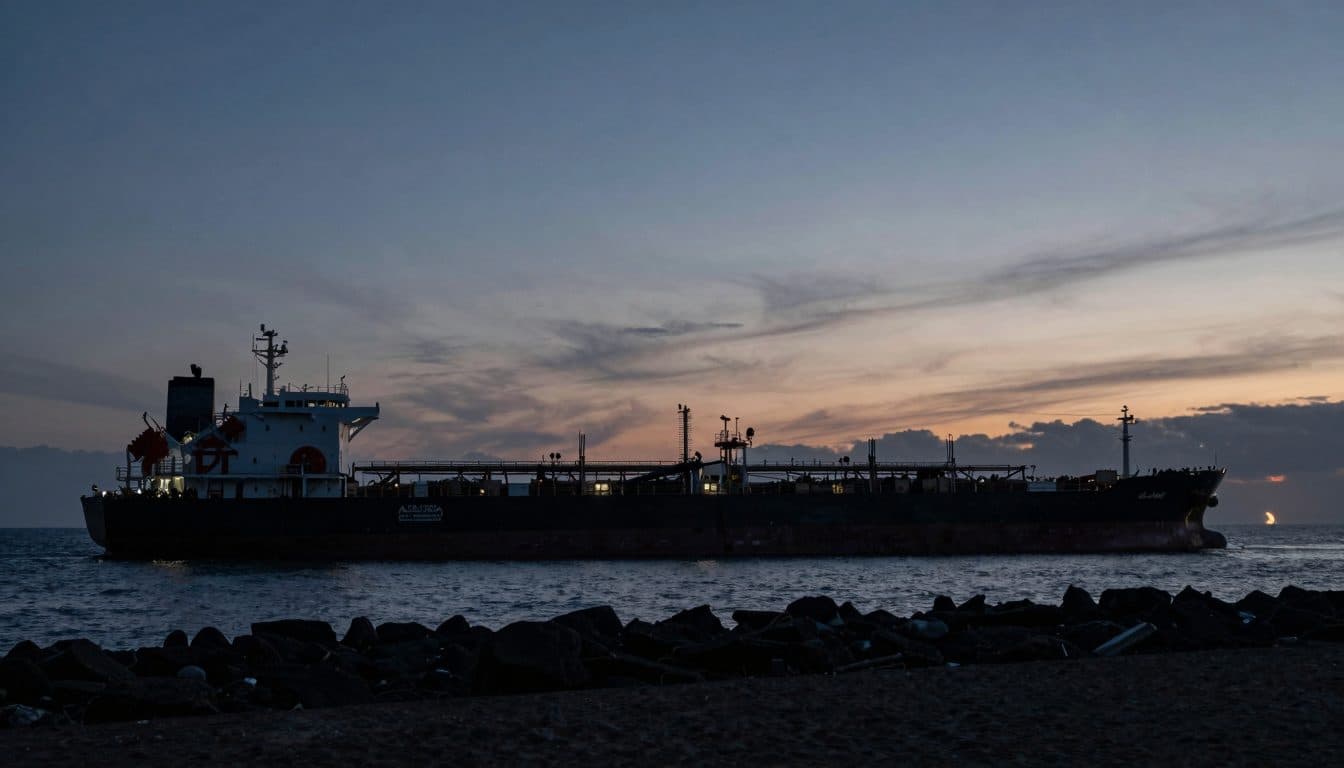
AI-generated image (z-image via Kie.ai)
Summary
Following attacks by the Houthi militia on two Saudi Arabian oil tankers in the Red Sea, US President Donald Trump has threatened Iran with severe military punitive measures. The oil price subsequently rose above the $100 per barrel mark.
Washington, July 23, 2026
US President Donald Trump has threatened Iran with severe military punitive measures after attacks by the Houthi militia on two Saudi Arabian oil tankers in the Red Sea, while also warning the militia of "significant military punishment."
The Houthi militia announced on Thursday that it had attacked the Saudi Arabian oil tankers "Encelia" and "Layla" overnight with missiles and drones, claiming the vessels had violated the "blockade" the militia had declared in the Red Sea. According to the Houthi-controlled news agency Saba, the attack was a "targeted military operation" against the two ships. A fire broke out on board the "Encelia" following the attack; the incident occurred approximately 130 kilometers southwest of Al-Shuqaiq in Saudi Arabia.
Trump reacted on Thursday on his platform Truth Social and announced "heavy military punishment against Iran and of course also against the Houthis themselves." "Should they do this again, the United States will hold Iran accountable, as the Houthis are acting as proxies for Iran," the US president wrote. At the same time, he said he was "very disappointed" with the Iran-allied militia and warned: "It has not hurt them enough yet."
Background: The Houthi militia and its role in the regional conflict
US Secretary of State Marco Rubio, speaking on the sidelines of the ASEAN foreign ministers' meeting in Manila, called the situation a "dangerous precedent" and said: "I think the Houthis have, frankly, fallen for what the Iranians are selling them on this." Until now, the militia had behaved "largely wisely" and stayed out of the conflict, Rubio said. Now, however, there appeared to be no willingness for a deal: "So it looks like they're not ready for a deal, so they're going to continue to pay a price." That price is rising night after night, Rubio warned.
Iranian Foreign Minister Abbas Araghchi, for his part, criticized the US stance toward Iran and its approach on Thursday. He condemned the "irrational, excessive and domineering" conduct of the United States. "Perhaps they will be ready for a deal in a few days, once they realize this is not a beneficial solution for them," Araghchi said. A spokesman for the Iranian army announced on state television that retaliatory strikes would continue "as long as US attacks on the country's infrastructure and coastal areas continue."
The Houthis had declared a "blockade" of maritime traffic for Saudi Arabia on Monday — roughly a week after a new confrontation with Yemen, the militia's neighbor, with which it has been at war for more than ten years. A "ban on shipping" would apply to Saudi Arabia with immediate effect, it said. Saudi Arabia announced it would take "all necessary steps" to protect its vessels.
US threats: Trump announces retaliation
The attacks on the tankers are part of a new level of escalation in the Middle East conflict. In spring 2025, the US military had already bombed targets in Yemen to stop Houthi attacks on shipping. According to the news portal Axios, citing an interview with Trump, the new punitive measures could be more extensive than the strikes during the so-called "Operation Epic Fury" at the time.
The EU also reacted with concern: EU foreign policy chief Kallas stressed that the EU naval mission "Aspides" remained ready to protect freedom of navigation in the Red Sea and adjacent international waters. The EU called on the Houthis to end their threats against international shipping in the Red Sea. The Foreign Ministry in Muscat expressed "grave concern" about the situation in the Red Sea.
Markets reacted nervously to the new front in the Middle East war: the price of a barrel of North Sea Brent crude crossed the symbolic $100 mark — the highest level since early June. A barrel of North Sea Brent rose to as much as $100.36 (around 88 euros). That was 6.6 percent more than the previous day.
International reactions: EU and Oman express concern
The Red Sea and the Bab al-Mandab strait ("Gate of Tears" or "Gate of Grief") off Yemen's coast carry the shipping route from Asia via the Suez Canal to Europe. Since 2023, the Houthis had already massively disrupted world trade through attacks in the Red Sea — at the time in connection with the Gaza war. The current escalation is further worsening the situation for global energy supply.
A Chinese oil tanker, meanwhile, received clearance to pass through the strait, as the trade publication "Lloyd's List" reported on Thursday. This fueled speculation about possible arrangements between China and the Houthis. The Houthi militia had previously said it would only attack ships of certain countries — a practice criticized internationally as a selective blockade.
International concern about the situation is growing. "The whole thing has fatal consequences for the people in the region, but also for all countries in the world that depend on energy supplies and other deliveries from the region," one diplomat warned. "This is clearly going in the wrong direction," he said, referring to the latest developments.
Impact on world trade
The Houthi militia controls large parts of northern Yemen, including the capital Sanaa, and is backed by Iran. The militia has repeatedly attacked ships in the Red Sea in recent years, initially out of declared solidarity with Palestinians in the Gaza war. The new attacks on Saudi tankers mark an expansion of the conflict to another regional actor.
Saudi Arabia and Yemen are neighboring countries shaped by decades of confrontation. The Houthi militia has been at war for more than ten years against Yemen's internationally recognized government, which is supported by Saudi Arabia. The latest attacks on Saudi tankers could further heighten tensions between the two countries.
Geopolitical dimension: Tensions between the regional powers
The US government faces the challenge of avoiding escalation without undermining its own credibility. Trump has repeatedly demanded a hard line toward Iran in recent months. The announcement of "heavy military punishment" could be read as a signal to Tehran that Washington is prepared to make good on its threats.
Developments in the Red Sea have direct implications for global trade and energy supply. The rise of the oil price above the $100 mark shows how sensitively markets react to geopolitical tensions in this strategically important region. The coming days will show whether the diplomatic channels between Washington and Tehran still function or whether further military escalation looms.
Questions & Answers
Who attacked the Saudi tankers in the Red Sea?
The Houthi militia from Yemen claimed it attacked the Saudi Arabian oil tankers "Encelia" and "Layla" overnight on Thursday with missiles and drones, alleging the vessels had violated the "blockade" declared by the militia.
How did US President Trump react to the attacks?
Trump threatened Iran with "heavy military punishment" on Truth Social and announced that the United States would hold Iran accountable, "as the Houthis are acting as proxies for Iran."
What impact have the attacks had on the oil price?
The price of a barrel of North Sea Brent rose to as much as $100.36 on Thursday — the highest level since early June. That was 6.6 percent more than the previous day.
Trump threatens Iran after attacks on tankers | allfacts360