Humpback whale Timmy lived only a few days after release: Tracker data presented in Schwerin
Schwerin, 12 June 2026
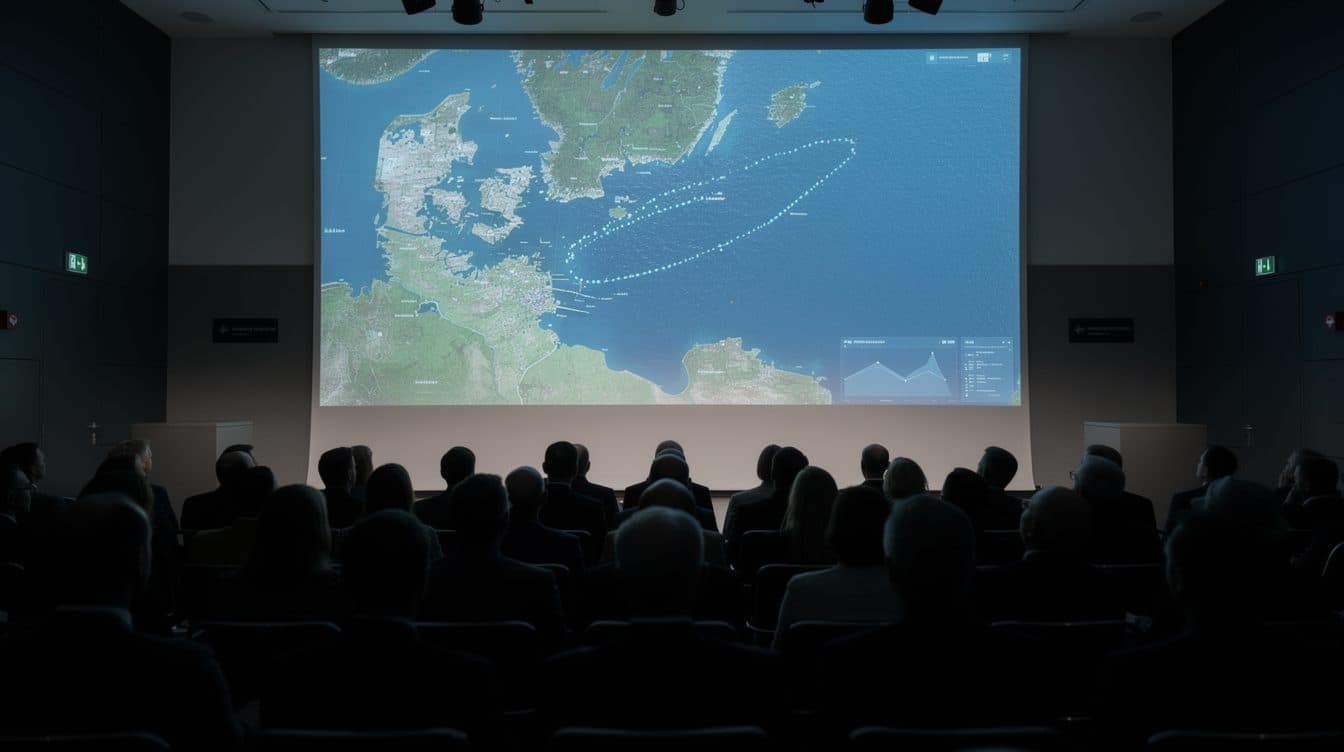
AI-generated image (flux-2/pro-text-to-image via Kie.ai)
Summary
The humpback whale known as "Timmy" likely lived only until 6 or 7 May after his release in the Skagerrak on 2 May, according to evaluated tracker data. Mecklenburg-Vorpommern's Till Backhaus (SPD) presented the data on Friday in Schwerin; the exact cause of death remains unclear.
Schwerin, 12 June 2026
The humpback whale "Timmy" likely lived only a few days after his release in the Skagerrak on 2 May 2026, according to the evaluation of tracker data, as Mecklenburg-Vorpommern's Till Backhaus (SPD) announced on 12 June in Schwerin.
Background: The final days of a lost animal
As Mecklenburg-Vorpommern's Till Backhaus, SPD, said in Schwerin, the whale perished according to the tracker data "zwischen dem 6. und 7. Mai". The animal named Timmy by the media had likely lived only until 6 or 7 May after his release on 2 May. According to the information, the animal thus died only around four to five days after the contested release into the open sea.
Backhaus spoke of a sad outcome. "Es sei traurig, wie es für das Tier ausgegangen ist. Er hat die Chance nicht nutzen können", said the minister. According to the Environment Ministry, the exact cause of death is to remain unclear. Die genaue Todesursache sei weiterhin unklar, Backhaus continued.
Timmy, an approximately twelve-metre-long female, as was determined during the later autopsy, was first spotted in early March in the harbour of Wismar. The whale subsequently wandered for weeks along the German Baltic coast and stranded several times off Schleswig-Holstein and Mecklenburg-Vorpommern. Most recently, the weakened animal lay for weeks in a shallow bay off the Mecklenburg island of Poel.
The rescue operation and its critics
In early April, Environment Minister Backhaus tolerated a rescue attempt by a private initiative, although experts had already given up on the animal after several failed recovery attempts. The private initiative transported him on a barge towards the North Sea. About 70 kilometres from Danish Skagen, he was released in the Skagerrak strait on 2 May.
Shortly before the release, a tracker from the company Wildlife Computers had been attached to the whale's dorsal fin. According to this, the tracker had delivered data until 7 May, including water depth, temperatures, movement patterns and speed. The transmitter did not record any vital signs in the medical sense, such as heart or breathing rate, as special sensor technology would have been required for that.
However: The tracker attached to the dorsal fin had no longer delivered data underwater. According to the initiative's announcement, at least some movement data such as dive depths had initially been recorded. According to this, the device had never sent location data – likely because it had not been tested and initialised beforehand as actually intended. Der Tracker habe demnach keine Positionsdaten übermittelt, was die wissenschaftliche Auswertung der Bewegungen deutlich einschränkt.
What the tracker data show
Nevertheless, the available data paint a picture of the animal's final phase of life. According to Backhaus, the humpback whale had covered about 215 kilometres up to its death – and had immediately set course back towards the Baltic Sea. Diese würden auf diese wenigen Lebenstage hinweisen. Afterwards, the marine mammal had more or less «gedriftet» – or rather, the signal had cut out.
In the Baltic Sea, the minister said, the whale had also swum more slowly and not dived as deeply as before. "Dort war er nach den Worten des Ministers auch wieder langsamer geschwommen und nicht mehr so tief wie zuvor getaucht", the statement read. These observations indicate a persistently weakened state of health.
Nearly two weeks later, on 14 May, the humpback whale often called "Timmy" – a female, as later determined in the autopsy – washed up dead on the Danish island of Anholt. Shortly after the discovery, Danish and German authorities confirmed that it was Timmy. The identity was later also confirmed by a DNA test, according to the Danish Environment Agency. The matching tracker was also found on the whale.
Autopsy on Anholt: No clear cause of death
How long the marine mammal had already been dead could not be said. The already heavily decomposed carcass of the whale was autopsied after the stranding on the Danish island of Anholt, initially without concrete results regarding the cause of death. In the examination of the carcass in Denmark in early June, "nichts Ungewöhnliches" had been discovered – "weder am noch im Wal", said Backhaus. There had been no serious internal or external injuries, and remains of a fishing net had not been found either.
The data transmission from the transmitter ended on 10 May. The reason for the cutoff is unclear; a damage to the transmitter or the whale no longer surfacing are possible. Exactly when the whale died could also not be conclusively determined. However, the movement patterns in the final days suggest that the animal died between 6 and 7 May, as the minister explained.
Backhaus rejected accusations that the transport or release could have contributed to the death. There were "nach heutigem Erkenntnisstand keine belastbaren Hinweise" that the transport or release of the marine mammal had contributed to its death or endangered it, said Backhaus. "Der Rettungsversuch war aus unserer Sicht rechtlich und fachlich vertretbar." Supporters of the rescue operation saw the transport as a last chance for the animal; critics pointed to the poor chances of survival and called for greater orientation towards scientific assessments.
What happens to the carcass
The remains of the dead whale "Timmy" were hauled to the Danish island of Anholt at the end of May and transported away by lorry. The remains of the animal were to be processed in Denmark into biodiesel, among other things. Accordingly, biofuel is to be produced from the carcass; the remaining material will be processed into meat and bone meal, which can likewise be used as biofuel, for example in cement production, according to the Danish authorities. Some bones were also to go into the collection of the Natural History Museum in Denmark's capital Copenhagen.
Outlook: Data for research
According to Backhaus, all collected data are to be made available to science. In the coming weeks and months, further data on water temperature, dive depth, movement radius, speed and organ examinations are to be transmitted and scientifically evaluated. The evaluation of the satellite transmitter is also to show where the animal moved after leaving the barge, how often it surfaced to breathe and how deeply it dived.
The death of the animal had triggered a nationwide debate in Germany about the handling of lost marine mammals, the role of private rescue initiatives and the correct approach to scientific expertise. Backhaus announced that the movement data from Mecklenburg-Vorpommern had been evaluated by the authorities. A final assessment of the contested rescue attempt is still pending.
Up to its death, the whale had covered 215 kilometres – and had immediately set course back towards the Baltic Sea. This last, striking turning point could, according to observers, be an indication that the animal instinctively wanted to return to the waters familiar to it, although its state of health evidently no longer allowed this. The case raises questions about the future handling of lost large whales in the Baltic Sea, whose state of health often only becomes apparent late.
Questions & Answers
Who is Till Backhaus and what role does he play in the Timmy case?
Till Backhaus is the Environment Minister of the state of Mecklenburg-Vorpommern (SPD). He presented the evaluated tracker data of the humpback whale Timmy in Schwerin on 12 June 2026 and commented on the course of the contested rescue operation.
Why was the humpback whale Timmy released on 2 May 2026?
A privately funded initiative transported the weakened animal by barge out of the Baltic Sea and released it about 70 kilometres off Danish Skagen in the Skagerrak. Environment Minister Backhaus had tolerated the rescue attempt in early April, although experts had classified the animal's chances of survival as low.
What happens to the remains of the whale Timmy?
The carcass was hauled to the Danish island of Anholt at the end of May and transported away by lorry. In Denmark, the remains are to be processed into biodiesel and meat and bone meal; individual bones will go into the collection of the Natural History Museum in Copenhagen.
Humpback whale Timmy: Tracker data show death shortly after | allfacts360