
Innsbruck, 19 July 2026
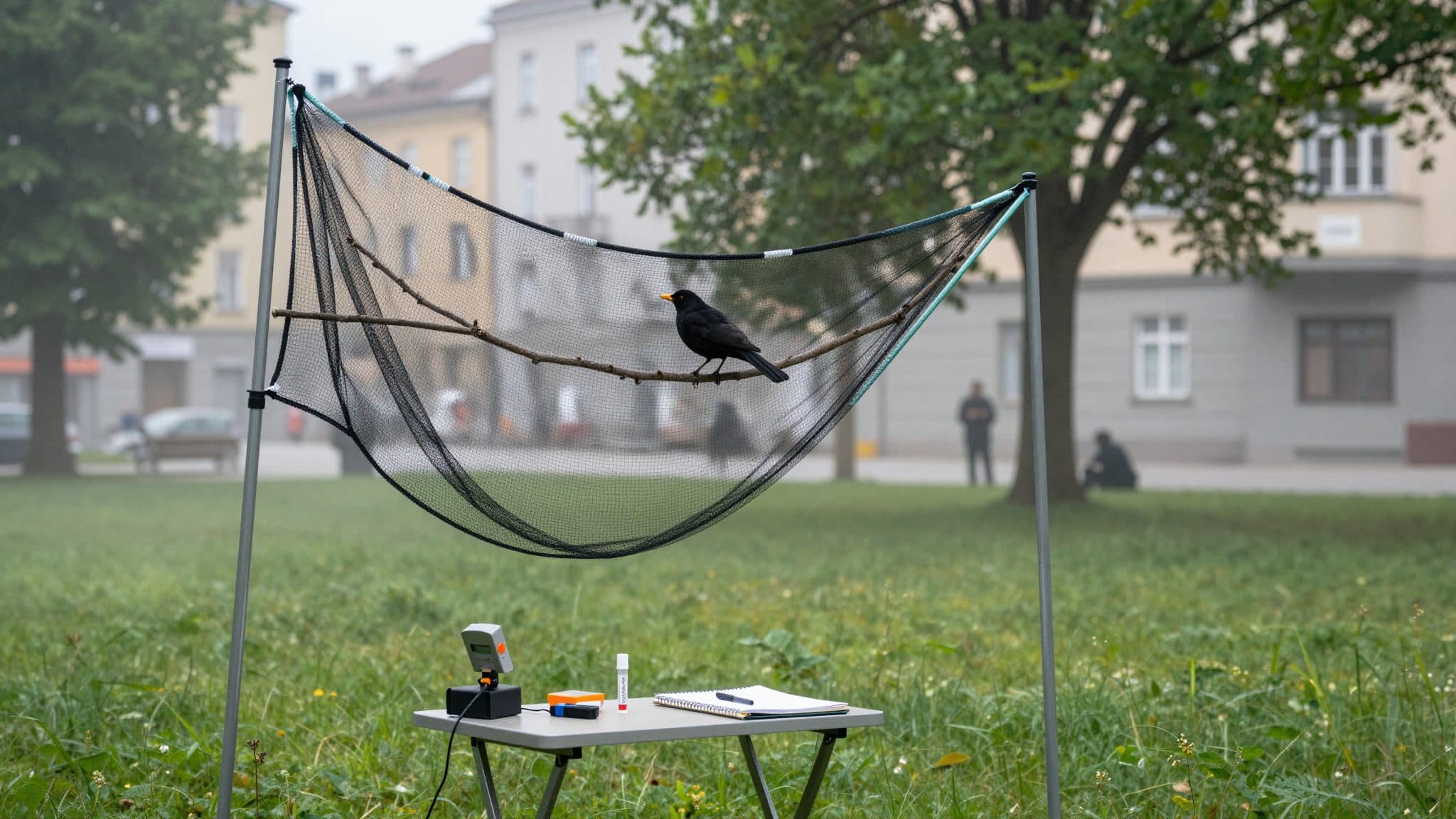
Researchers at the University of Innsbruck have launched a project that aims to capture around 250 blackbirds at 50 sites within the city area and examine them for genetic, morphological, and ecological changes.
Research Design and City Classification
The team led by ecologist Birgit Schlick-Steiner and study director Florian Steiner has divided the Innsbruck study area into ten levels based on aerial images, which reflect the degree of human influence. The so-called hemeroby ranges, according to the researchers, from zero percent sealing or agriculture at the forest edge to 100 percent in the commercial zone. Five areas were selected per level, Schlick-Steiner explained.
„Wir haben die Amsel gewählt, weil diese Vogelart sehr häufig ist, überall in der Stadt vorkommt und keinen besonders großen Bewegungsradius hat“, erklärte Ökologe Florian Steiner im APA-Gespräch. At the selected sites, blackbirds are to be captured with mist nets, measured, and sampled. „Insgesamt sind es also 50 Flächen, an denen wir unsere Japannetze aufstellen“, erläuterte der beteiligte Student Egger.