Iran announces renewed closure of the Strait of Hormuz, undermining framework agreement with the US
Tehran, 20 June 2026
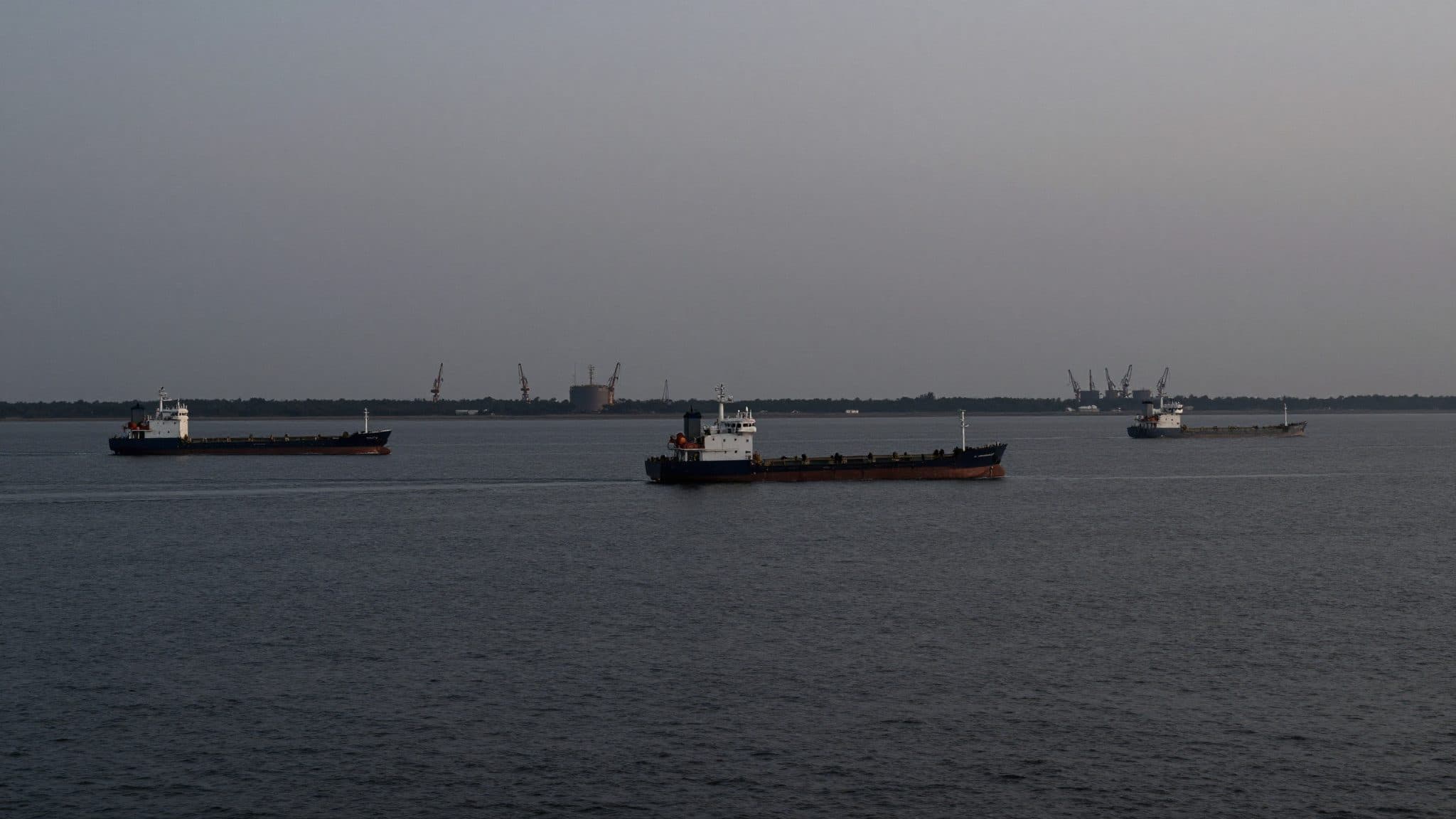
AI-generated image (z-image via Kie.ai)
Summary
The Iranian Revolutionary Guards have announced the renewed closure of the Strait of Hormuz, thereby undermining the framework agreement signed shortly before with the US. JD Vance subsequently denied any halt to shipping, while at the same time at least 35 deaths were reported from Lebanon in Israeli attacks.
Tehran, 20 June 2026
The Iranian Revolutionary Guards announced on Saturday the renewed closure of the Strait of Hormuz to shipping traffic, apparently breaking the framework agreement signed with the US on Wednesday.
The Iranian Revolutionary Guards stated in a communiqué: "Hereby it is announced that the Strait of Hormuz will be closed to shipping traffic". The closure was described from Tehran as a "first step". Should the "aggression" continue, further measures would be taken to "force the enemy to comply with its obligations". In doing so, Iran is undermining the framework agreement signed on Wednesday with the US, which explicitly states that "the transit of commercial vessels will resume immediately".
One of the world's most important shipping routes
The Strait of Hormuz is one of the world's most important maritime chokepoints: roughly 20 percent of global energy trade passes through this passage. Iran had already closed the strait after the war began on 28 [date in original text incomplete]. The renewed announcement of a closure carries particular weight given that the United States and Iran, with the mediation of Qatar and Pakistan, had negotiated a framework agreement intended to lead to a final peace treaty within 60 days.
Surprisingly optimistic, JD Vance spoke at the same time to the US broadcaster Fox News: Donald Trump's vice president denied the reports of the renewed closure of the Strait of Hormuz, saying there was "no evidence" for it. At the same time, he spoke favourably about the journey of the US negotiators and the "success" of the US president, who "holds all the cards". He announced talks with Iran on Sunday and declared that he expected "to depart at some point in the coming days" – possibly to Switzerland.
Contradiction from Washington
As if to underscore Vance's contradiction, US Central Command (CENTCOM) likewise reported on Saturday afternoon an increase in commercial shipping traffic in the Strait of Hormuz. According to the report, 55 commercial vessels had transited the route and "transported more than 17 million barrels of oil to world markets". The military remained on site to ensure that all provisions of the framework agreement were "adhered to, followed, and fully implemented".
US President Trump also spoke on Saturday: during the 60-day ceasefire in effect under the framework agreement with Iran, there would be "no toll" in the important strait, he wrote on his platform Truth Social. At the same time, he added a caveat: "Unless they are levied by the United States of America and for their benefit, should the agreement not materialise – and that for services they have rendered as 'guardian angels' of the nations of the Middle East, for the purpose of reimbursement of costs past, present, and future". Should no final peace agreement materialise, the US could thus charge for its services.
Trump threatens US toll
Parallel to the dispute over the strait, violence in Lebanon continues. Since Friday 4:00 p.m. local time (3:00 p.m. CET), a ceasefire in Lebanon was actually supposed to be in effect, according to a US government official. Yet Lebanese media report numerous Israeli airstrikes with at least 35 deaths on Saturday. In the city of Nabatieh alone, considered a Hezbollah stronghold, 16 bodies were recovered according to Lebanese civil defence.
In an airstrike on the town of Qennarit, at least seven people were killed and 13 others wounded, according to the health ministry. Already on Friday, 83 people were reportedly killed in Israeli attacks, according to the ministry. An Israeli master sergeant was also reported to have "fallen in combat", the Israeli army announced on Saturday.
Violence in Lebanon continues
Benjamin Netanyahu had already made clear on Friday that Israel would "not tolerate any attack on our soldiers or our territory". The Israeli army is reportedly halting its attacks in Lebanon outside a "security zone" it unilaterally declared. Netanyahu had described this zone as a barrier between the Hezbollah militia in Lebanon and the citizens and communities in northern Israel. The Hezbollah militia is Iran's most important ally in the region.
Hezbollah member of parliament Hassan Fadlallah said on Saturday that his group had "the full right to fight this enemy if it attacks us". The projectiles that Hezbollah fired overnight at Israeli troops in southern Lebanon evidently did not count from the Shiite-Islamist militia's perspective – just as the Israeli army did not consider its airstrikes a violation of the agreement. Lebanon reported at least 23 deaths.
The Iranian news agency IRNA quoted Iranian Foreign Ministry spokesman Esmaeil Baghaei as saying that the delegation departing on Saturday would "monitor and demand compliance with the obligations of the other side under the agreement". "The other side must take the necessary measures as soon as possible," Baghaei said of the US. Otherwise, "the entire agreement will be in jeopardy".
Iran in the position of strength
Position of strength Whether closed or not: Iran has played a trump card simply by making the announcement. Contrary to Vance's view, it is in a position of strength through its control of the Strait of Hormuz. "The mere threat of a closure could be enough to deter shipping and cause significant disruption once again, without Tehran incurring significant costs," wrote security analyst Nitya Labh of the London think tank Chatham House after the signing of the framework agreement.
Vance was confident before his departure: "I think we will hopefully make progress on the nuclear issue and also advance the question of the ceasefire in Lebanon". He stressed: "We are giving these negotiations a chance". At the same time, he acknowledged that it was "always a delicate undertaking" and that diplomatic protocols had to be observed.
Outlook on further negotiations
The Pakistani foreign ministry confirmed that talks between the US and Iran could take place on Sunday. The framework agreement negotiated with the mediation of Qatar and Pakistan provides for negotiating a final treaty for a comprehensive peace solution within 60 days. The coming days are likely to show whether the parties to the conflict will actually continue along the diplomatic path they have embarked upon – or whether the Strait of Hormuz will become the symbol of another failure.
The events illustrate the fragility of the compromise only just reached: while Washington increases economic pressure with the prospect of tolls, Tehran relies on the leverage of its geographical position. Hezbollah in Lebanon sees itself in a defensive position due to the ongoing shelling. A final clarification of the situation is not expected until after the talks announced for Sunday.
Questions & Answers
Who announced the renewed closure of the Strait of Hormuz?
The Iranian Revolutionary Guards announced on Saturday in a communiqué that the strait would be closed to shipping traffic, describing it as a "first step".
What did JD Vance say about the reports?
JD Vance denied the reports of a renewed closure of the strait to the US broadcaster Fox News, saying there was "no evidence" for it, while at the same time expressing optimism about the ongoing negotiations.
What provisions does the framework agreement between the US and Iran contain?
The agreement, negotiated with the mediation of Qatar and Pakistan, provides for the immediate resumption of commercial shipping traffic and for a final peace treaty to be negotiated within 60 days.
Iran closes Strait of Hormuz – contradiction of US | allfacts360