Lindsey Graham dies at age 71 – Trump ally and Ukraine supporter
Washington, July 12, 2026
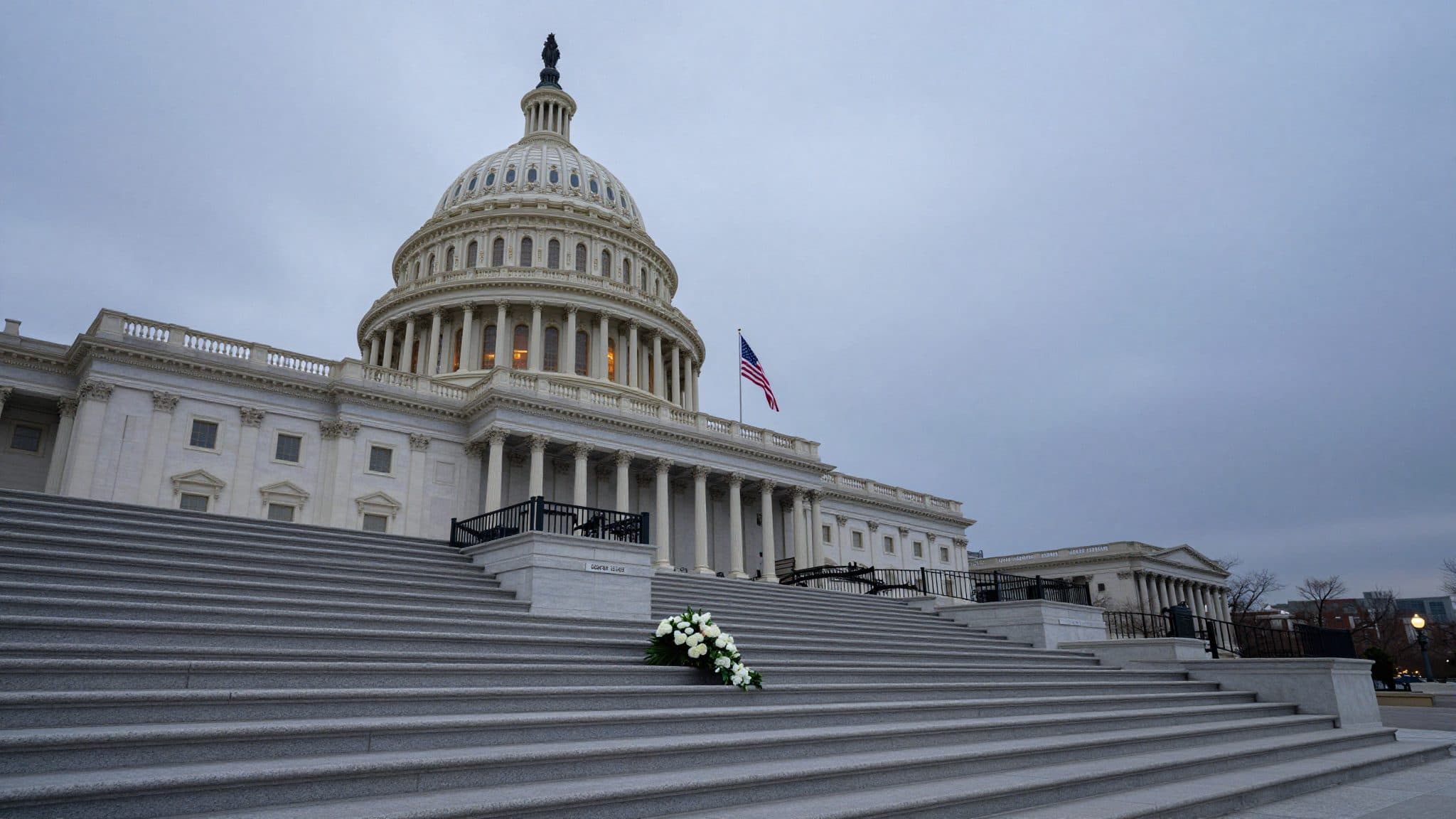
AI-generated image (z-image via Kie.ai)
Summary
US Senator Lindsey Graham died on Saturday evening at the age of 71 after a short, serious illness. Allies around the world are mourning the influential Republican, who most recently chaired the Senate Budget Committee.
Washington, July 12, 2026
The Republican US Senator Lindsey Graham of South Carolina died on Saturday evening at the age of 71 after a short, serious illness, as his office announced via the platform X.
Political career since the 1990s
The news of the senator's death triggered immediate reactions in Washington and among international allies. Graham's office stated that he had succumbed to a brief and sudden illness on Saturday evening. He was 71 years old and had only celebrated his birthday on Thursday.
Graham was one of the most defining figures in US politics of recent decades. He had served in the Senate since 2002, officially from 2003 according to his office. He represented the state of South Carolina, for which he had already served in the House of Representatives in Washington from the mid-1990s. He was re-elected three times, in 2008, 2014, and 2020. Most recently, he chaired the Senate Budget Committee and had planned to run for a fifth term in the important congressional elections in November.
His political profile was shaped by a pronounced stance on foreign and security policy. Graham was regarded as a sharp critic of Russia and of the war against Ukraine. Just days before his death, on Friday, he had announced in Kyiv together with Ukrainian President Volodymyr Zelensky the White House's support for a new sanctions package against Russia. According to Zelensky, it was Graham's tenth visit to Ukraine since the start of the large-scale Russian invasion. In a video message from Kyiv, the Ukrainian had congratulated the senator on his birthday on Thursday; Graham replied: "Gut. Älter. Älter. Aber nicht klüger."
At the same time, Graham was regarded as a long-standing ally of US President Donald Trump, a connection that followed a remarkable reversal. As recently as 2015, in the run-up to the Republican primaries, he had called Trump a "rassistischen Hetzer, Fremdenfeind und religiösen Fanatiker." On CNN he said at the time: "Wissen Sie, wie man Amerika wieder großartig macht? Sagen Sie Donald Trump, er soll zur Hölle fahren." He also warned his party: "Wenn wir Donald Trump nominieren, werden wir zerstört – und wir werden es verdient haben."
Transformation from Trump critic to confidant
But after Trump's defeat in the primary against Hillary Clinton, the relationship fundamentally changed. Regular rounds of golf, also reported by the New York Times, cemented a closeness that drew Graham politically into Trump's camp. After the storming of the Capitol on January 6, 2021, he briefly broke with Trump and declared: "Ich bin raus. Genug ist genug." Just a few weeks later, however, he voted for Trump's acquittal in the impeachment trial. He later defended the president in the Senate and helped build the majority for his judicial appointments. On X he wrote in retrospect: "Auf beruflicher Ebene bin ich stolz darauf, von Anfang an dabei gewesen zu sein, als Präsident Trump – allein durch seine Willenskraft – das größte politische Comeback in der amerikanischen Geschichte geschafft hat."
President Trump honored Graham over the weekend in a statement on Truth Social: "Senator Lindsey Graham, einer der grossartigsten Menschen und Senatoren, die ich je gekannt habe, ist tot! Er war immer am Arbeiten und war ein wahrer amerikanischer Patriot. Lindsey wird uns sehr fehlen!!!" Back in 2018, Trump had said: "Lindsey war früher ein großer Feind von mir, und jetzt ist er ein guter Freund von mir. Ich hätte nie gedacht, dass ich das einmal sagen würde, aber ich mag ihn wirklich sehr." Trump had assured Graham his "uneingeschränkte und volle Unterstützung" for the upcoming Senate election.
International reactions to the death
Internationally, Graham's death triggered numerous expressions of condolence. Ukrainian President Zelensky said he was "zutiefst betrübt" and added: "Amerika und die Welt haben einen entschlossenen Anführer verloren." He had welcomed the senator "zehnmal" to Ukraine, and Graham had stood "unserem Volk zur Seite" "als dies am dringendsten nötig war." European Commission President Ursula von der Leyen honored Graham's commitment with the words: "Senator Graham hat bis zum Schluss gekämpft, um den Kampf der Ukraine für Freiheit zu unterstützen und die Kosten von Russlands Angriffskrieg in die Höhe zu treiben." She added that he had coordinated closely with the European Union: "Er wird sehr vermisst werden."
NATO Secretary General Mark Rutte described Graham as a "starken Fürsprecher Amerikas" who firmly believed in the transatlantic alliance and actively worked for an end to Russia's war against Ukraine. German Chancellor Friedrich Merz (CDU) wrote on X that he was "betroffen" by Graham's death. Graham had been a "wahren Freund und ein Partner Deutschlands im transatlantischen Bündnis" and had stood "mehr als vier Jahrzehnte an der Seite Deutschlands." On X, Merz added: "I will miss him."
Condolences also came from Israel. Prime Minister Benjamin Netanyahu condoled on X and said Israel had lost one of its "besten Freunde." Defense Minister Israel Katz wrote that Graham had "in den schwierigsten Momenten an der Seite Israels gestanden." Lithuanian Foreign Minister Kęstutis Budrys honored Graham's work with the words: "Sein Engagement für die Werte der Demokratie, der Sicherheit und der internationalen Partnerschaft brachte ihm den Respekt und die Dankbarkeit vieler Menschen in ganz Europa ein."
Back in February, Graham had appeared on the sidelines of the Munich Security Conference at a major event of the Iranian exile opposition. According to Chancellor Merz, he advocated there for regime change in Tehran. Toward Iran, Graham professed a policy of "maximalen Härte." He had previously defended the Iraq war and consistently advocated a tough approach toward Iran.
Final diplomatic activities
In his last days, Graham was still active as an intermediary with Beijing. On Friday he said China could play a decisive role in persuading Russia to peace talks and ending the war in Ukraine. A week after his visit to Kyiv, a US television interview was scheduled for Sunday, which will no longer take place.
Graham's personal biography was marked by an unusual rise. He grew up in modest circumstances in South Carolina, where his parents ran the "Sanitary Cafe" in Central, an establishment with a beer bar, billiard room, and liquor sales. Both parents died within 15 months when Graham was in his early twenties. He then took over guardianship of his then 13-year-old sister Darline. He was the first in his family to earn a college degree and later served as a military lawyer in the US Air Force, including at Rhein-Main Air Base near Frankfurt. Throughout his life, Graham remained unmarried and childless; he most recently lived in Seneca, South Carolina.
Personal background and family's request
His official biography profile describes him with the words: "Lindsey Graham hat sich den Ruf als konservativer Problemlöser und als einer der entschiedensten Verfechter einer starken Landesverteidigung erworben" and as someone who "konsequent auf Ergebnisse im Krieg gegen den Terror gedrängt" habe, "die unsere langfristigen nationalen Sicherheitsinteressen schützen." His family asked for prayers and privacy: "Die Familie von Senator Graham ist dankbar für die Gebete und bittet in dieser unglaublich schwierigen Zeit um Privatsphäre."
With Graham, the US Senate loses a voice that shaped the transatlantic alliance over decades – in defense policy toward Russia, in support of Israel, in the tough line against Iran. The fact that just days before his death he personally advanced the sanctions policy toward Moscow in Kyiv underscores the foreign policy dimension of his work, which now also dominates the eulogies from Europe and Ukraine.
The article was broadcast on July 12, 2026 by Deutschlandfunk.
Questions & Answers
Who was Lindsey Graham and what offices did he hold?
Lindsey Graham was a US Senator for the state of South Carolina and had served in the Senate since 2002, officially from 2003. Most recently he was chairman of the Senate Budget Committee and planned to run again in the November congressional elections.
How did Graham's reversal toward Donald Trump come about?
Graham had sharply criticized Trump in 2015 as a "rassistischen Hetzer, Fremdenfeind und religiösen Fanatiker." After Trump's election victory in 2016, the relationship changed; regular rounds of golf cemented the closeness, so that Graham later became one of Trump's closest allies in Congress.
What role did Graham play in Ukraine policy?
Graham was regarded as a sharp critic of Russia and advocated tougher sanctions against Moscow. Just days before his death, he announced in Kyiv together with President Zelensky a new White House sanctions package against Russia – it was his tenth visit to Ukraine since the start of the war.
Lindsey Graham dead: Senator dies at 71 | allfacts360