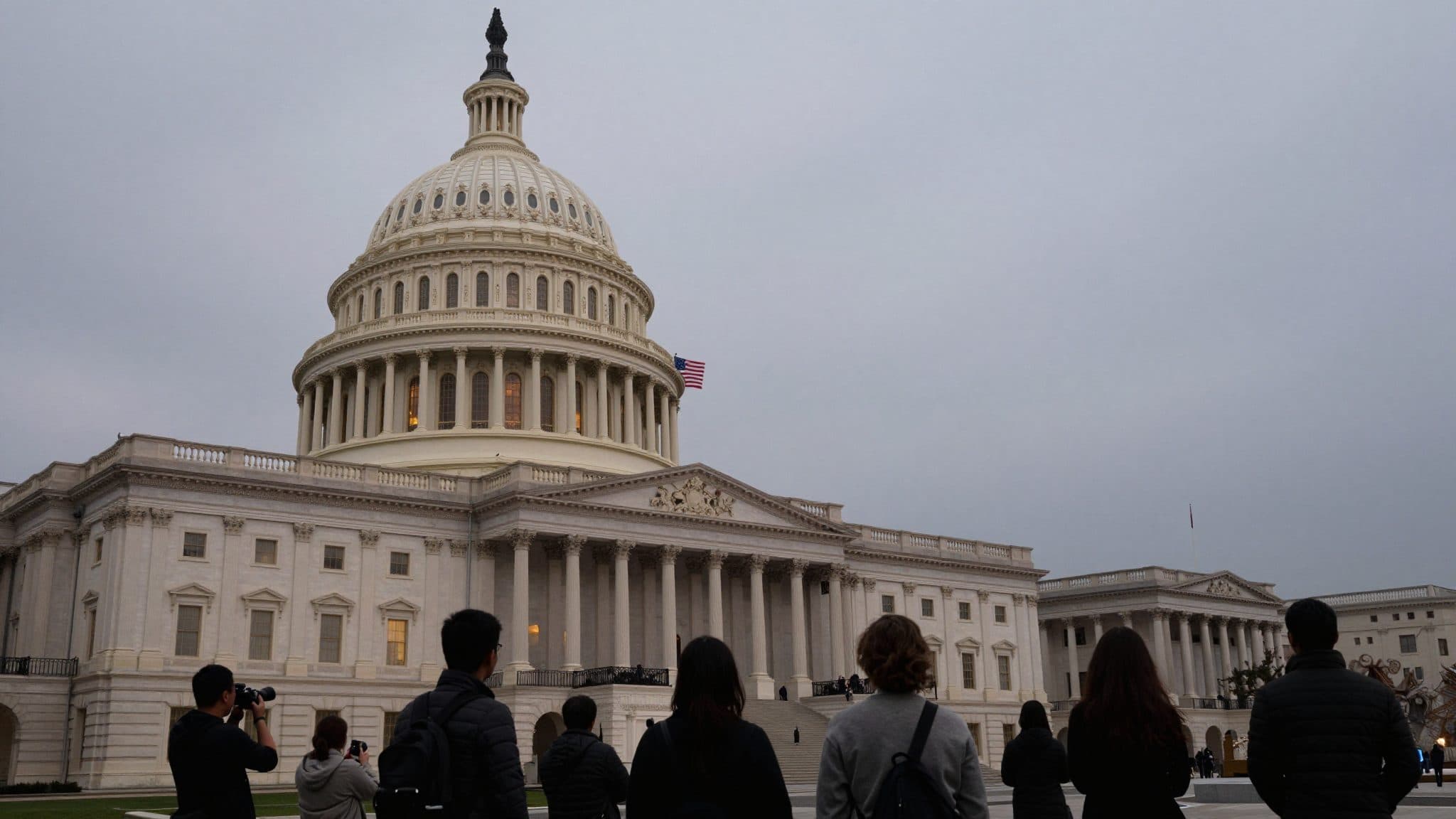
Republican US Senator Lindsey Graham of South Carolina died on Saturday evening after a brief and serious illness at the age of 71. His office announced the death overnight into Sunday via the online networks X and Facebook.
Washington, July 12, 2026
Republican US Senator Lindsey Graham died on Saturday evening (local time) at the age of 71 after a brief and serious illness, as his office announced early Sunday.
As the communications director of his office stated in a post on X, the politician from South Carolina passed away on Saturday evening after a brief and serious illness. The statement was titled „Statement from the Office of U.S. Senator Lindsey Graham (R-South Carolina).“ and was published under the account @LindseyGrahamSC on the platform X as well as on Facebook.
Statement from the office and family reaction
It read: „Senator Graham's family appreciates prayers at this time and asks for privacy during this incredibly difficult period.“ In a further statement, his family asked „all who pray for them“ and called for „respect for their privacy during this extremely difficult time.“ Graham's office provided no information on the exact cause of death.
Graham had been a senator for the state of South Carolina since 2003, representing the US state in the Senate in Washington for nearly a quarter of a century. At the time of his death, he was on his way to a fifth term. Previously, according to his website, he was elected in 1994 to the US House of Representatives for South Carolina's third congressional district.
Political career in South Carolina
The politician was regarded across party lines as an influential voice on foreign and security policy. He was known as a „defence hawk“ who, according to his own description on his website, „consistently pushed for outcomes in the War on Terror that protect our long-term national security interests“.
Hard line in foreign policy
In foreign policy, Graham took a hard line toward Russia and Iran for years. As early as the 1990s, while a member of the House of Representatives, he supported policies aimed at isolating Iran and limiting its missile and nuclear programs. He was considered a „longtime hawk on Iran“.
Transformation from critic to Trump confidant
At the beginning of his career, Graham was a vocal critic of US President Donald Trump before becoming one of his most loyal allies on Capitol Hill. During the 2016 campaign, he briefly sought the Republican presidential nomination but subsequently switched to Trump's side and developed into a close confidant.
According to US media reports, Graham had just returned from a trip to Ukraine when he fell ill. Ukrainian President Volodymyr Zelensky had thanked the Republican for his tenth visit to the country attacked by Russia and circulated footage of the meeting.
Final trip to Ukraine and sanctions against Russia
On that same Saturday, Graham had reached agreement with one Republican and two Democratic colleagues on tightened sanctions against Russia. Just on Friday, he had also announced an agreement with the Trump administration on the further course of action regarding a sanctions package against Moscow. Most recently, he had negotiated an agreement in the US Senate on new sanctions against Moscow.
Graham supported the decision made by Trump in the past to strike Iranian nuclear facilities. He advised Trump on foreign policy matters, particularly with regard to Iran and Russia. He also spoke frequently with the president and regularly played golf with him.
Appearances at the Munich Security Conference
Graham repeatedly attracted international attention through his appearances at the Munich Security Conference. He was a frequent guest at the conference and, in February, appeared on the sidelines of the event at a large rally of the Iranian exiled opposition.
Graham was also regarded in the Senate as a critic of the war against Ukraine. His repeated trips to the crisis zone and his recent sanctions initiatives made him one of the most visible voices in congressional efforts to organize support for Kyiv.
Little personal information about his life became known. Graham was unmarried and had most recently lived in Seneca in the US state of South Carolina. An interview with broadcaster NBC News scheduled for the day of his death could no longer take place, as the broadcaster announced.
His death is part of a phase of health setbacks among Republican politicians in Washington. Republican Congressman Tom Kean Jr. of New Jersey, for example, was absent for months without explanation before announcing his return with a diagnosis of depression. In addition, Republican Senator Mitch McConnell of Kentucky was hospitalized a few weeks ago for unspecified health reasons.
Health setbacks among Republicans
The news of his death was picked up by dpa and APA, among others, and disseminated on July 12, 2026. Deutschlandfunk also reported on the senator's death in its programming. Graham's death is being mourned in Washington as a painful loss both within the Republican Party and in the ranks of the Democrats.
In an initial reaction, companions honored Graham as a senator who was uncompromising on foreign policy questions but who had been esteemed and respected in the Senate for years. His death leaves a gap in South Carolina, in the Senate, and in the Republican Party that will be difficult to fill shortly before the upcoming elections.
Questions & Answers
Who was Lindsey Graham?
Lindsey Graham was a Republican US Senator from South Carolina who had served in the Senate since 2003 and was regarded as a foreign policy hardliner toward Russia and Iran.
What did Lindsey Graham die of?
According to his office, Lindsey Graham died on Saturday evening (local time) at the age of 71 after a brief and serious illness, without further details on the cause of death being given.
What were Graham's recent political priorities?
Shortly before his death, Graham had negotiated a Senate agreement on tightened sanctions against Russia and completed his tenth trip to Ukraine.
Lindsey Graham dead: Trump ally dies at 71 | allfacts360