Major Telstra network outage paralyses Australia for hours
Sydney, 8 July 2026
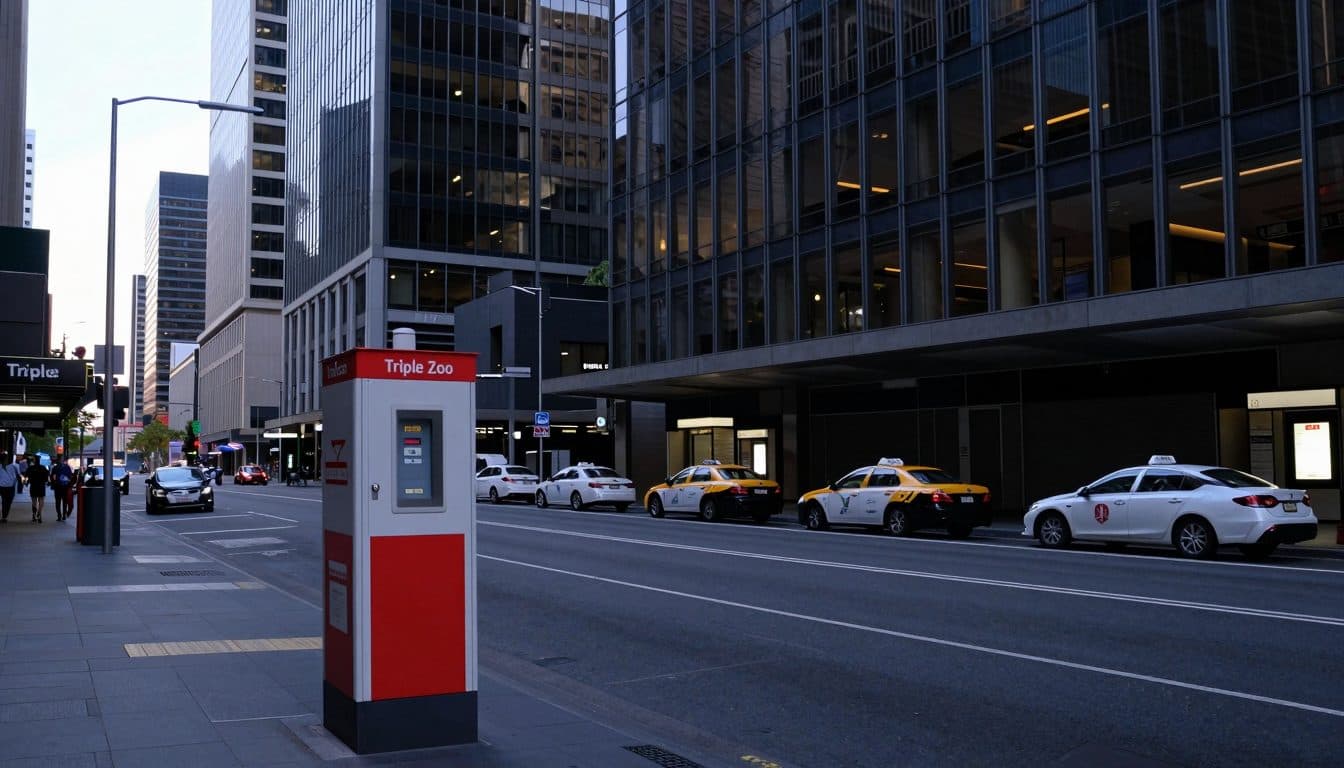
AI-generated image (z-image via Kie.ai)
Summary
A widespread outage in the mobile network of Australia's largest provider Telstra paralysed large parts of the country on Wednesday morning. Trains came to a halt, emergency calls failed, payments failed – until around 90 percent of services were restored by late morning.
Sydney, 8 July 2026
A major outage in the mobile network of Australia's largest telecommunications provider Telstra disrupted phone calls, data connections, emergency calls, rail traffic and digital payments nationwide on Wednesday morning (local time).
Technical cause and timeline
The group identified the problem on Wednesday at 4:30 a.m. local time. According to Telstra, the cause was a fault in a system used for time synchronisation of the mobile network. The company ruled out a cyberattack. By around 9:30 a.m., the fault had been corrected and phone and data traffic had been restored across large parts of Australia. Five hours after the problem was first identified, Telstra reported that around 90 percent of calls were possible again. Over the course of the day, however, a large part of the mobile network returned to normal operation.
Political reactions
Prime Minister Anthony Albanese expressed concern about the incident. "This is deeply concerning and significantly impacts the lives of people across the country," he said. According to the Ministry of Transport, the responsible authority ACMA (Australian Communications and Media Authority) has already initiated an investigation into the incident.
Impact on emergency calls
Tens of thousands of customers of Australia's largest mobile network provider were suddenly only able to make limited phone calls or use mobile data. It was also noticed on the national emergency call system that some calls did not connect; the emergency number in Australia is 000 ("Triple Zero"). Authorities urged the public not to call the emergency number for testing purposes.
Telstra statement
Telstra apologised to its customers. "We know how much customers rely on our network and understand how much this disruption has affected your daily routine," the company said in a statement. It initially recommended that customers simply try again if a connection failed, as the difficulties were not occurring continuously.
Consequences for air traffic and mining
However, the outage had consequences for infrastructure across the country: trains were unable to run, and payment systems and traffic lights were affected, as the Sydney Morning Herald reported. The airport in the west coast metropolis of Perth was hit particularly hard. According to the portal News.com.au, dozens of aircraft departed with delays of up to three hours.
Hundreds of mining industry workers who wanted to travel to remote mine sites with "FIFO flights" (Fly-in, Fly-out) had to prepare for delays of several hours in the early morning. The outage also caused significant disruptions in Australia's mining regions, which rely on regular commuter flights.
Rail traffic affected in several states
In the southern state of Victoria, regional traffic came to a complete standstill. According to operator VLine, all regional rail services in the southern state of Victoria were suspended due to radio disruptions linked to the Telstra outage. It is still unclear when trains will resume running. The VLine trains use the mobile network for their communication and signalling systems.
In the neighbouring state of New South Wales in the southeast, numerous trains also came to a halt, with some being replaced by buses. Travellers sometimes had to wait hours for alternative connections. The entire public transport system in several states was affected simultaneously.
Digital payment systems were also reportedly affected by disruptions. In some cases, taxi rides could not be paid for directly; according to one reporter, he had to give the driver his phone number and promise to settle the fare later. In South Australia, hundreds of traffic lights failed; according to ABC News, traffic lights in the south of the country only functioned to a limited extent at times.
Traffic lights and payment systems disrupted
Without mobile network coverage, they could not be operated in a way that adapts to traffic conditions. Transport authorities in several cities had to switch to manual operation, leading to additional congestion during the already busy morning hours.
Australian Minister for Emergency Management Kristy McBain assured the public that she shared the frustration over the outage. Politicians also demanded an explanation and clarification after the incident. On social networks, many users pointed out how dangerous it is when critical infrastructure depends on a few providers.
Background: Optus outages
The incident is part of a series of telecommunications outages in Australia. The most recent was a widespread telecommunications outage in the sparsely populated country in 2023. At that time, a software update at competitor Optus had caused more than ten million people in Australia to be temporarily unable to make phone calls or use the internet. No emergency calls could be made, numerous payment terminals failed, and some trains came to a halt.
In the autumn of last year, a faulty firewall update at Optus caused the emergency number to fail for hours across large parts of the country. That outage was linked to several deaths. Unlike the previous incident, however, the latest Telstra outage was relatively brief and clearly visible – people immediately noticed that their devices had no reception.
The outage also led to unusual scenes in offices. For example, employees in a Sydney office building were unable to work for two hours because two-factor authentication for logging into their computers did not function. According to eyewitnesses, they used the time to watch football together.
The investigations by regulator ACMA are expected to focus on the question of how a single fault in a time synchronisation system could trigger such widespread infrastructure failure. Industry experts point out that, due to its size and low population density, Australia is particularly dependent on a few large telecommunications providers.
Questions & Answers
What was the cause of the Telstra network outage?
According to the company, the cause was a fault in a system used for time synchronisation of the mobile network. Telstra ruled out a cyberattack.
Which areas were hardest hit by the outage?
In addition to mobile phone and mobile data connections, regional rail services in Victoria and New South Wales failed, emergency calls were partially blocked, digital payments failed and hundreds of traffic lights only functioned to a limited extent.
What were the consequences of the outage for air traffic in Perth?
At the airport in the west coast metropolis of Perth, dozens of aircraft departed with delays of up to three hours. Hundreds of mining workers travelling to remote mine sites on FIFO flights were also affected for hours.
Telstra network outage Australia July 2026: Impact & cause | allfacts360