Mercedes-Benz Reports Sales Decline, Sees Growth in Electric Vehicles
Stuttgart, 08 July 2026
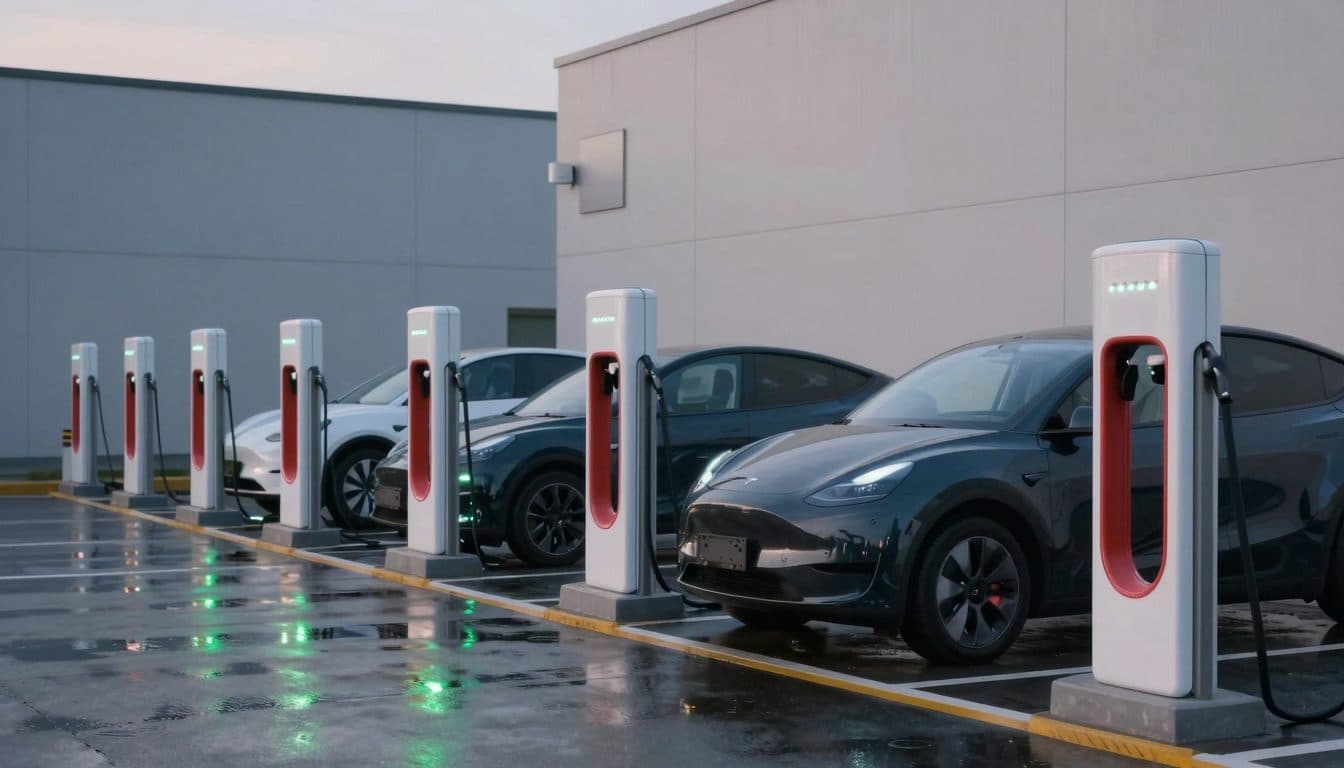
AI-generated image (z-image via Kie.ai)
Summary
Mercedes-Benz has sold significantly fewer cars in the second quarter of 2025 than in the previous year.
Stuttgart, 08 July 2026
Mercedes-Benz has sold significantly fewer cars in the second quarter of 2025 than in the previous year. However, the group posted strong growth in fully electric vehicle sales and sees its model offensive confirmed. Due to weakness in China, the company is tightening its cost-cutting course, and employees are protesting.
Mercedes-Benz sold 511,900 cars and vans worldwide in the second quarter of 2025, six percent fewer than in the same period of the previous year, while the group achieved a 51 percent increase in fully electric vehicle sales.
The Stuttgart-based automaker Mercedes-Benz sold 511,900 cars and vans in the second quarter of the current year. This represents a decline of six percent compared to the second quarter of the previous year. The decline for passenger cars alone was eight percent, according to the half-year figures presented on Wednesday.
Overall, the group sold 1.01 million cars in the first half of the year, according to its own figures, "das sind sechs Prozent weniger als im Vorjahreszeitraum". The weakness was concentrated on combustion models, according to the company. "Mercedes verwies darauf, dass es im zweiten Quartal vor allem bei den Modellen mit Verbrennungsmotor abwärts ging".
Weak Overall Sales
A key reason for the decline is the weak business in China. In the first half of the year, only 210,000 cars were sold there. Compared to the first half of 2025, this represents a decline of 28 percent. Overall passenger car sales in China also dropped by around 30 percent.
Sales chief Mathias Geisen spoke of a model offensive gaining momentum despite the weak figures: "Unsere größte Modelloffensive gewinnt weiter an Dynamik." Demand for the new electric GLC, the electric CLA, and the electric GLB has been extraordinarily strong, Geisen added. "Vertriebschef Mathias Geisen sagte, die Nachfrage nach dem neuen elektrischen GLC, dem elektrischen CLA und dem elektrischen GLB sei außerordentlich stark".
Electric Vehicles See Strong Growth
That the new models are resonating is also reflected in electric vehicle sales figures. Mercedes-Benz sold 52,900 fully electric passenger cars worldwide in the second quarter, an increase of 51 percent compared to the same period of the previous year. This means roughly one in eight passenger cars sold in the quarter was a battery electric vehicle. In Europe, electric vehicle sales even soared by 87 percent in the second quarter.
In Europe, unit sales rose slightly overall. From January to June, passenger car sales in the region increased by five percent year-on-year to 325,000 vehicles. In the second quarter, Europe grew by four percent. "Hier spielten zum einen neue Produkte, zum anderen eine stärkere Nachfrage nach Elektroautos eine Rolle", the group explained.
Europe and North America in Positive Territory
Business in North America also performed favorably. From January to June, Mercedes-Benz sold 180,900 vehicles there. "In Nordamerika waren es mit 180.900 Fahrzeugen sogar 15 Prozent mehr verkaufte Autos als im Vorjahreszeitraum". In the second quarter, sales in the region rose by 13 percent.
While Europe and North America are growing, overall figures are shrinking because China is missing. Group management stated that the Chinese market remains central: "China bleibt ein zentraler Markt für Mercedes-Benz und spielt eine Schlüsselrolle in der Lokalisierungs- und Innovationsstrategie des Unternehmens". Nevertheless, the group has postponed the sales target of two million passenger cars per year, originally targeted for 2027.
The medium-term goal of selling around two million passenger cars per year is now expected to be achieved before the end of the decade, as the company confirmed. Until then, Mercedes-Benz intends to further tighten its cost-cutting course. At the end of June, the automaker had once again sharpened a cost reduction program launched a little over a year ago and, among other things, postponed a collective bargaining special payment to the following year.
Tightened Cost-Cutting Course and Protests
Group management also called on employees in Germany to increase their work performance: "Der direkteste und in unseren Augen fairste Weg: Wir sollten in allen Bereichen für das gleiche Geld mehr arbeiten". This was intended to reduce labor costs, the company said.
The workforce reacted promptly: On the following Friday, tens of thousands of employees took to the streets nationwide and protested against the group's austerity policy. This intensifies the conflict between management and the employee side at a time when the company is already struggling with declining sales figures.
For vans, the second quarter was slightly positive. From April to June, Mercedes-Benz sold 94,100 vans, an increase of one percent compared to the previous year. Electric vans accounted for only slightly more than a tenth of van sales, but grew by double-digit percentages.
Overall business development has not become any easier as a result. The group cited tariffs, negative currency effects, and intense competition in China as burdens for the full year 2025. Earnings are also already under pressure: The group's net profit fell by 17.2 percent in the first quarter of 2025 compared to the previous year's figure.
Outlook and Stock Market Reaction
On the stock market, investors reacted in the short term to the half-year figures. The Mercedes-Benz share temporarily fell by 3.50 percent to 44.36 euros in XETRA trading. Market observers rated the weak passenger car sales and Chinese weakness as burdening factors, even though the electric vehicle segment provided bright spots.
For the full year 2024, the company had already recorded a three percent decline in passenger car sales. In the full year 2025, passenger car sales of just over 1.8 million vehicles were nine percent below the previous year's figure. Group profit fell in the same period from 10.4 billion to 5.3 billion euros, according to group figures, and thus by approximately half.
Mercedes-Benz plans to release the complete second-quarter financial figures at the end of July. The focus will then be primarily on revenue and operating profit. Observers expect the final figures to show how far the cost-cutting course can stabilize margins given weak combustion engine sales.
If the group succeeds in scoring with the model offensive centered on the electric GLC, CLA, and GLB, as well as with new combustion models such as the S-Class and GLE in the second half of the year, the medium-term goal of two million passenger cars per year before the end of the decade could still become realistic. Until then, China remains the decisive factor for the bottom line.
The current half-year figures also illustrate how profound the shift toward electromobility is in the European and North American markets. Without the strong growth in fully electric passenger cars, the half-year would have performed significantly worse, the company indirectly acknowledged.
For employees at the German plants, the situation remains tense in the meantime. With the postponement of the special payment and the demand for more work for the same pay, further collective bargaining disputes are ahead. The protests a few days ago show that the workforce will not accept the cost-cutting course without objection.
Questions & Answers
How did Mercedes-Benz passenger car sales develop in the second quarter of 2025?
Mercedes-Benz sold 417,800 passenger cars in the second quarter, eight percent fewer than in the same period of the previous year. Including vans, total sales were 511,900 vehicles, a decline of six percent.
What factors are burdening Mercedes-Benz business in China?
Mercedes-Benz cites tariffs, negative currency effects, and intense competition in China as burdens. In the first half of the year, sales there dropped by 28 percent to 210,000 cars.
How are Mercedes-Benz electric vehicles developing in Europe?
Sales of fully electric passenger cars rose by 87 percent across Europe in the second quarter. Overall, the group sold 52,900 fully electric passenger cars worldwide, an increase of 51 percent compared to the same period of the previous year.
Mercedes-Benz Reports Sales Decline, Sees Growth in… | allfacts360