Merz cabinet reshuffle: Linnemann, Bilger, Warken – all the | allfacts360
Merz executes sweeping cabinet reshuffle: Linnemann, Bilger and Warken take over key ministries
Berlin, July 29, 2026
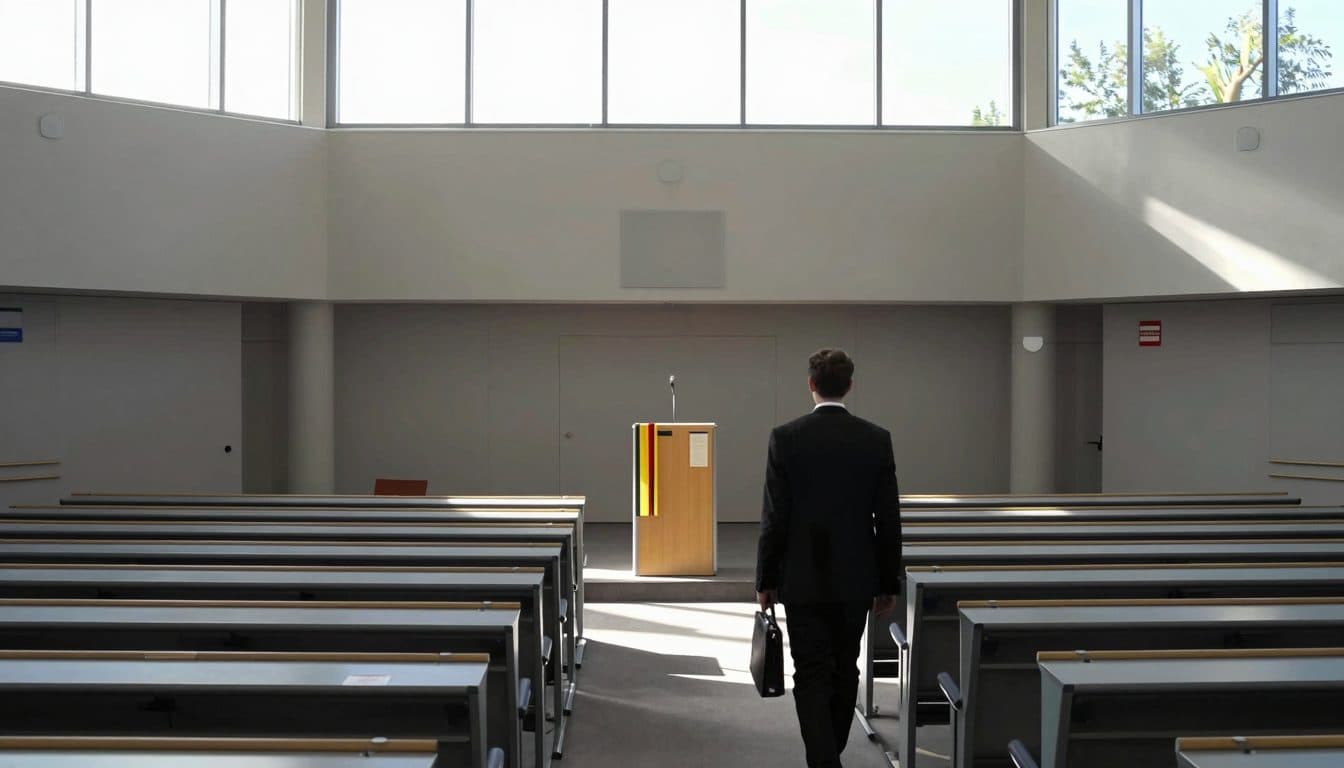
AI-generated image (z-image via Kie.ai)
Summary
Federal Chancellor Friedrich Merz is carrying out a broad cabinet reshuffle on Wednesday: Carsten Linnemann becomes Health Minister, Steffen Bilger Transport Minister and Nina Warken Head of the Federal Chancellery. At the same time, the Union parliamentary group is electing Thorsten Frei as its new chairman. The reshuffle was triggered by the resignation of former faction leader Jens Spahn and is meeting internal criticism.
Berlin, July 29, 2026
Federal Chancellor Friedrich Merz (CDU) is implementing an extensive cabinet reshuffle on Wednesday in the Berlin Reichstag, with Carsten Linnemann taking over the Health Ministry, Steffen Bilger the Transport Ministry and Nina Warken the leadership of the Federal Chancellery, while the Union parliamentary group simultaneously elects former Chancellery Minister Thorsten Frei as its new chairman.
Linnemann moves to the Health Ministry
The former CDU General Secretary, Carsten Linnemann, becomes the new Federal Health Minister. The Federal Government announced this on Wednesday in Berlin. The 48-year-old succeeds Nina Warken, who is moving to the Federal Chancellery. Linnemann had already been discussed as a minister at the start of Merz's term of office in May 2025.
"Ich traue mir das zu," said Linnemann. He added that during the election campaign he had advocated abolishing the citizen's income (Bürgergeld) and now wanted to deliver on that promise. On Phoenix he also explained: "Wenn sie mich jetzt aufgestellt hätten, weiß ich nicht, als Gesundheitsminister, wäre ich wahrscheinlich nicht erfolgreich gewesen. Die Leute hätten gesagt, warum wird der Gesundheitsminister, was hat der damit zu tun."
Merz praised Linnemann as "einen Minister, der standfest und reformwillig zugleich ist, auch im Gegenwind". Linnemann was previously CDU General Secretary and is considered one of the chancellor's closest confidants.
Warken becomes first female Head of the Chancellery
Nina Warken (CDU) becomes Head of the Federal Chancellery. She is thus the first woman to lead the Federal Chancellery. Warken was previously Federal Health Minister and, before the summer break, pushed through an austerity package for the statutory health insurance funds, which passed the Bundestag and Bundesrat as the Contribution Stabilization Act.
"Ich gehe fest davon aus, dass nach der Fraktionssitzung am morgigen Tag dann auch alle Entscheidungen nicht nur getroffen sind, sondern auch akzeptiert," said Merz on Tuesday in Dublin. He described Warken as "eine der wichtigsten, wenn nicht die wichtigste Stütze" and emphasized that she is "durchsetzungsstark … auch in den sicherheitspolitischen Themen zu Hause".
Bilger replaces Schnieder at the Transport Ministry
With the change at the top of the Chancellery Minister's office, the Health Ministry becomes vacant. The 47-year-old Warken will receive her dismissal certificate as Health Minister from Federal President Frank-Walter Steinmeier on Wednesday at 12:00 noon and immediately afterward her appointment certificate as the new Minister for the Federal Chancellery.
Steinmeier is to appoint the former parliamentary group manager of the Union faction, Steffen Bilger (CDU), as the new Federal Transport Minister. Bilger had previously already served as Parliamentary State Secretary at the Transport Ministry. He succeeds Patrick Schnieder, who, after weeks of speculation surrounding his person, is now officially leaving office.
"Ich möchte, dass er im Bundesverkehrsministerium jetzt die Chancen nutzt, die das Investitionsprogramm aus unserem Sondervermögen bietet," said Merz about Bilger. He also stressed: "Investitionen in die Infrastruktur müssten schnell kommen - um zu zeigen, dass die enorme Schuldenaufnahme ihre Rechtfertigung habe."
Schnieder himself had drawn the consequences on Sunday from days of speculation and asked Merz for his dismissal. "Mit diesem Schritt ziehe ich die Konsequenzen aus den Entwicklungen der vergangenen Tage und will zugleich den unwürdigen Zustand beenden, der die notwendige sachliche Arbeit unmöglich macht," the CDU politician from the Eifel region explained.
Merz had already informed Schnieder on Thursday of the previous week that he wanted to dismiss him. The planned announcement was, however, delayed by three days because the designated successor, Fritz Güntzler (CDU), withdrew his recently given acceptance overnight. Schnieder was informed about this on Sunday, according to his own statements.
Frei to lead the Union parliamentary group
Schnieder will receive his dismissal certificate from Federal President Steinmeier on Wednesday around midday, after which he will symbolically hand over the keys to his successor Bilger. In the morning, Schnieder will still attend a cabinet meeting according to information from the ARD Hauptstadtstudio, where he will be represented by Parliamentary State Secretary Ulrich Lange.
In parallel with the cabinet reshuffle, the CDU/CSU members of parliament are electing Thorsten Frei as the new chairman of the Union parliamentary group on Wednesday in a special session in the Reichstag building. Frei was previously Chancellor of the Chancellery Minister for 14 months and is considered to have been closely connected to Merz for many years. "In den vergangenen 14 Monaten ist Frei Kanzleramtsminister, die rechte Hand des Bundeskanzlers und zuständig für den Ablauf der Regierungsgeschäfte," an analysis states.
Historically, Union faction chairmen usually receive more than 90 percent of the votes in a first election without opposing candidates. Wednesday's election is also regarded as an indirect vote of confidence in the chancellor. "Am Ende ist es eine geheime Wahl," it is said from faction circles.
The personnel reshuffle was triggered by the resignation of the previous Union faction chairman Jens Spahn. Spahn had stepped down after sharp criticism from within his own ranks and at the chancellor's request, after he and his husband Daniel Funke had publicly disclosed that they had had a child via a surrogate mother in the United States – contrary to a ban in force in Germany and a corresponding CDU party conference resolution.
Spahn's resignation as the trigger
Within the Union, Chancellor Merz is facing criticism over the personnel reshuffles. Bremen CDU chairman Heiko Strohmann reported in the Tagesspiegel of growing discontent among party members. "Ich will nicht sagen, dass wir eine katastrophale Stimmung haben. Aber es geht schon in diese Richtung," the 58-year-old said.
Strohmann had already sharply rebuked Merz's leadership style at a party executive meeting on Monday: "Sie leiten hier keine Firma, sondern eine Partei." At the same time, Strohmann supported his party colleague Armin Schuster from Saxony, who had criticized the lack of eastern German representation in the federal cabinet.
Criticism from within the ranks
Schnieder's removal has caused anger in his own state association in Rhineland-Palatinate. The CDU state association there, led by Minister-President Gordon Schnieder, the brother of the dismissed minister, had publicly confronted Merz over the dismissal. Saxony's Minister-President Michael Kretschmer also objected to the fact that Sports State Minister Christiane Schenderlin would have to move to the Health Ministry.
Radtke, the chairman of the Christian Democratic Employees' Association (CDA), defended Merz's decisions on Deutschlandfunk: "es sei die Freiheit und das Recht eines Kanzlers, seine Mannschaft so auf- und umzustellen, wie er es für richtig halte". At the same time, he called for "einen besseren Kommunikationsstil des CDU-Parteichefs". That so much criticism had come from within his own party was due to the fact "dass man es in der Politik mit Menschen und entsprechend mit Empfindlichkeiten zu tun habe".
Radtke is a member of the European Parliament and said "zu Führungsaufgabe gehöre es eben auch, solche Befindlichkeiten einzupreisen und damit umzugehen". GDL chairman Claus Weselsky, himself a CDU member, criticized the manner in which Schnieder was replaced. "Schnieder habe mehr getan als viele Vorgänger," said Weselsky on Deutschlandfunk, but emphasized: "Gerade bei der Eisenbahn müsse langfristig mit gleicher Intensität und strategischer Voraussicht gearbeitet werden. Ein Personalwechsel sorge zunächst für Stillstand." Weselsky demanded that the new Transport Minister Bilger be given a chance.
Changes in other positions
In addition to the three ministers, three Parliamentary State Secretaries are also being swapped. Christiane Schenderlin follows Tino Sorge at the Health Ministry; Sorge had loudly complained about his removal on Monday. Johannes Steiniger (39), previously CDU General Secretary in Rhineland-Palatinate, becomes Parliamentary State Secretary at the Economics Ministry, succeeding Gitta Connemann (62), who in turn takes over the previous post of Philipp Amthor. Amthor becomes the new Minister of State for Federal-State Relations in the Chancellery, succeeding Michael Meister. In addition, Franziska Hoppermann was elected the new CDU General Secretary on Monday.
The swearing-in of the new ministers in the Bundestag is scheduled for the first sitting week after the summer break, presumably on September 9. The background is that the 630 members of parliament are currently in the parliamentary summer recess. The Federal Government considers the procedure of carrying out the swearing-in outside a regular sitting to