NATO Summit in Ankara: Alliance agrees on higher defense spending and Ukraine aid
Ankara, July 8, 2026
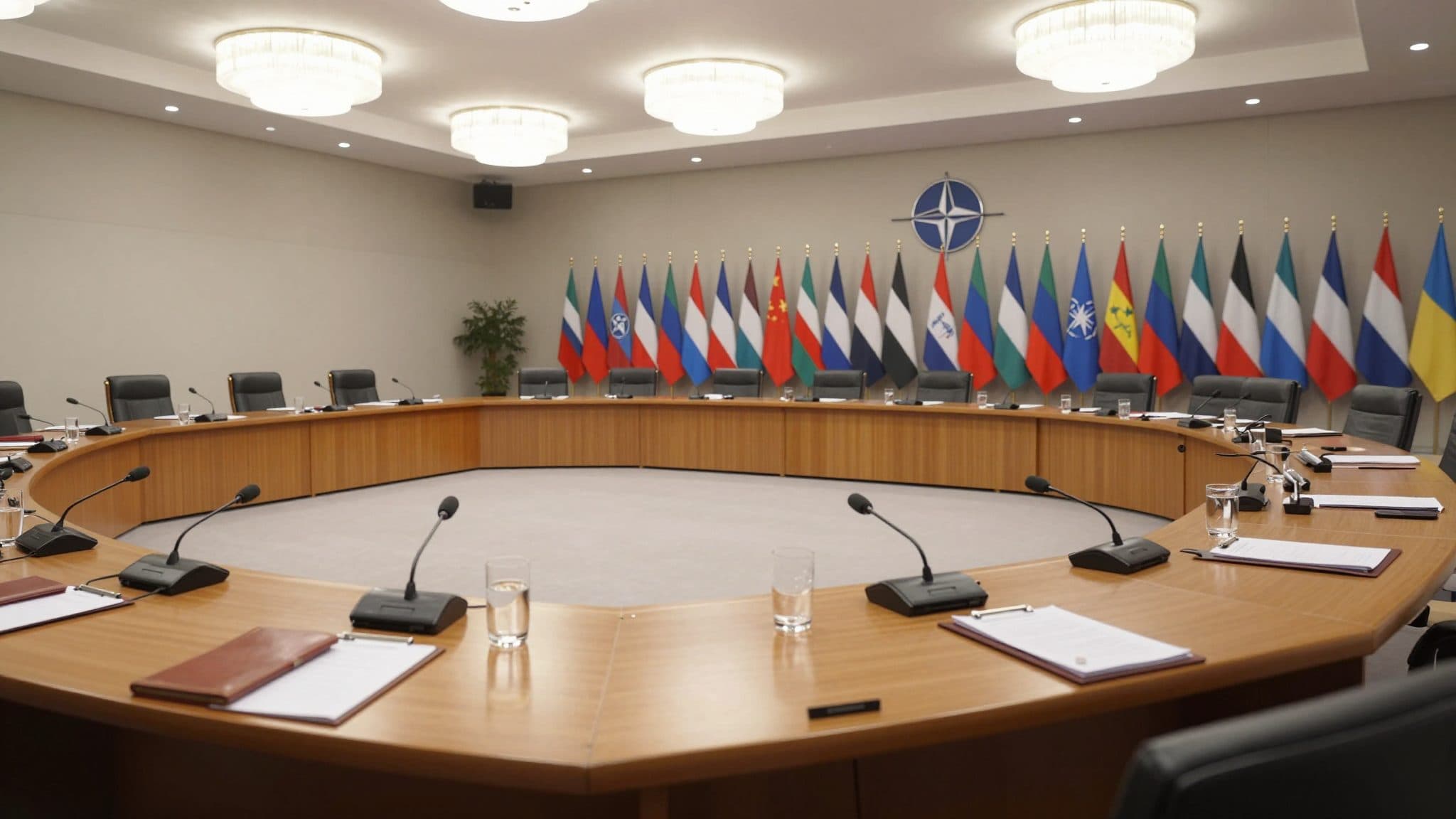
AI-generated image (z-image via Kie.ai)
Summary
At the NATO summit in Ankara, alliance partners reached agreement on significantly rising defense spending and new aid for Ukraine. Chancellor Merz and NATO Secretary General Rutte presented key decisions, while the issue of burden-sharing between the US and Europe took center stage in the debate.
Ankara, July 8, 2026
At the NATO summit in Ankara, the alliance partners agreed on an increase in defense spending and additional aid for Ukraine, while US President Trump once again criticized the contributions of European states.
Higher defense spending decided
The NATO summit in Ankara is marked by a fundamental rebalancing of the burden-sharing between the United States and Europe. At the meeting of heads of state and government, decisions were prepared that are intended to significantly raise the annual defense spending of alliance states. The background is the ongoing Russian aggression against Ukraine and the pressure to make European armed forces more capable of waging war.
According to information from the Deutsche Presse-Agentur, the coordinated draft of the final declaration provides for minimum funding of 70 billion euros per year for military equipment, support, and training – for this year and the next. In total, the alliance would mobilize around 140 billion euros for collective defense. The text states, „die europäischen Bündnispartner und Kanada übernehmen gemeinsam mit den Vereinigten Staaten mehr Verantwortung für die Verteidigung des Bündnisses“. The aim is „ein stärkeres Europa in einer stärkeren NATO – ein modernisiertes Bündnis“.
Rutte calls for more European self-reliance
NATO Secretary General Mark Rutte emphasized Europe's grown responsibility at the summit. „Es ist nicht nachhaltig, von einem Land mit 350 Millionen Einwohnern, das rund acht Flugstunden von hier entfernt ist, zu erwarten, Europa gegen Russland zu verteidigen“, he said with a view to the US. Especially not because 600 million people live in the European part of the NATO area and Europe is one of the wealthiest regions in the world. Rutte thus openly advocated for a more robust European pillar within the alliance.
Chancellor Friedrich Merz interpreted the summit as a signal to Moscow. „Dem Kreml dürfte langsam klar sein, dass sich Russland in diesem Krieg nicht durchsetzen wird und seine Kriegsziele nicht erreichen wird“, he said. The summit in Ankara could mark a turning point in this war. Merz also pointed to the massively increased German defense spending, which is set to reach a new record of around 125 billion euros this year.
German contributions at record level
Germany actually reported defense spending of 124.7 billion euros for 2026 – an increase of 25.5 percent compared to the previous year. According to NATO calculations, the share of gross domestic product will thus reach 2.69 percent, after the ratio had been 2.22 percent the previous year. The absolute increase of around 25.4 billion euros is, according to the available data, the highest ever recorded for Germany in recent history.
Tension arose, however, from the appearance of US President Donald Trump. Shortly before the summit, he had criticized, among other things, the German contributions to the alliance as „lächerlich“. „Ich war sehr enttäuscht von der NATO“, he declared on the sidelines of a meeting with Turkish President Recep Tayyip Erdogan. In the spring, he told the „Telegraph“ that there was hardly any longer any debate that US membership would have to be reconsidered after the end of the Iran war.
Trump criticizes alliance partners
Another key issue was the financial dimension of European self-reliance. The initiative was adopted last year under pressure from Trump to spend five percent of gross domestic product annually on defense and security by 2035 at the latest. Of this, 3.5 percent is to go to traditional defense spending, with a further 1.5 percent able to flow, for example, into infrastructure. This would leave around 80 billion euros that NATO states would have to shoulder nationally.
An EU aid package of around 60 billion euros by the end of 2027 is also to be included in the overall balance. This noticeably shifts the financial architecture of the alliance. At the same time, more than 40 billion dollars is to be invested in drone defense capabilities over the coming five years – an area that has gained importance through the experiences from the war in Ukraine.
Ukraine aid in focus
The discussion about a fairer burden-sharing has been conducted intensively for months. The background is the dwindling willingness of the US to bear a disproportionate share of alliance costs. At the same time, awareness is growing in Europe that credible deterrence against Russia cannot be maintained without significantly greater own efforts. As host, Ankara also offered a stage at which Turkey, as an emerging regional power, could be more visibly integrated into alliance policy.
On the sidelines of the summit, NATO Secretary General Rutte and Ukrainian President Volodymyr Zelensky met, as shown in a press photo from the Ukrainian presidential office dated July 7, 2026. Zelensky used the meetings to point to Ukraine's ongoing military and financial support needs. The aid for Kyiv is to be made permanent at the summit and embedded in a multi-year perspective.
Observers assess the decisions as an attempt to keep NATO capable of acting despite transatlantic tensions. Even if the positions of Washington and European capitals diverge on individual issues, the summit signals a united front on supporting Ukraine and strengthening European defense capability. Chancellor Merz spoke of a signal to the Kremlin that Russia would not be able to achieve its war aims.
Significance for security policy
For Germany, the summit means a further increase in defense spending, which is also being debated domestically. The opposition has recently brought up counter-financing through additional debt or the activation of special funds. The government points to the obligations towards the alliance as well as to an increasingly threatening security situation in Europe.
Overall, the NATO summit in Ankara shows that the alliance is in a phase of profound change. The burden-sharing between the US and Europe is being recalibrated, support for Ukraine is being made permanent, and capabilities for drone defense and national defense are being expanded. Whether the decisions will be sufficient in the long term will become clear in the coming budget years.
The alliance partners agreed to provide at least 70 billion euros per year for military equipment, support, and training in this and the coming year – a total of around 140 billion euros.
How high are German defense spending in 2026?
Germany reported defense spending of 124.7 billion euros for 2026, which corresponds to an increase of 25.5 percent compared to the previous year and a share of 2.69 percent of gross domestic product.
What role does US President Trump play at the summit?
Trump had criticized, among other things, the German contributions to the alliance as „lächerlich“ and expressed that he was „sehr enttäuscht von der NATO“; at the same time, a stronger burden-sharing between the US and Europe is being negotiated at the summit.
NATO Summit Ankara: Burden-sharing and Ukraine in focus | allfacts360