CXMT IPO Shanghai: DRAM manufacturer surges 470% | allfacts360
Record IPO in Shanghai: China's DRAM manufacturer CXMT jumps 470 percent at trading debut
Shanghai, July 27, 2026
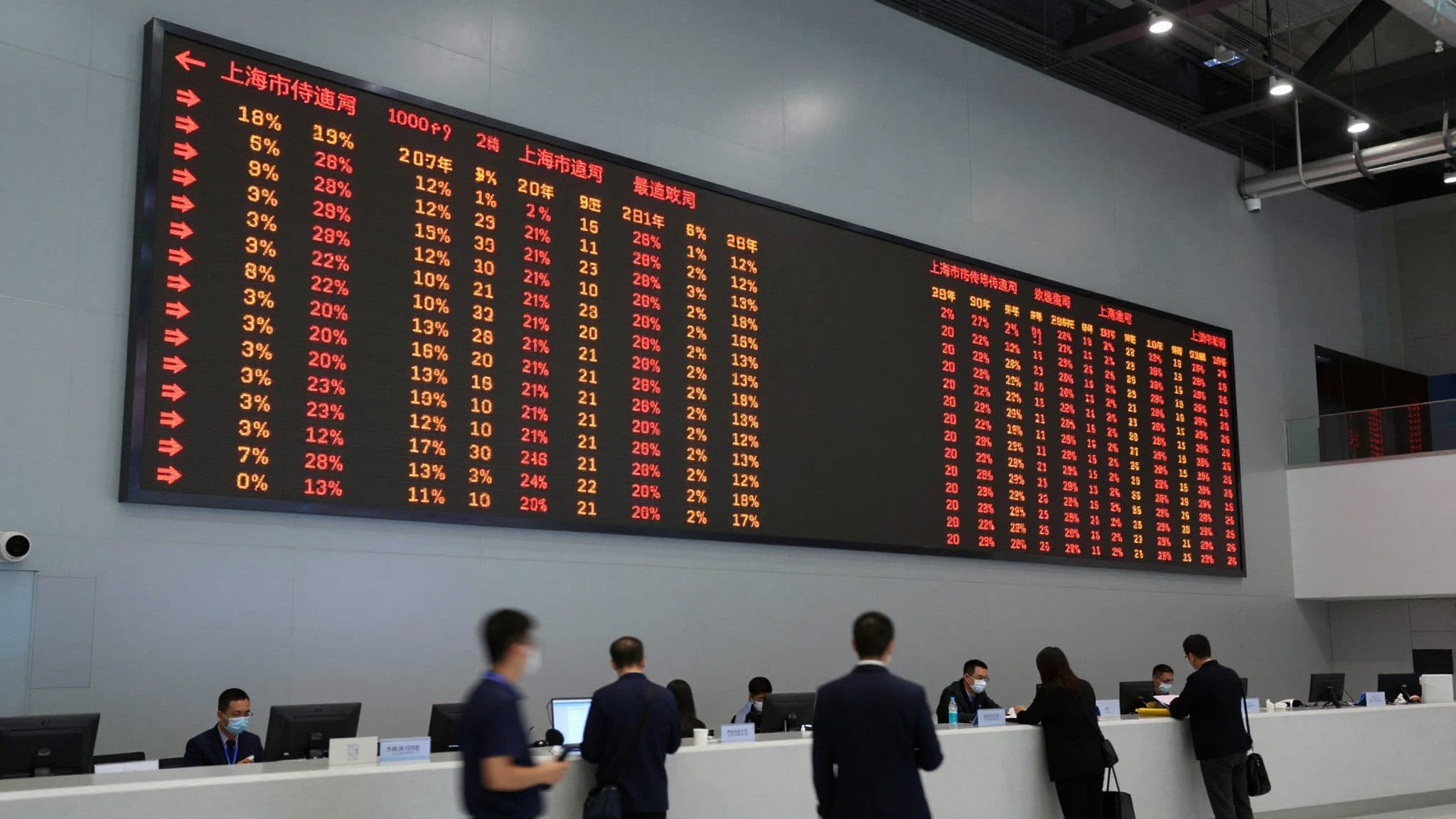
AI-generated image (z-image via Kie.ai)
Summary
In China's largest semiconductor IPO, DRAM specialist CXMT debuted in Shanghai with a price surge of 472 percent. With a market capitalization of around 3.31 trillion yuan, the company overtook the Industrial and Commercial Bank of China and is now the most valuable listed company on the Chinese mainland.
Shanghai, July 27, 2026
The Chinese memory chip manufacturer Changxin Memory Technologies (CXMT) launched on the Shanghai stock exchange on July 27, 2026 with a price surge of around 472 percent, becoming the most valuable listed company on the Chinese mainland.
Record volume and overwhelming demand
CXMT (Changxin Memory Technologies) launches a record initial public offering (IPO) on the Shanghai stock exchange in China on July 27, 2026. Right at the start of trading, the share was around 472 percent above the issue price, which had been set at 8.66 CNY. The share started at 46.90 CNY and most recently traded at 52.39 CNY on the Shanghai stock exchange – a gain of more than 500 percent over its issue price. At the opening bell, the stock of the company from eastern Chinese Hefei jumped by more than 470 percent.
With an issue volume of 57.92 billion yuan (8.6 billion US dollars), according to information in the prospectus, it is the largest semiconductor IPO on the Chinese mainland and the largest IPO in Asia in the current year. The total placement volume reached up to 66.6 billion yuan. The IPO itself was oversubscribed by a factor of 212, underscoring the enormous investor demand.
Position in the global DRAM market
According to its own prospectus disclosures, CXMT ranked as the fourth-largest memory chip manufacturer with a 7.67 percent share of the global DRAM market, behind Samsung Electronics, SK Hynix and Micron Technology. CXMT is the world's fourth-largest manufacturer of DRAM memory chips (Dynamic Random Access Memory), after SK Hynix, Samsung Electronics and Micron. The company is regarded as China's leading producer of DRAM chips and thus benefits directly from the global race for AI capacity.
It manufactures so-called DRAM memory, which enables fast data access. The chips are important in AI development because they cache the training data of the models, functioning in a sense as a brain. The strong demand for such chips amid the global race to develop new AI models has created a supply bottleneck in the industry, especially for manufacturers of everyday electronic devices.
Key financial figures and earnings development
CXMT forecasts revenue of between 16.2 and 17.7 billion US dollars for the first half of the year, up from 9.1 billion US dollars for the full year 2025. Net profit in the first half is expected to exceed the 7.4 billion US dollar mark, after the company moved into the black the previous year. CXMT's net profit margin is likely to be above 45 percent in this period; this puts the company on par financially with industry heavyweights such as Samsung, Hynix and Micron at the peak of the global chip boom.
In the first quarter of the current fiscal year, operations swung from a loss of 2.83 billion yuan in the same period a year earlier to an operating profit of 35.43 trillion yuan. CXMT rose to become the most valuable listed company in mainland China, with a market capitalization of approximately 450 billion euros. Market capitalization reached 3.31 trillion yuan (489 billion US dollars) on the first trading day, overtaking the Industrial and Commercial Bank of China.
Background: founder, owners and investors
CXMT was founded in 2016 by an investment group within the framework of Hefei's economic and technological development zone, the capital of the eastern Chinese province of Anhui, with seed funding of just 10 million yuan (1.5 million US dollars). Founder Zhu Yiming, a Tsinghua University graduate who studied and worked in the United States before returning to China, holds shares worth nearly 14 billion yuan. He will make part of his stake available as incentives for employees.
Investors with ties to the Hefei government hold 36.8 percent of CXMT, making them the largest shareholder group. At the IPO price, this stake is worth around 213 billion yuan (31.5 billion US dollars), more than double the entire revenue of the city of Hefei for 2025. The company is selling share packages directly to investors, including state pension funds, large Chinese chip-industry equipment makers such as AMEC, as well as the investment arms of tech groups such as Alibaba, Tencent and Xiaomi.
CXMT received additional attention from reports that Apple is testing the manufacturer's memory chips for devices sold in China. The group is also lobbying the US government to allow broader use of CXMT products, the Financial Times reported, citing people familiar with the matter. The US Department of Commerce has not yet added the company to the stricter Entity List. CXMT is included in the Pentagon's Section 1260H list of Chinese military companies.
Investors expect CXMT's valuation to quickly exceed 1 trillion yuan (139 billion US dollars) after the listing. Once the 1 trillion yuan mark is surpassed, CXMT will become a heavyweight on the STAR Market and in semiconductor indices, forcing index funds, actively managed funds and sector-specific funds to rebalance their portfolios accordingly, said Tim Sun, senior researcher at financial analyst firm Hashkey Group, to US broadcaster CNBC.
Market reaction and valuation outlook
Theodore Shou, head of investment firm Yiyi Capital, put the price surge in context on CNBC: "Ein Plus von rund 470 Prozent am ersten Handelstag sei für sich genommen nicht ungewöhnlich, wohl aber bei einem Unternehmen dieser Größenordnung." Shou is confident that CXMT will evolve over the long term from a challenger into a global market leader. Morningstar analyst Jing Jie Yu sees CXMT as a beneficiary of China's ongoing drive for chip self-sufficiency, while also pointing to the technology gap behind the global market leaders that could limit its share of higher-value AI memory chips.
Whether the valuation can be sustained will depend in part on how CXMT closes the technology gap with HBM4-capable competitors in high-bandwidth memory, and whether the stock is admitted to the Stock Connect program for foreign investors in the third quarter. Only 6.73 percent of the expanded share capital was freely tradable at the IPO; the bulk of the shares is subject to lock-up periods. The first lock-up periods for institutional subscribers will also not expire until next year.
Regulatory context
Ahead of the IPO, analyst firm HSBC Qianhai Securities had warned that the offering could drain liquidity from the broader Chinese market in the short term, but saw recovery potential for the following trading day after previous tech listings. The state-run Shanghai Securities News published a comment in which it dispelled concerns that the CXMT IPO would draw liquidity away from the broader market. The China Securities Regulatory Commission (CSRC) held a series of meetings with representatives of listed companies, securities firms, fund managers and academia, and announced a statement on July 21 pledging stronger guidance of market expectations and a more institutionalized market stabilization mechanism.
For historical comparison: Semiconductor Manufacturing International Corporation (SMIC) had raised 53.2 billion yuan at its IPO in 2020 – an amount now clearly surpassed by CXMT. CXMT is now by far the heaviest weight on the STAR Market, China's platform for technology and innovation companies. This news was broadcast on July 27, 2026 on the Deutschlandfunk program.
Questions & Answers
Who is CXMT and what does the company make?
Changxin Memory Technologies (CXMT) is China's leading manufacturer of DRAM memory chips, founded in 2016 in Hefei. According to its own prospectus, the company ranks as the world's fourth-largest DRAM producer with a 7.67 percent market share, behind Samsung, SK Hynix and Micron.
Why is the CXMT IPO relevant for the global AI market?
DRAM chips are central to AI development because they cache training data, functioning in a sense as the brain of the models. The strong global demand for AI chips has led to a supply bottleneck, from which CXMT directly benefits.
What risks and uncertainties remain after the record IPO?
Analysts such as Morningstar's Jing Jie Yu see a technology gap relative to the global market leaders in higher-value AI memory chips. In addition, the valuation depends on whether CXMT can close the gap with HBM4-capable products and whether the stock is admitted to the Stock Connect program for foreign investors.