Salzgitter takes over HKM – 2,000 jobs cut | allfacts360
Salzgitter takes over HKM completely – around 2,000 jobs to be cut by end of 2028
Duisburg, 10 July 2026
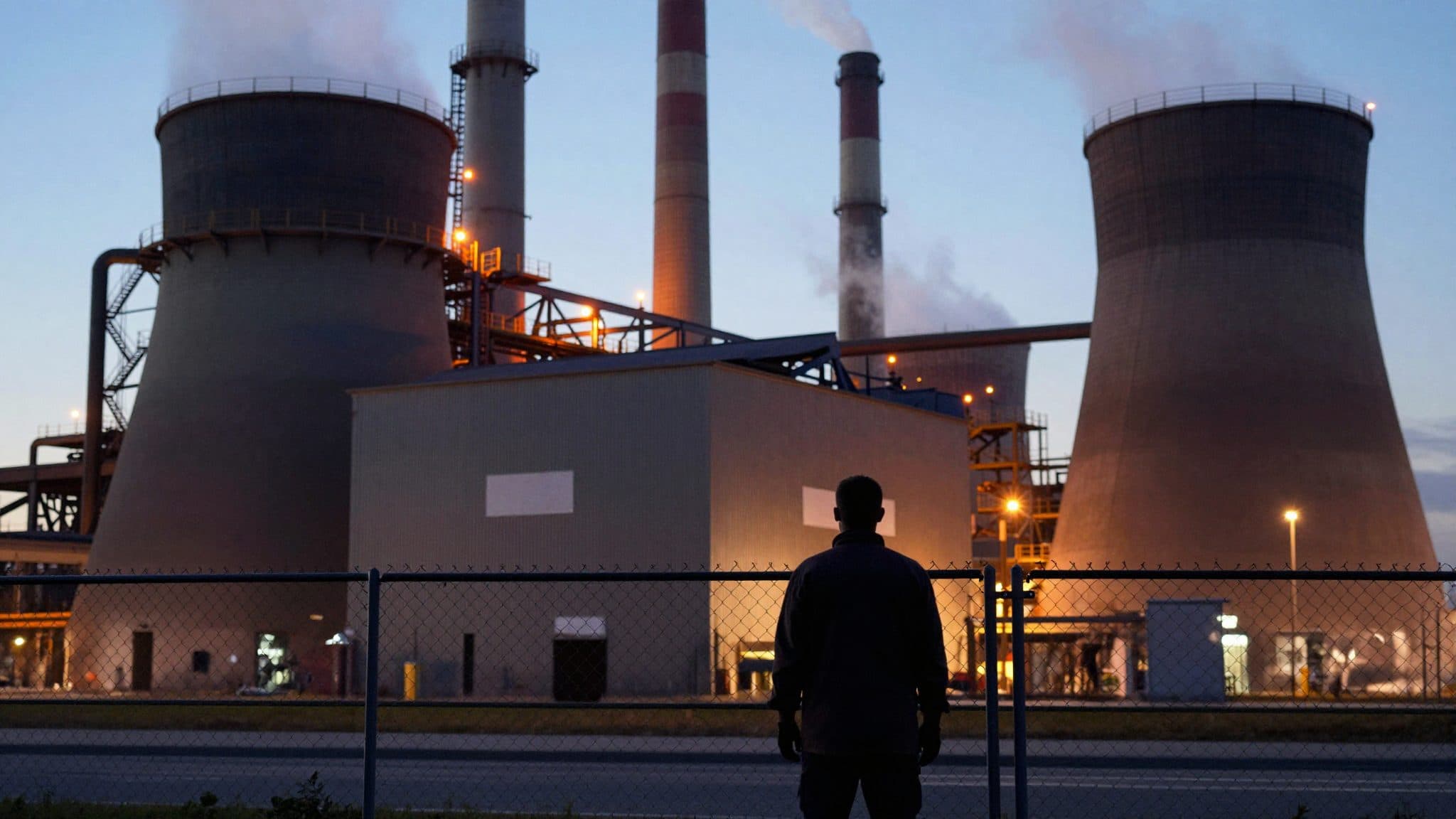
AI-generated image (z-image via Kie.ai)
Summary
Salzgitter AG is taking over the Duisburg steelworks HKM in full from Thyssenkrupp Steel Europe and Vallourec. The approximately 3,000 jobs are to be reduced to around 1,000 by the end of 2028; according to the company, the only alternative would have been a complete shutdown.
Duisburg, 10 July 2026
Salzgitter AG is taking over the Duisburger Hüttenwerke Krupp Mannesmann (HKM) in full and intends to reduce the steelworks' workforce from the current around 3,000 employees to approximately 1,000 positions by the end of 2028.
The announcement marks the end of a months-long marathon of negotiations. As Salzgitter announced on Thursday, the company has reached an agreement with the previous co-owners Thyssenkrupp Steel Europe (TKSE) and the French pipe manufacturer Vallourec on the complete acquisition of the joint venture. "We are glad that we have now found a satisfactory solution for all parties involved," declared Salzgitter chief Gunnar Groebler. The Lower Saxony-based group will thereby assume "full responsibility at HKM," the company added.
Background: From joint venture to Salzgitter subsidiary
At its core, the matter concerns a far-reaching restructuring of the long-established steelworks in southern Duisburg. Salzgitter plans to build an electric arc furnace, which will be powered by electricity rather than coal and therefore emit significantly less CO2. The conversion is part of the group's declared goal of reducing the CO2 emissions of steel production "by 90 percent in the long term." The site is to be, according to Groebler, "made fit for the upcoming challenges with a clear plan and a full focus on the green transformation."
But the ecological new beginning comes at a high social price. Under the new owner's plans, the workforce will be slashed from the current around 3,000 employees to about 1,000 positions by the end of 2028. That amounts to a cut of roughly two-thirds of the jobs within just two and a half years. Salzgitter's Chief Human Resources Officer Birgit Dietze spoke of a "difficult but necessary step" and at the same time declared that the restructuring should be designed "in principle in a socially responsible manner." Concrete figures on social plans or severance payments were not given.
Workforce: Thousands of jobs are at stake
The contracting parties have also agreed to keep silent about the details of the settlement. Neither the purchase price for the remaining 70 percent of the shares – until now TKSE held 50 percent, Salzgitter 30 percent, and Vallourec 20 percent – was made public, nor were figures on restructuring costs released. Salzgitter justifies the reticence with the desire not to burden the ongoing process.
The leadership at Thyssenkrupp Steel sees the deal primarily as a liberating move. Marie Jaroni, head of Thyssenkrupp's steel division TKSE, called the agreement "an important milestone for all parties involved." TKSE can now focus on its own site in northern Duisburg and there "sustainably increase capacity utilization, efficiency, and economic viability." Supply by HKM was originally planned until 2032 and will now only continue until the end of 2028.
The IG Metall trade union assessed the planned job cuts as "bitter," but at the same time expressed relief that the site as a whole is being preserved. A spokesperson said that at least 1,000 "well-secured industrial jobs in NRW" would remain. According to the company, the alternative would have been a "complete shutdown of the Duisburg steelworks."
Strategy: Green steel from Duisburg
Salzgitter had already announced its entry at the beginning of the year; now the agreement is "final," according to the company. With the completion of the transaction, HKM will become a wholly owned subsidiary of the Lower Saxony-based group. The struggling steelmaker, which has been suffering for years from high energy costs and a difficult market environment, is to be transformed step by step under new management.
Analysts reacted cautiously. Cole Hathorn of Jefferies confirmed his price target of 55 euros and left the rating at "Hold"; he expects further statements with the publication of quarterly figures on 11 August. Deutsche Bank had already rated Salzgitter "Buy" on 28 May 2026, and DZ Bank rated it "Hold" on 19 May. The stock traded clearly in negative territory on Thursday during the session after the scale of the job cuts became known; it partially recovered in the further course of the day.
Market reaction: Analysts remain cautious
With the sale, Thyssenkrupp is now also formally bidding farewell to another piece of its steel past. The company was closely linked to the name HKM – Hüttenwerke Krupp Mannesmann – for decades. The exit is part of a comprehensive strategic course change for the overall group, which is withdrawing from the steel business. The future of HKM now lies in Salzgitter's hands – and thus also in the responsibility of balancing the trade-off between climate goals, competitiveness, and social responsibility in the region.
The coming weeks will be decisive. The works council and the union must now negotiate with the new owner on the concrete design of the job cuts. The question of how many employees will ultimately be taken over and which activities will remain at the Duisburg-Süd site after 2028 has also not been conclusively answered. Observers are above all waiting for the quarterly results in August, in which Salzgitter is expected to provide further details on the takeover and the planned investment program.
Concern on the ground is great. In Duisburg, the steel industry has been a defining economic factor for more than a century; every job lost weighs heavily in the region. The employees who lose their jobs should, in Salzgitter's words, at least not be left without a perspective. What that will mean in practice will, according to those involved, be clarified in the coming negotiations.
Outlook: Negotiations on social plan begin
One thing is already certain now: As of 1 January 2029, HKM will have only a third of its current workforce. The site remains – but it will be a different one.
What remains is a dilemma: On the one hand, a plant is being saved that would otherwise have faced closure. On the other hand, a significant share of industrial employment is disappearing in a region that is already struggling with structural change. Both sides, the group and the union, emphasize that there was no better alternative. For the affected employees, that finding is cold comfort.
Questions & Answers
Who is acquiring the HKM steelworks in Duisburg?
Salzgitter AG is taking over Hüttenwerke Krupp Mannesmann (HKM) in full from the previous co-owners Thyssenkrupp Steel Europe (TKSE) and the French pipe manufacturer Vallourec, thereby becoming the sole owner.
How many jobs at HKM are affected by the cuts?
Under the new owner's plans, the workforce is to be reduced from the current around 3,000 employees to about 1,000 positions by the end of 2028 – around 2,000 jobs will thus be cut.
Why are the job cuts happening at all?
Salzgitter explained that it could not carry out the sole takeover without the painful job cuts; according to the company, the alternative would have been a complete shutdown of the Duisburg steelworks.