Satellite images suggest repairs at Iranian nuclear facilities – IAEA sees no suspicious activity
Berlin, July 11, 2026
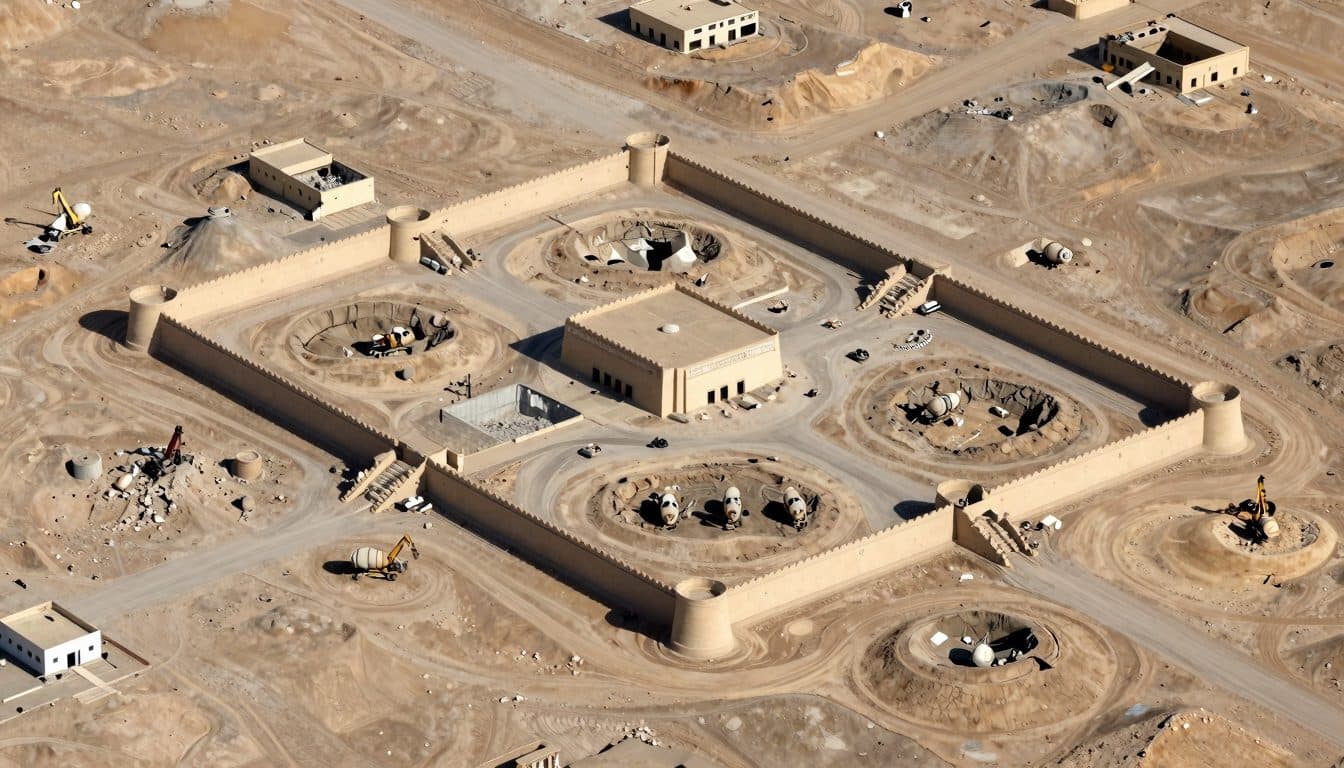
AI-generated image (z-image via Kie.ai)
Summary
Satellite images and analyses by the Institute for Science and International Security suggest repair work at Iranian military facilities linked to the former nuclear weapons program. The International Atomic Energy Agency (IAEA), however, currently sees no suspicious activity, according to CNN. The framework agreement between Iran and the United States is considered fragile.
Berlin, July 11, 2026
According to the Institute for Science and International Security (ISIS), satellite images indicate ongoing repair work at an Iranian military complex near Tehran, while the International Atomic Energy Agency (IAEA) currently detects no suspicious activity at Iranian nuclear facilities, according to CNN.
The Institute for Science and International Security (ISIS) in Washington said that in recent weeks, activities had been observed suggesting new work at Iranian nuclear facilities. The researchers base their findings in part on satellite imagery, which reportedly shows cleanup work and permanent repairs at a known military research site. According to ISIS, evidence of permanent restoration work has "increased" "in recent weeks," including "several concrete mixers and other equipment intended to permanently seal the impact craters."
The site in question is a military complex near Tehran. The complex was damaged at the beginning of the war by American and Israeli airstrikes. ISIS stated that the facility was "hit multiple times" at the start of the war. Satellite images reportedly initially showed cleanup work at the site before indications of more extensive reconstruction work increased.
The site and its history
Iran is suspected of developing technical equipment for nuclear weapons there. The suspicions are fueled by the history of the site, where, according to the IAEA, work took place as part of Iran's "Amad" program until 2003 on technologies that could be relevant to nuclear weapons. According to the report, tests with powerful explosives were allegedly conducted there to simulate the implosion of a nuclear warhead. Iran denies the existence of the Amad program.
According to CNN, the observations also concern other facilities associated with the alleged development of nuclear weapons and ballistic missiles. One such facility is located at the so-called Pickaxe Mountain, where, according to reports, work on nuclear capabilities is said to be carried out deep underground. Activities have also been recorded at the Parchin military complex in recent weeks. The Taleghan complex has repeatedly triggered speculation in the past.
IAEA and ISIS arrive at different assessments
While ISIS interprets the evidence as an indication of a gradual reconstruction, the International Atomic Energy Agency paints a different picture. The broadcaster CNN reported that the International Atomic Energy Agency currently sees no suspicious activity at Iranian nuclear facilities. This publicly contradicts the assessment of the Washington think tank, at least to some extent. An independent verification of the satellite images by other experts has not yet taken place.
Politically, the reports come at a fragile time. Under the framework agreement with the United States, Iran has committed to refraining from developing nuclear weapons. Tehran has also pledged in the agreement to end the war and maintain the "status quo" in its nuclear program. The arrangement is currently considered fragile, however. Observers view the construction activities now documented as a stress test for an already shaky accord.
The framework agreement is being put to the test
The affected sites have been of particular significance in the international debate over Iran's nuclear program for years. Fordo and Isfahan are considered central locations for uranium enrichment; Parchin and Taleghan are suspected of hosting military research and development work. The question of whether civilian maintenance or a military resumption of work is being carried out is politically sensitive. ISIS, which specializes in nuclear issues, spoke of a "rebuilding" tendency given the accumulation of indicators.
The US government has not yet officially commented on the new ISIS findings. Diplomatic channels reportedly remain open, however. Should the suspicion be confirmed, a new round of escalation threatens in the already tense relations between Washington and Tehran. The upcoming IAEA reports are considered decisive in determining whether the controversy over the satellite images will gain political weight.
The significance of Fordo, Isfahan, Parchin, and Taleghan
In Western capitals, concern is meanwhile growing that Iran's reconstruction could go beyond the threshold of purely civilian maintenance. Evidence of permanent sealing of the impact craters by concrete mixers can hardly be explained by short-term cleanup work, but rather points to long-term use of the facility, according to the researchers.
The report was broadcast on July 11, 2026 on the Deutschlandfunk program. It is based on research by CNN as well as analyses by the Institute for Science and International Security, a Washington-based research institution specializing in nuclear issues. Both sources arrive at different findings in their assessment of the situation.
So far, it is only certain that the body of evidence has grown denser in recent weeks. While ISIS speaks of repairs that go beyond mere damage limitation, the IAEA currently sees no suspicious activity. This discrepancy between proximity to intelligence services and international oversight now shapes the debate over the future of the framework agreement.
Observers point out that a definitive assessment will only be possible once independent inspectors gain access to the facilities. Until then, the classification of the satellite images remains a matter of interpretation, in which technical details, intelligence knowledge, and political motivations of the actors involved all play a role.
Outlook: What the coming weeks could bring
The coming weeks are considered decisive. Should the IAEA adjust its assessment or should new satellite images permit further conclusions, this could increase pressure on Tehran to make its program more transparent. Tehran, in turn, could respond to the accusations by intensifying its diplomatic rhetoric without halting the construction work.
For the international community, the conflict over Iran's nuclear policy remains a litmus test for the effectiveness of multilateral controls. The framework agreement was conceived as an attempt to prevent military escalation and to halt the development of nuclear weapons. The activities now observed raise the question of whether this mechanism still holds.
Regardless of the political assessment, the ISIS data show that the war and the subsequent airstrikes have left visible marks on the Iranian facilities. Whether these marks are now being removed in order to restore the status quo, or whether they mark the beginning of a new phase of rearmament, is the central question that the coming weeks must answer.
Questions & Answers
Which facilities in Iran are suspected of being repaired?
According to the Institute for Science and International Security, the focus is on a military complex near Tehran that was damaged at the beginning of the war by US and Israeli airstrikes. In addition, indications of activity at the Parchin complex, in Taleghan, and at a facility at Pickaxe Mountain are cited.
How does the IAEA assess the satellite images?
According to CNN, the International Atomic Energy Agency currently sees no suspicious activity at Iranian nuclear facilities and thus contradicts the assessment of the Institute for Science and International Security, which sees evidence of extensive repair work.
Why is the Iranian framework agreement with the United States fragile?
Under the framework agreement, Iran has committed to refraining from developing nuclear weapons, ending the war, and maintaining the status quo in its nuclear program. These commitments are in question because ISIS has documented increased repair work at militarily used facilities in recent weeks.
Iran: Satellite images show repairs at nuclear facilities | allfacts360