
Woodstock, New York, 25 May 2026
Sonny Rollins, the legendary American jazz saxophonist revered as the ‘Saxophone Colossus’, died at his home in Woodstock, New York, on May 25, 2026, at the age of 95, his publicist announced.
The death was confirmed on the artist’s official online page with the statement: ‘Mit tiefer Trauer und inniger Liebe geben wir das Ableben von Sonny Rollins bekannt.’ No cause of death was immediately given, but the announcement noted he passed away in the afternoon.
Rollins’s career spanned more than seven decades, during which his powerful, hard-blowing solos earned him a reputation as the greatest improviser in jazz. His 1956 album ‘Saxophone Colossus’ became a cornerstone of the genre, its title track and the calypso-inspired ‘St. Thomas’ remaining essential listening.
A Sonic Giant
The moniker ‘Saxophone Colossus’ was not just an album title—it described the physical and musical enormity of his sound. A review in the Jazz Journal at the time declared Rollins was able ‘to extract the last ounce of meaning from a particular phrase taken from the melody of the song’.
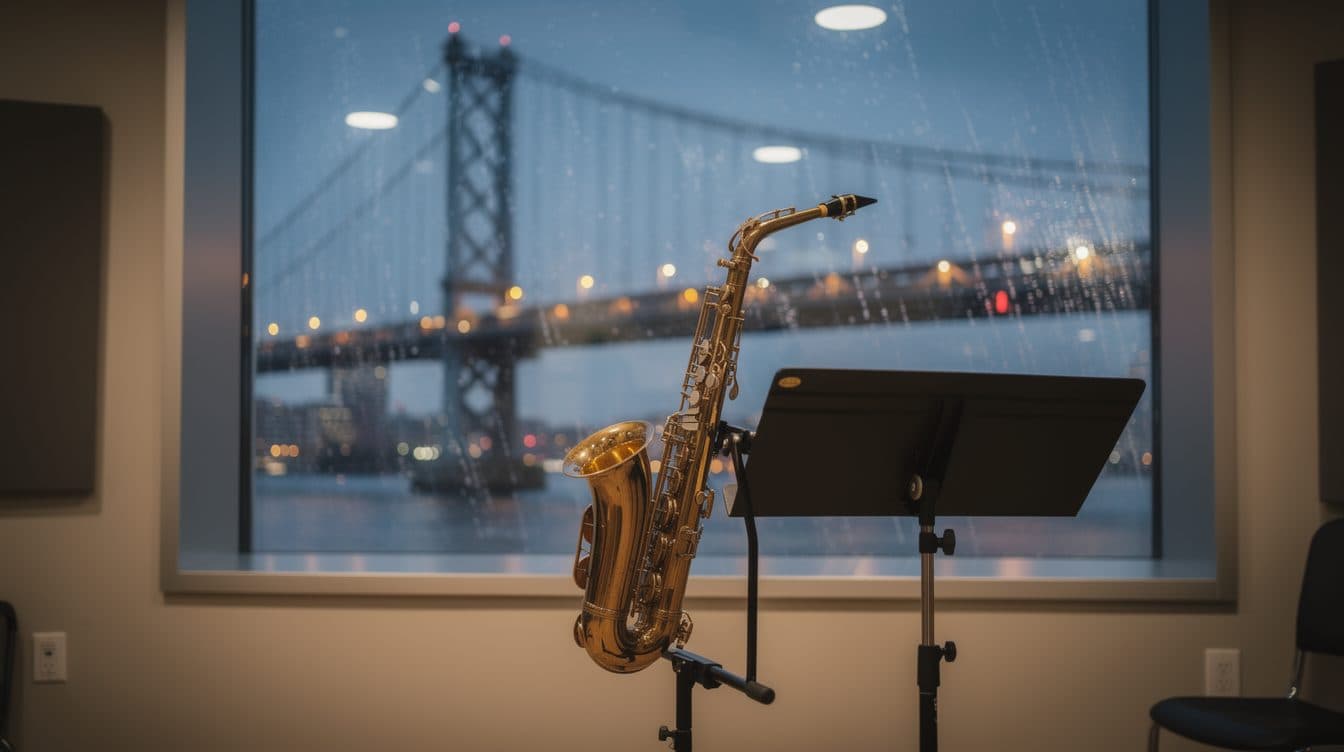
But Rollins’s legacy extends beyond the studio. In the summer of 1959, dissatisfied with his playing, he embarked on one of music’s most extraordinary undertakings: a solitary practice regimen on the windswept pedestrian walkway of New York’s Williamsburg Bridge.
For more than two years, Rollins would climb the bridge daily, often staying 14 or 15 hours, blowing his saxophone against the roar of traffic and the river wind. He later explained his reasoning to the Guardian newspaper in 2022: ‘What made me withdraw and go to the bridge was how I felt about my own playing. I knew I was dissatisfied.’
The Bridge Hermitage
The bridge retreat became a defining myth of jazz, marking his return to performing with a renewed, deeply personal voice. It demonstrated an almost monastic dedication that few artists have matched.
Equally transformative was his enthusiasm for yoga. Rollins told AFP in New York a decade ago that the practice was central to his survival. ‘It helped me stay away from drugs and alcohol,’ he said, adding that it gave him the discipline to sustain his musical journey.
His earlier life had been marked by turmoil. As a young man, Rollins had been addicted to heroin and experienced a period of homelessness. The double escape—from addiction through yoga and from creative crisis through the bridge—shaped his later years as a model of artistic resilience.
Yoga and Renewal
Born in New York City in 1930, Rollins picked up the saxophone as a teenager and quickly emerged as a leading light of the bebop era, playing alongside icons such as Miles Davis and Thelonious Monk. His career momentum, however, was repeatedly interrupted by personal struggles and the self-imposed hiatuses that only deepened his mystique.
Over the decades he recorded dozens of albums, received multiple Grammys and a lifetime achievement award, and in 2011 was honoured by the Kennedy Center. Yet he often downplayed his stature, preferring to speak of music as an ongoing quest.
A Lasting Sound
Rollins retired from public performance in the 2010s, but his influence continues to ripple through jazz and beyond. His solos are studied as profound statements, and the Williamsburg Bridge remains a pilgrimage site for aspiring musicians.
He is survived by his wife and longtime manager, Lucille Rollins. Tributes have begun pouring in from fellow musicians who credit him with expanding the expressive possibilities of the tenor saxophone.