Trump doubles down on Meloni photo claim, deepening diplomatic rift with Italy
Rome, 20 June 2026
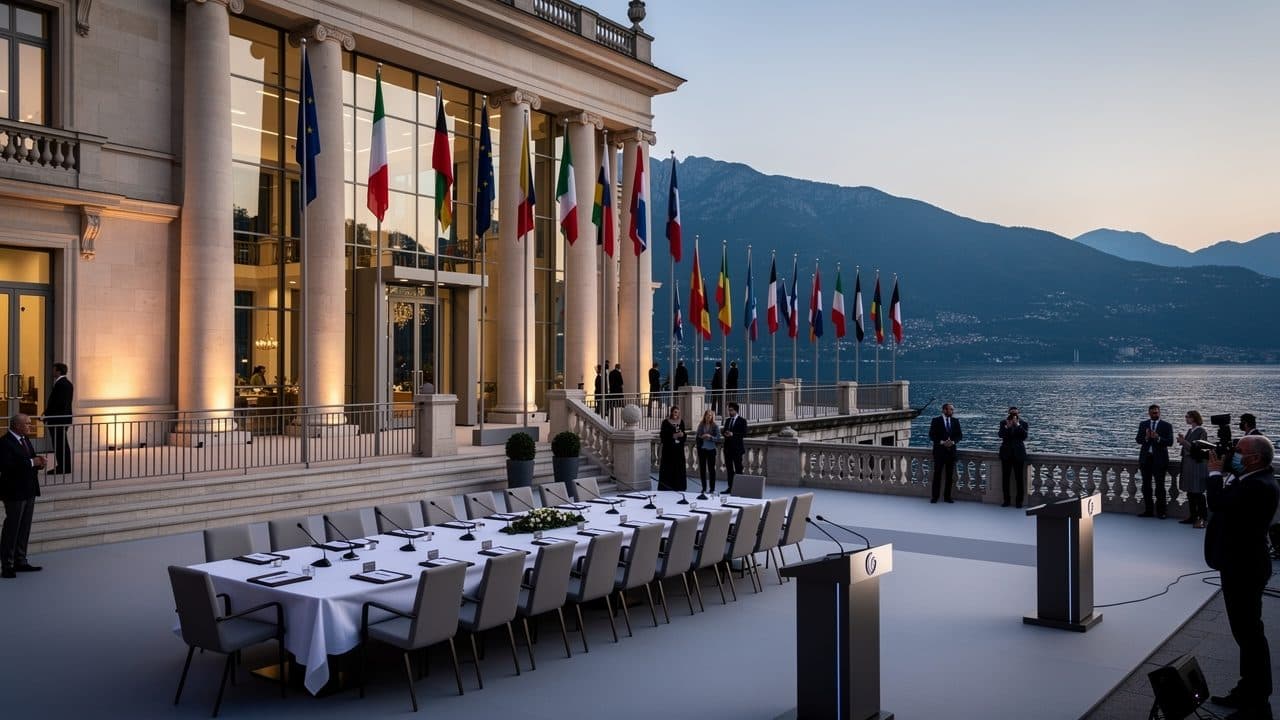
AI-generated image (flux-2/pro-text-to-image via Kie.ai)
Summary
US President Donald Trump has escalated a public clash with Italian Prime Minister Giorgia Meloni, repeating his claim that she begged him for a photo at the G7 summit in France. Meloni has rejected the characterization as invented and pushed back sharply, with Rome's foreign minister cancelling a planned US visit in protest.
Rome, 20 June 2026
US President Donald Trump has escalated a public row with Italian Prime Minister Giorgia Meloni by repeating on social media his claim that she begged him for a photograph at this week's G7 summit in France, drawing a sharp rebuke from Rome and a cancelled bilateral visit.
Background
The dispute, which broke into the open on Friday and intensified over the weekend, marks an unusually personal clash between Trump and one of Europe's most prominent right-wing leaders who had cultivated a working relationship with the US president since his return to office. In a phone interview with the Italian broadcaster La7 on Friday, Trump said Meloni had asked him for a photo at the G7 summit in the French town of Evian and that he had agreed only out of pity.
Trump repeated and amplified the allegation on Saturday in a post on his Truth Social platform, writing: "Italian Prime Minister Giorgia Meloni asked, over and over, for a picture with me during the G-7 meeting in France." He initially misspelled her first name as "Gigiorgia" before the post was corrected.
In the same post, Trump linked the alleged request to disputes over Iran and NATO, claiming Meloni was "doing poorly in Italy with her level of popularity" and accusing Italy and other NATO allies of failing to back the US-Israeli military campaign against Tehran. He alleged that Italy had refused to allow US forces to use Italian airfields, calling that refusal "a significant logistical disadvantage."
Meloni's rebuttal
Meloni, who turned 49 this year according to Italian media and had at the close of the G7 summit on Wednesday described the atmosphere as "very positive," rejected Trump's account within hours. Writing on X, the Italian prime minister said: "Ich und Italien betteln nie" — "Italy and I never beg" — and accused Trump of insulting all Italians with his remarks. She told Trump in subsequent posts on Instagram that her popularity was none of his business and suggested he focus on his own.
She expanded the criticism on Saturday evening, writing: "Diese ständigen, unprovozierten Angriffe sind sinnlos" — "These constant, unprovoked attacks are pointless." She added: "Ihre Freundin zu sein, hat meiner Beliebtheit sicherlich nicht geholfen" — "Being your friend certainly hasn't helped my popularity." She also insisted: "Italien bleibt eine souveräne Nation" — "Italy remains a sovereign nation."
In a separate post addressed directly to Trump, Meloni wrote: "Was meine Beliebtheit angeht: Deine Freundschaft hat ihr sicherlich nicht geholfen, und sie hängt auch nicht von meiner Beziehung zu dir ab." On Sunday, she announced that she would stop engaging on the photo issue, saying she still believed in Western unity and that a public spectacle did not serve that cause.
Italian government response
The Italian government moved to register its displeasure through official channels. Foreign Minister Antonio Tajani cancelled a planned trip to the United States in protest at what his office described as "schwerwiegenden und beleidigenden Kommentare" — "serious and insulting comments" — by the US president. Italian Justice Minister Carlo Nordio called the incident a "schmerzliche Verletzung" — "painful injury" — to bilateral relations.
Defence Minister Guido Crosetto, a close Meloni ally, said: "Diese Scherze nutzen niemandem" — "These jokes help no one." He also questioned why the US president behaved this way toward his own allies and said it was regrettable that Trump did not show the same resolve against what Crosetto called "die Feinde des Westens" — "the enemies of the West".
Trump refused to walk back the claim. In further comments, he suggested that Meloni should consider herself lucky that he had spoken to her, adding: "Ich musste gar nicht mit ihr reden" — "I didn't have to talk to her at all." On Truth Social, Trump alleged that after the US military defeat of Iran, Meloni now wanted to rebuild ties to lift her domestic ratings. He closed that passage with the words "Nein, danke" — "No, thank you."
The Iran dispute at the heart of the row
Meloni had refused to back Italian participation in the US-Israeli strikes on Iran, a position Italian officials had publicly defended as a matter of national sovereignty. The disagreement over Iran has now fused with the personal row over the G7 photograph, with Trump framing Italian non-cooperation as the underlying cause of any cooling in relations.
Italian political analysts said the rupture was notable because Meloni, the leader of the Brothers of Italy party, had invested heavily in cultivating Trump and presenting herself as a bridge between Washington and the European continent. The current public tone, those analysts said, makes that role significantly harder to sustain, at least while the dispute remains unresolved.
Broader US-Italy friction
The spat also comes against a backdrop of earlier strains between Trump and Italy this year. In a separate episode, Trump publicly criticised Pope Leo, describing him as "weak on crime and terrible on foreign policy," comments that Italian officials and bishops had condemned at the time. The Vatican did not immediately comment on the latest row, but Italian Catholic voices joined mainstream politicians in criticising Trump's tone.
Reaction in the Italian press was uniformly critical of Trump. Major newspapers carried front-page treatment of Meloni's rebuttal on Sunday, and broadcasters highlighted the cancellation of Tajani's US trip. Opposition leaders, including figures from the centre-left, rallied to Meloni's defence, accusing Trump of trying to humiliate a NATO ally.
The White House has not signalled any intention to de-escalate, and Trump has so far resisted calls from European partners to smooth the disagreement. Italian officials said privately that they expected the row to persist for several days, with both sides likely to keep trading barbs on social media before any behind-the-scenes effort to repair ties.
European reaction
European Union officials in Brussels, who have watched the Italy-US friction with concern, declined to comment on the record. Several diplomats said the episode underscored the unpredictability of the US president's approach to long-standing European partners and was likely to feed into ongoing debates about European strategic autonomy.
What happens next
The photo at the centre of the dispute has not been released, and Italian government sources said no meeting between Trump and Meloni at the G7 produced a formal bilateral photograph in which the Italian prime minister was the sole subject requesting an image. Trump's office did not produce evidence corroborating his account when asked, and the Italian side flatly denied it.
By Sunday evening, both leaders appeared to be settling into entrenched positions. Trump posted twice more on Truth Social repeating his version of events, and Meloni used her Sunday video address to say she would not be drawn further into the personal fight, returning her focus to the G7 communique and to Italy's G20 presidency preparations later this year.
Questions & Answers
What did Trump say about Giorgia Meloni at the G7?
Trump claimed on the Italian broadcaster La7 and again on Truth Social that Meloni had begged him repeatedly for a photograph at the G7 summit in Evian, France, and said he had agreed only because he felt sorry for her.
How did Giorgia Meloni respond to Trump's claims?
Meloni rejected the account as invented, posting on X that "Italy and I never beg," telling Trump her popularity was none of his business, and describing his attacks as pointless and unprovoked.
Why did Italy's foreign minister cancel his US visit?
Foreign Minister Antonio Tajani called off the trip in protest at what his office described as "serious and insulting comments" by the US president, an unusually sharp move in a long-standing US-Italian partnership.